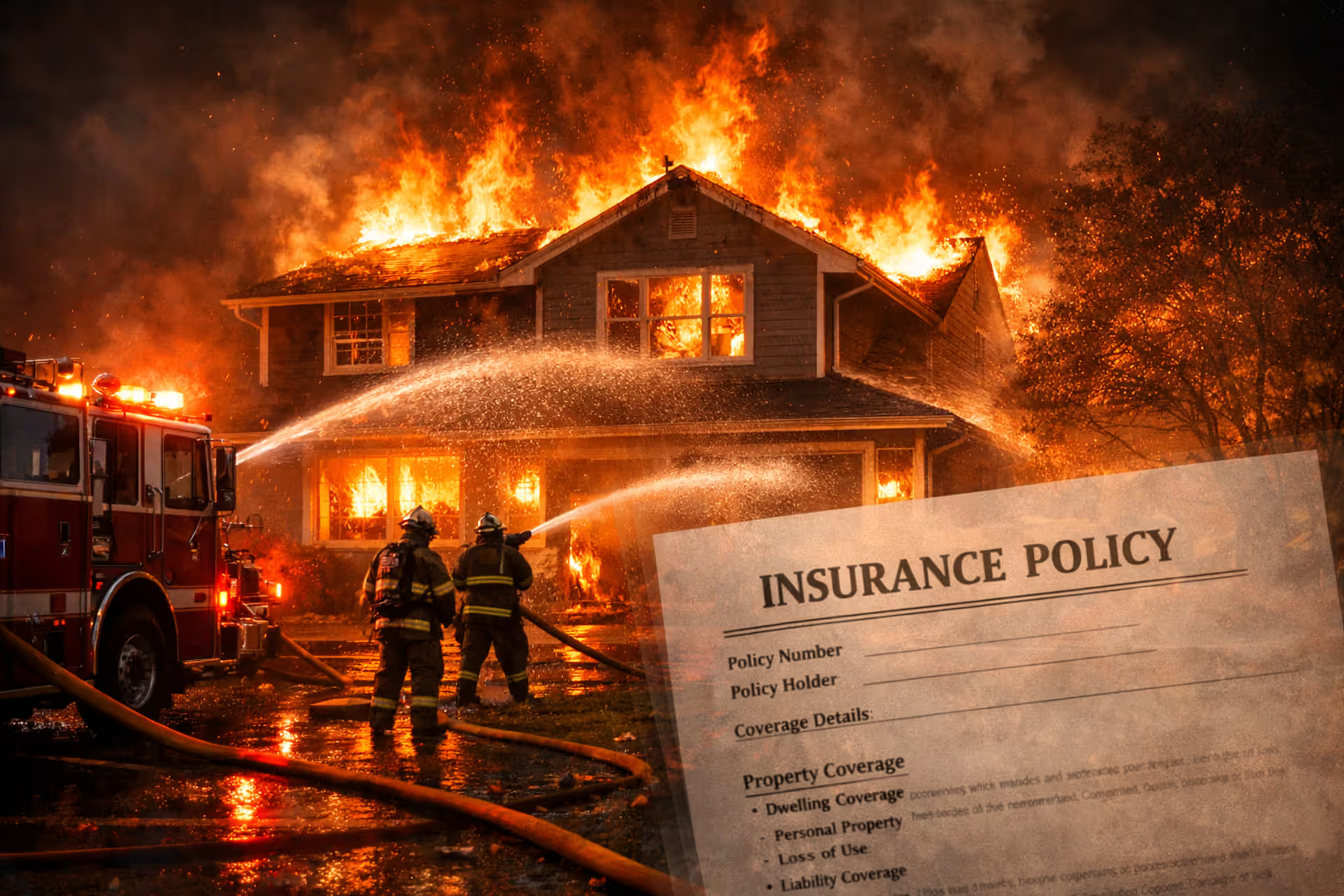
Suburban house on fire at night with firefighters spraying water and insurance policy document overlay
What Does Fire Insurance Cover on a Home — Coverage Explained

Content
Fire ranks among the most financially devastating events a homeowner can face. A single blaze can destroy decades of memories and hundreds of thousands of dollars in property within hours. Yet many homeowners carry policies without fully understanding what their coverage actually includes when flames strike.
Most standard homeowners insurance policies include fire as a covered peril, but the details matter enormously. The difference between adequate protection and financial ruin often comes down to understanding coverage limits, exclusions, and the claims process before disaster strikes.
How Fire Coverage Works in Standard Homeowners Insurance Policies
Fire appears as a named peril in virtually every HO-3 policy, the most common homeowners insurance form in the United States. This means your insurer specifically lists fire as a covered cause of loss, distinguishing it from unnamed or excluded perils.
Your policy divides coverage into distinct categories, each with separate limits. Coverage A protects your dwelling—the physical structure of your home. Coverage B typically provides 10% of your dwelling coverage for other structures like detached garages or sheds. Coverage C covers personal property, usually at 50-70% of your dwelling coverage amount. Coverage D handles additional living expenses if fire makes your home uninhabitable.
These percentages aren't arbitrary. They reflect statistical averages of loss patterns, but they may not match your specific situation. A homeowner with a $300,000 dwelling policy receives $150,000-$210,000 in personal property coverage by default, which may fall short if you own extensive electronics, jewelry, or collectibles.
The fire peril homeowners insurance coverage guide within your policy declarations page specifies your exact limits. Review this document annually, as rebuild costs fluctuate significantly with lumber prices, labor shortages, and local construction market conditions.

Author: Ethan Caldwell;
Source: sixth-fleet.com
What Fire Damage Your Policy Actually Covers
Understanding the breadth of fire damage coverage homeowners insurance policies guide requires examining each coverage category individually.
Structure and Dwelling Protection
Your dwelling coverage pays to repair or rebuild your home's permanent structures. This includes walls, roof, built-in appliances, attached decks, and permanently installed fixtures. If fire destroys your kitchen, the policy covers cabinets, countertops, flooring, drywall, and electrical systems.
Most policies cover the dwelling on a replacement cost basis, meaning the insurer pays what it costs to rebuild with materials of similar kind and quality, without deducting for depreciation. A 15-year-old roof destroyed by fire gets replaced with a new roof, not a depreciated payout reflecting its age.
However, replacement cost coverage requires you to actually rebuild. If you take the initial actual cash value payment and don't repair the damage, you forfeit the recoverable depreciation—often 30-50% of the total claim value.
Personal Property and Belongings
Fire damage to furniture, clothing, electronics, and other movable items falls under personal property coverage. This includes items destroyed by flames, melted by heat, or ruined by smoke and soot.
Standard policies impose sub-limits on certain categories. Jewelry typically caps at $1,500 total, cash at $200, and firearms at $2,500. A homeowner who loses $15,000 in jewelry during a fire receives only the sub-limit unless they purchased a scheduled personal property endorsement beforehand.
Documentation becomes critical here. Homeowners who maintained photo inventories, receipts, or video walkthroughs of their possessions receive significantly higher settlements than those relying on memory alone. Insurance adjusters can't pay for items they can't verify existed.
Additional Living Expenses (ALE) During Repairs
When fire renders your home uninhabitable, your policy covers reasonable additional living expenses. This includes hotel bills, restaurant meals (above your normal food costs), storage unit rentals, and even pet boarding fees.
ALE coverage typically extends for the time "reasonably required" to repair or rebuild, often capped at 12-24 months or 20-30% of your dwelling coverage. A $400,000 dwelling policy might provide $80,000-$120,000 for temporary housing.
The insurer pays the difference between your normal living expenses and your temporary costs. If you normally spend $800 monthly on groceries but now spend $1,200 eating out, the policy covers the $400 difference. Keep every receipt—without documentation, you can't claim reimbursement.
Other Structures on Your Property
Detached garages, sheds, fences, and gazebos receive coverage under Coverage B, typically 10% of dwelling coverage. A $300,000 dwelling policy provides $30,000 for other structures.
This amount often proves insufficient for homeowners with large detached garages, extensive fencing, or pool houses. Insurers allow you to increase this percentage for additional premium, a worthwhile investment if your other structures exceed the default limit.
Common Fire-Related Damages That Aren't Covered
Fire claim homeowners insurance policies guide documents also specify important exclusions that catch homeowners off-guard.
Arson committed by the policyholder or anyone living in the home voids coverage entirely. If investigators determine you or a household member intentionally set the fire, the insurer denies the entire claim and may pursue criminal fraud charges.
Vacant home exclusions apply if your property sits unoccupied for 30-60 consecutive days (timeframes vary by insurer). A fire in a vacant home receives no coverage unless you purchased a vacant property policy. This affects homeowners who travel extensively, maintain seasonal properties, or leave homes empty during estate settlement.
Certain secondary damages face scrutiny. If fire damages your plumbing and subsequent water leaks cause mold growth months later, insurers may deny the mold claim as resulting from lack of maintenance rather than the original fire.
Neglect and deferred maintenance exclusions mean fires caused by faulty wiring you knew about but didn't repair may face partial or complete denial. Insurers expect homeowners to maintain their property in reasonable condition.
Business property kept at home faces sub-limits, typically $2,500. A home-based business owner who loses $30,000 in equipment and inventory receives only the sub-limit without a business property endorsement.
How to File a Fire Claim: Step-by-Step Process
The fire claim homeowners insurance policies guide process begins immediately after the fire department declares your property safe to approach.
Step 1: Immediate Contact (Within 24 Hours)
Call your insurance company's claims line as soon as possible. Policies require "prompt notice," and delays complicate the claims process. The insurer assigns a claim number and adjuster, typically within 24-48 hours.
Step 2: Emergency Mitigation
Your policy requires you to prevent further damage. Board up broken windows, tarp damaged roofs, and secure the property against weather and theft. Save all receipts—these emergency mitigation costs are reimbursable. However, don't begin permanent repairs until the adjuster documents the damage.
Step 3: Documentation Phase
Author: Ethan Caldwell;
Source: sixth-fleet.com
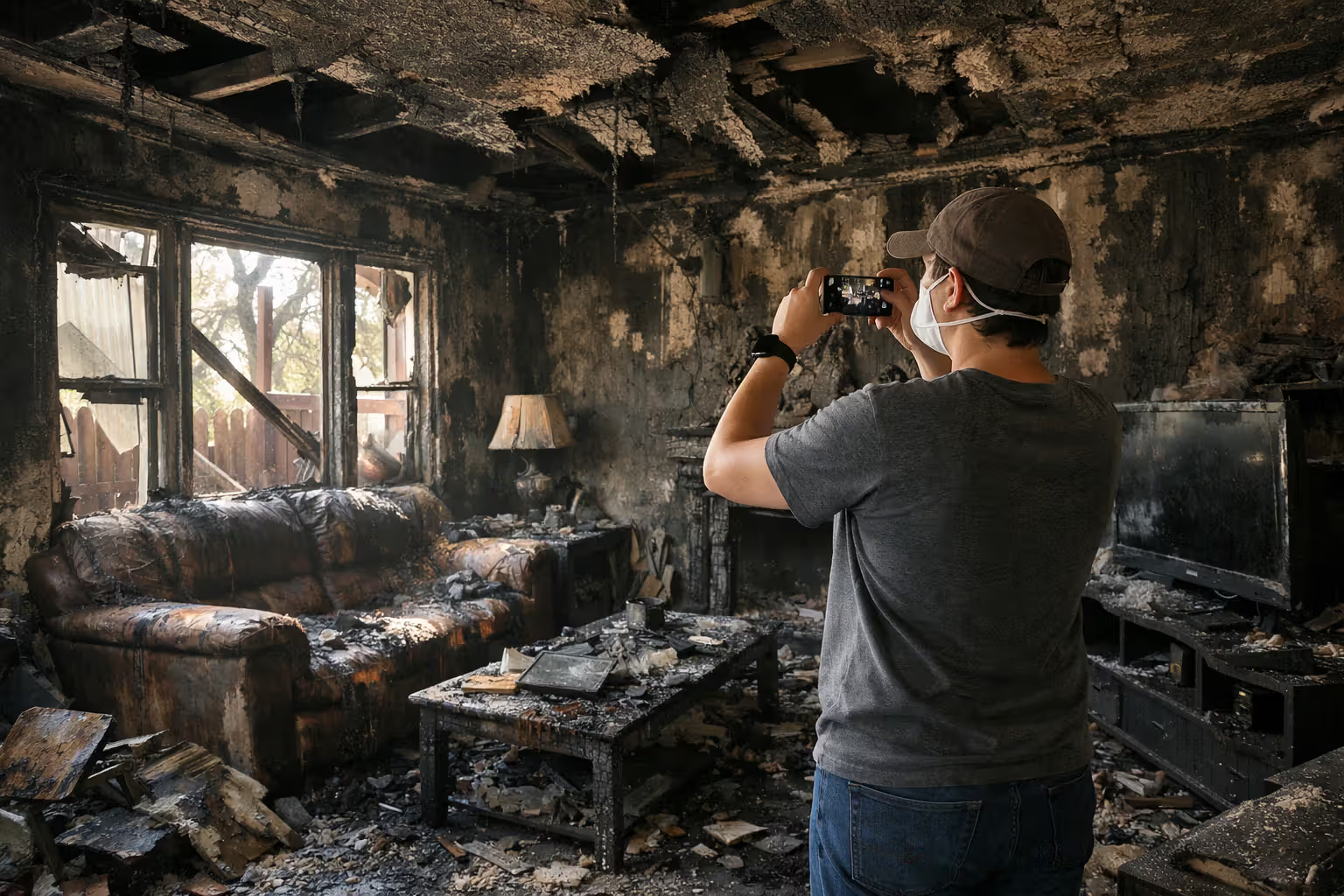
Photograph and video everything before cleanup begins. Document each damaged room from multiple angles. Create a detailed inventory of destroyed personal property, including approximate purchase dates and prices. The more thorough your documentation, the faster and larger your settlement.
Step 4: Adjuster Inspection
The insurance adjuster visits within 3-7 days to assess damage and determine coverage. They photograph damage, measure affected areas, and interview you about the fire's origin and your property's contents. Answer honestly and completely—inconsistencies raise red flags that delay claims.
Some adjusters work directly for insurance companies (staff adjusters), while others work independently (independent adjusters). Both serve the insurer's interests. Consider hiring a public adjuster who works for you, especially for claims exceeding $100,000. Public adjusters typically charge 5-15% of the settlement but often increase payouts by 20-40%.
Step 5: Estimate and Settlement
The adjuster prepares a damage estimate and coverage determination, typically within 10-14 days. Review this estimate carefully with a contractor. Insurance estimates sometimes undervalue labor costs or miss hidden damages.
If you disagree with the estimate, obtain independent contractor bids and submit them with a written explanation. Insurers must respond to disputes within timeframes specified by state law, usually 15-30 days.
Step 6: Payment and Repairs
Most insurers issue an initial payment for actual cash value (current value minus depreciation), holding back recoverable depreciation until you complete repairs and submit contractor invoices. This protects against homeowners taking payouts without rebuilding.
6 Mistakes Homeowners Make That Reduce Fire Claim Payouts
Understanding fire risk homeowners insurance policies guide requirements helps avoid costly errors.
Mistake 1: Underinsuring the Dwelling
Many homeowners insure their home for the purchase price or assessed value rather than rebuild cost. A home purchased for $250,000 might cost $400,000 to rebuild due to demolition, debris removal, and current construction costs. Underinsurance triggers coinsurance penalties, reducing all payouts proportionally.
Mistake 2: Failing to Document Personal Property
Homeowners without inventories struggle to remember everything they owned. An adjuster won't pay for items you can't prove existed. Take a video walkthrough of your home annually, opening closets and drawers, narrating what you see.
Mistake 3: Delayed Reporting
Waiting days or weeks to report fire damage violates policy requirements and allows secondary damage to worsen. Some homeowners delay reporting small fires they extinguished themselves, only to discover smoke damage throughout the HVAC system months later. Report all fires immediately, even minor ones.
Mistake 4: Discarding Damaged Items Too Quickly
Throwing away fire-damaged property before the adjuster documents it eliminates proof of loss. Store damaged items in a garage or storage unit until the adjuster releases you to dispose of them.
Mistake 5: Accepting the First Offer Without Review
Insurance companies sometimes lowball initial offers, expecting negotiation. Have a contractor or public adjuster review the estimate before accepting. You can't reopen a claim after signing a settlement release.
Mistake 6: Not Understanding Replacement Cost vs. Actual Cash Value
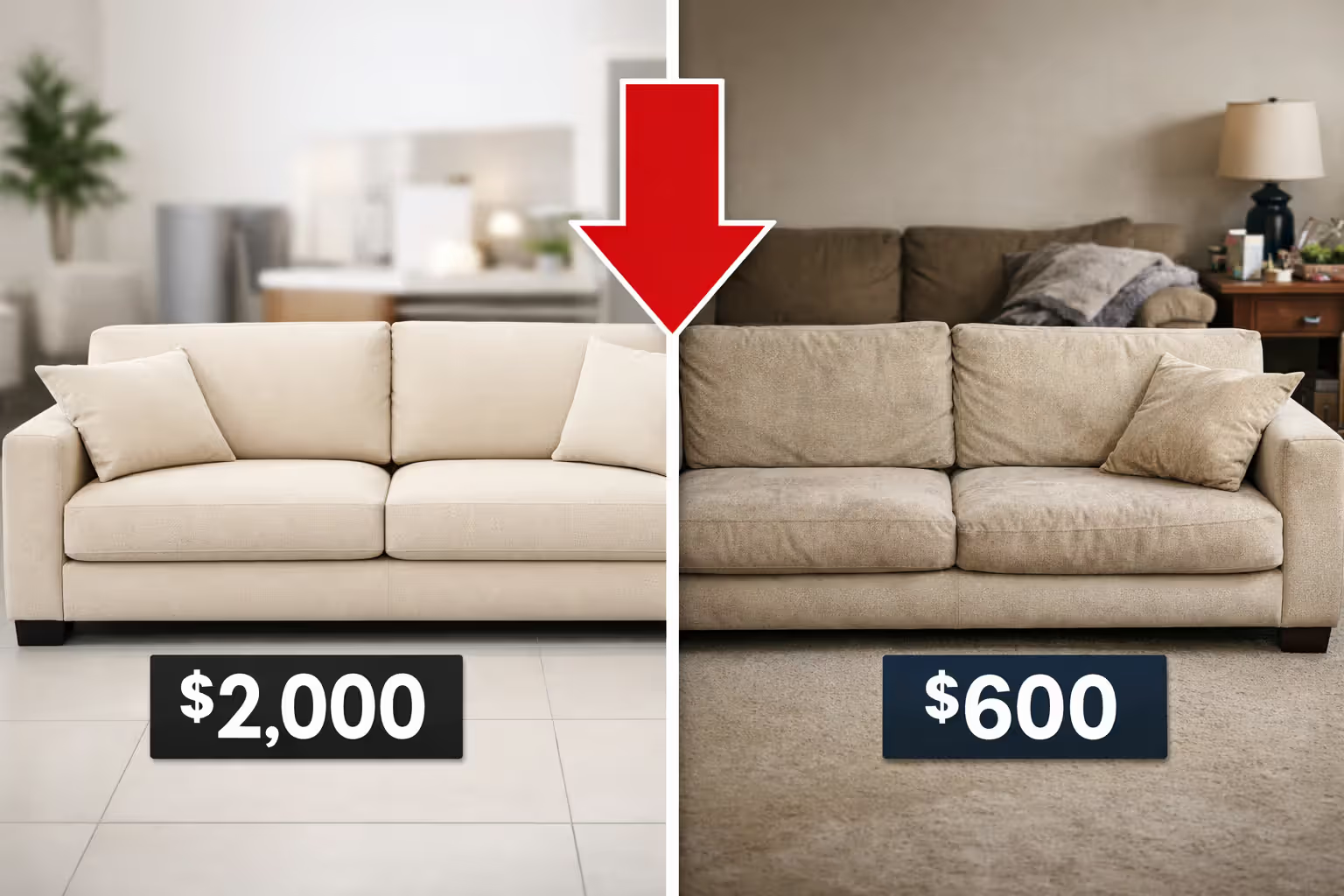
Replacement cost policies pay to replace items new, but only after you actually replace them. Actual cash value policies deduct depreciation immediately. A five-year-old $2,000 couch might have an ACV of $600. Know which coverage type you purchased and how the payout process works.
Author: Ethan Caldwell;
Source: sixth-fleet.com
How Much Fire Coverage Do You Actually Need?
Fire protection homeowners insurance policies guide recommendations center on adequate dwelling coverage, which drives all other limits.
Start with a replacement cost estimate from a contractor or professional estimator, not your home's market value. Replacement cost reflects current construction prices in your specific area, including demolition, debris removal, and rebuilding to current code.
Local construction costs vary dramatically. Rebuilding a 2,000-square-foot home costs $200-$250 per square foot in rural areas but $400-$600 per square foot in high-cost urban markets. A home requiring $500,000 to rebuild but insured for $350,000 faces a $150,000 coverage gap.
Consider these coverage enhancements:
Extended Replacement Cost endorsements pay 125-150% of your dwelling limit if rebuild costs exceed your coverage due to post-loss price spikes. After major disasters, contractor shortages drive prices up 30-50%.
Inflation Guard automatically increases your coverage 2-4% annually to keep pace with construction cost inflation. Without it, your coverage erodes over time.
Ordinance or Law Coverage pays the extra cost to rebuild to current building codes when your home was built under older, less stringent codes. Code upgrades can add 20-30% to rebuild costs.
Scheduled Personal Property endorsements remove sub-limits and provide broader coverage for jewelry, art, collectibles, and other high-value items. Schedule any item worth over $2,500 individually.
Review your coverage annually. Construction costs increased 15-20% in many markets between 2020-2023. Coverage adequate three years ago may fall short today.
Fire Coverage Comparison: What's Included vs. Excluded
| Fire Damage Scenario | Typically Covered | Typically Not Covered |
| Smoke and soot damage throughout home | ✓ | |
| Firefighter damage (broken windows, holes in walls) | ✓ | |
| Hotel and restaurant costs during repairs | ✓ | |
| Damage to detached garage | ✓ | |
| Landscaping and trees | ✓ (usually limited to $500-$1,000 per tree) | |
| Fire caused by lightning strike | ✓ | |
| Fire in vacant home (60+ days unoccupied) | ✓ | |
| Arson by homeowner or resident | ✓ | |
| Business inventory stored at home (over $2,500) | ✓ (without endorsement) | |
| Swimming pool damaged by fire debris | ✓ | |
| Temporary fence around fire-damaged property | ✓ | |
| Fire caused by intentional act | ✓ | |
| Mold from water used to extinguish fire | ✓ (if promptly mitigated) | ✓ (if due to neglect) |
Expert Insight:
The biggest mistake I see is homeowners assuming their coverage automatically keeps pace with rebuild costs.A policy that provided adequate coverage in 2018 may be 30% too low today. Homeowners should request replacement cost estimates every 2-3 years and adjust coverage accordingly. The few hundred dollars in extra premium pale compared to a six-figure coverage gap after a total loss
— Jennifer Martinez
Frequently Asked Questions About Fire Insurance Coverage
Protecting Your Home and Financial Future
Fire insurance coverage provides essential financial protection, but only when you understand what your policy actually covers and maintain adequate limits. The homeowners who recover fully from fire losses share common traits: they maintain detailed property inventories, review coverage limits annually, understand their policy's structure, and act quickly when filing claims.
Take three actions this week to strengthen your fire protection. First, photograph or video every room in your home, documenting your belongings. Store this inventory in cloud storage, not just on your phone. Second, request a replacement cost estimate from a local contractor and compare it to your dwelling coverage—adjust your policy if you find gaps. Third, read your policy declarations page and identify your actual coverage limits, deductibles, and any endorsements.
Fire destroys homes in minutes but rebuilding takes months or years. The decisions you make today about coverage limits and documentation determine whether you recover fully or face financial hardship. Your insurance policy is only as good as your understanding of what it covers and your preparation before disaster strikes.