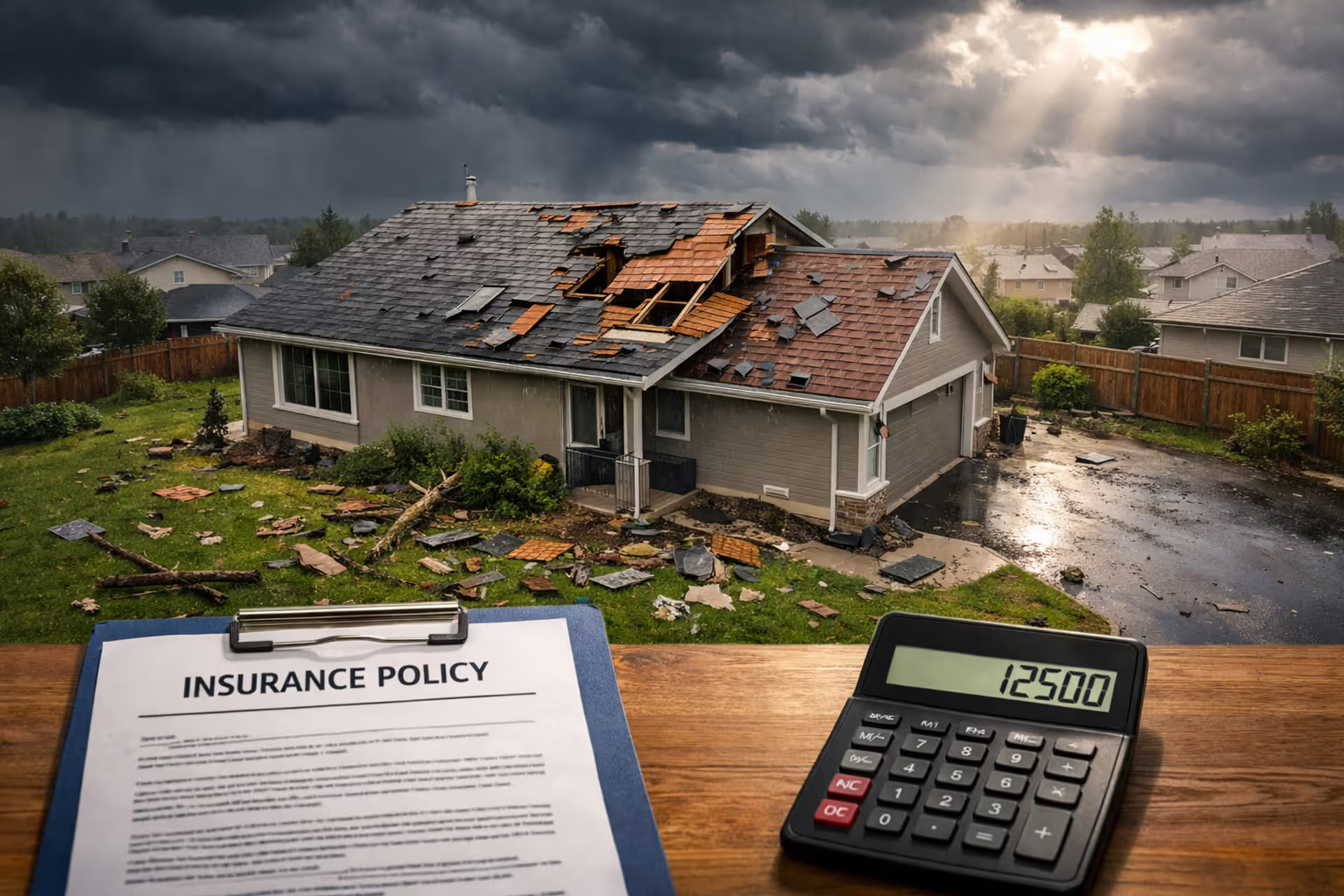
Suburban house with storm-damaged roof, missing shingles, debris on lawn, dark stormy sky with sunlight breaking through, insurance policy documents in foreground
Storm Damage Coverage Homeowners Insurance — What’s Covered vs. Excluded

Content
Most standard homeowners policies provide substantial protection against storm-related perils, but coverage gaps exist that surprise even diligent policyholders. The difference between covered wind damage and excluded flood damage, for instance, can mean tens of thousands of dollars in claim denials. State-specific requirements, separate deductibles, and policy exclusions create a complex landscape that requires careful navigation.
What Types of Storm Damage Are Typically Covered by Standard Homeowners Insurance
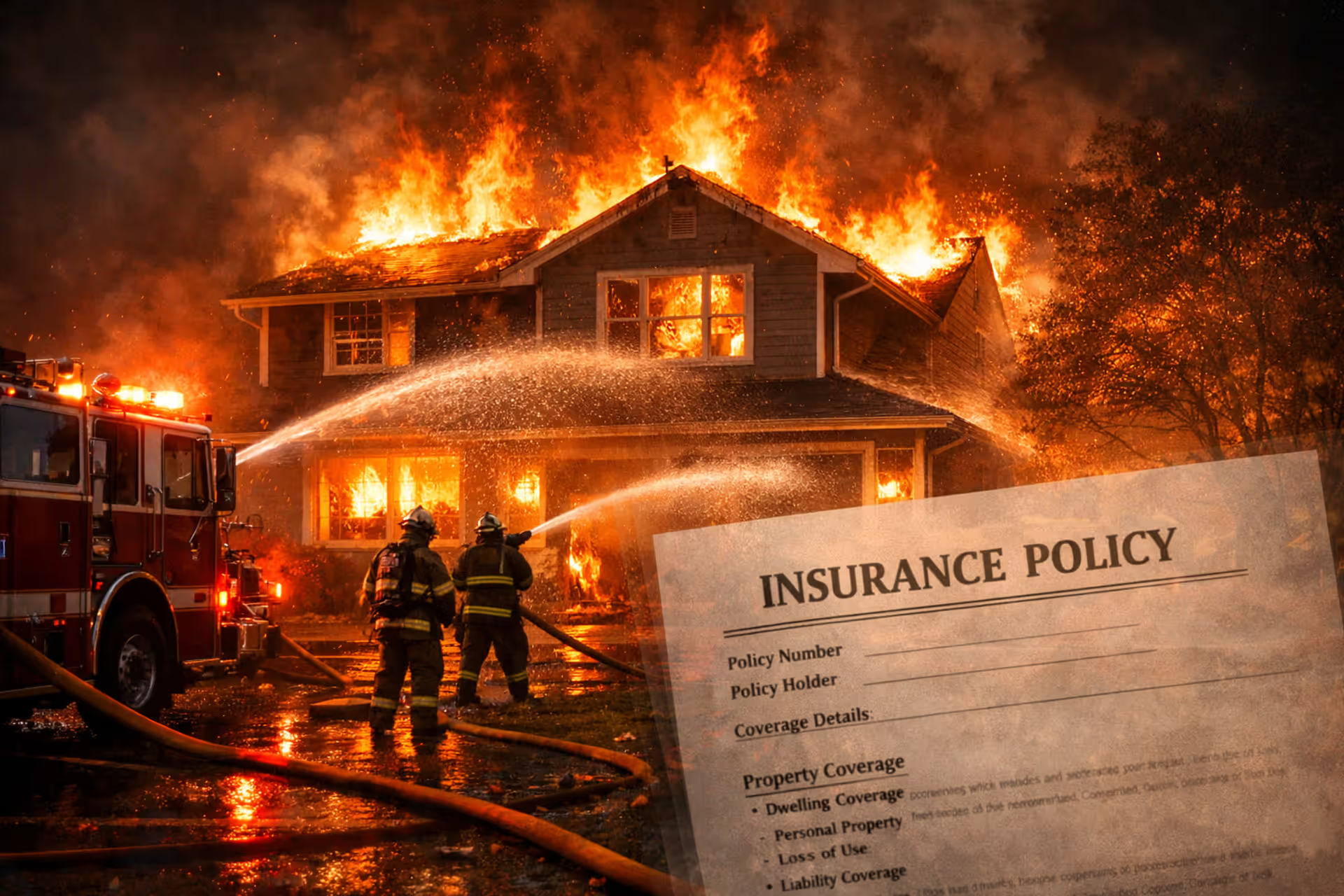
Standard homeowners insurance policies—particularly the widely-used HO-3 form—protect your dwelling under an "open perils" structure. This means your home is covered against all risks except those specifically excluded in your policy language. Your personal belongings, however, typically receive "named perils" coverage, protecting only against explicitly listed dangers.
This distinction matters significantly for storm damage coverage homeowners insurance policies provide. While your roof might be covered for wind damage under open perils, your furniture damaged by rain entering through that broken roof may only be covered if wind is listed as a named peril for personal property.
Wind and Hail Damage Coverage
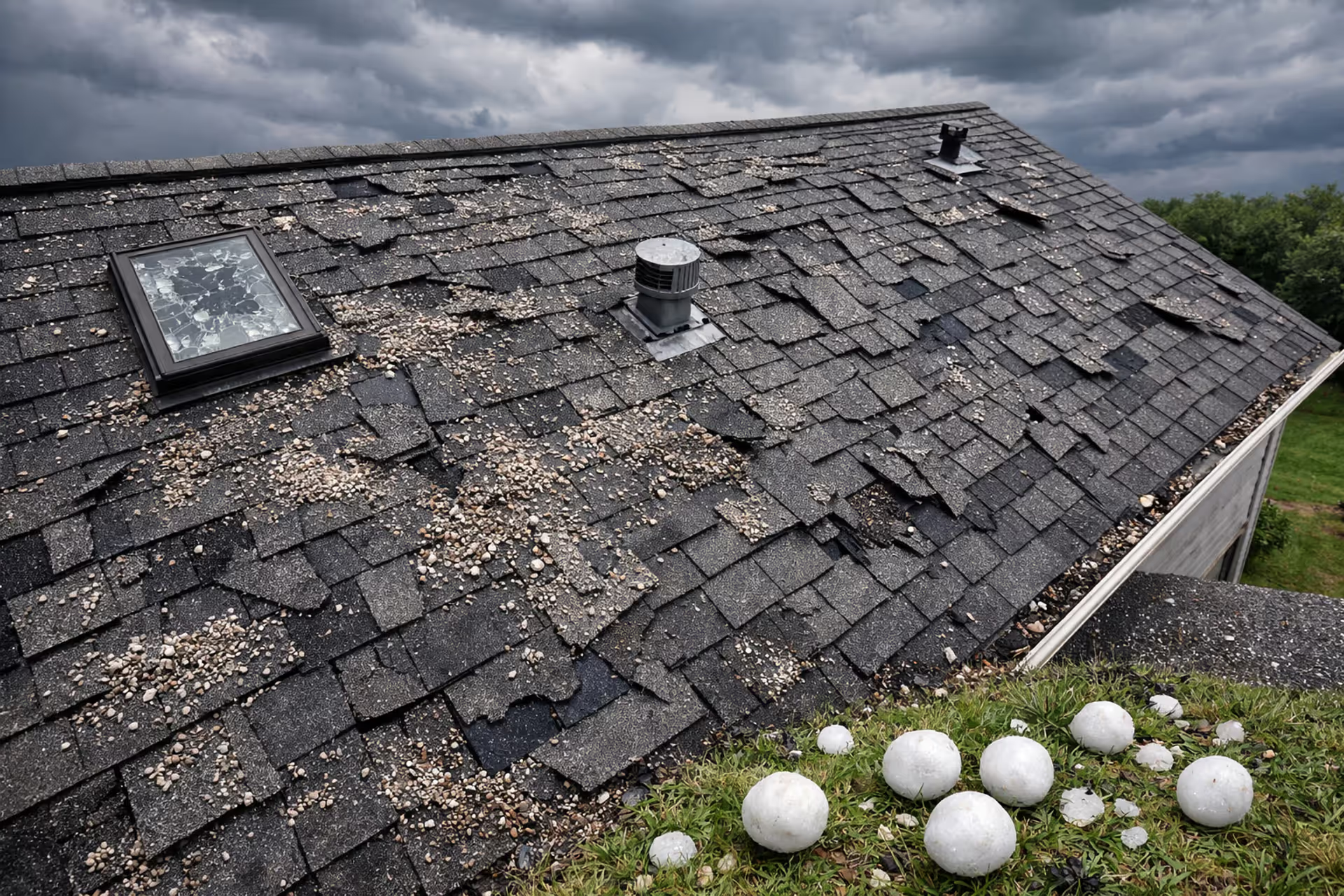
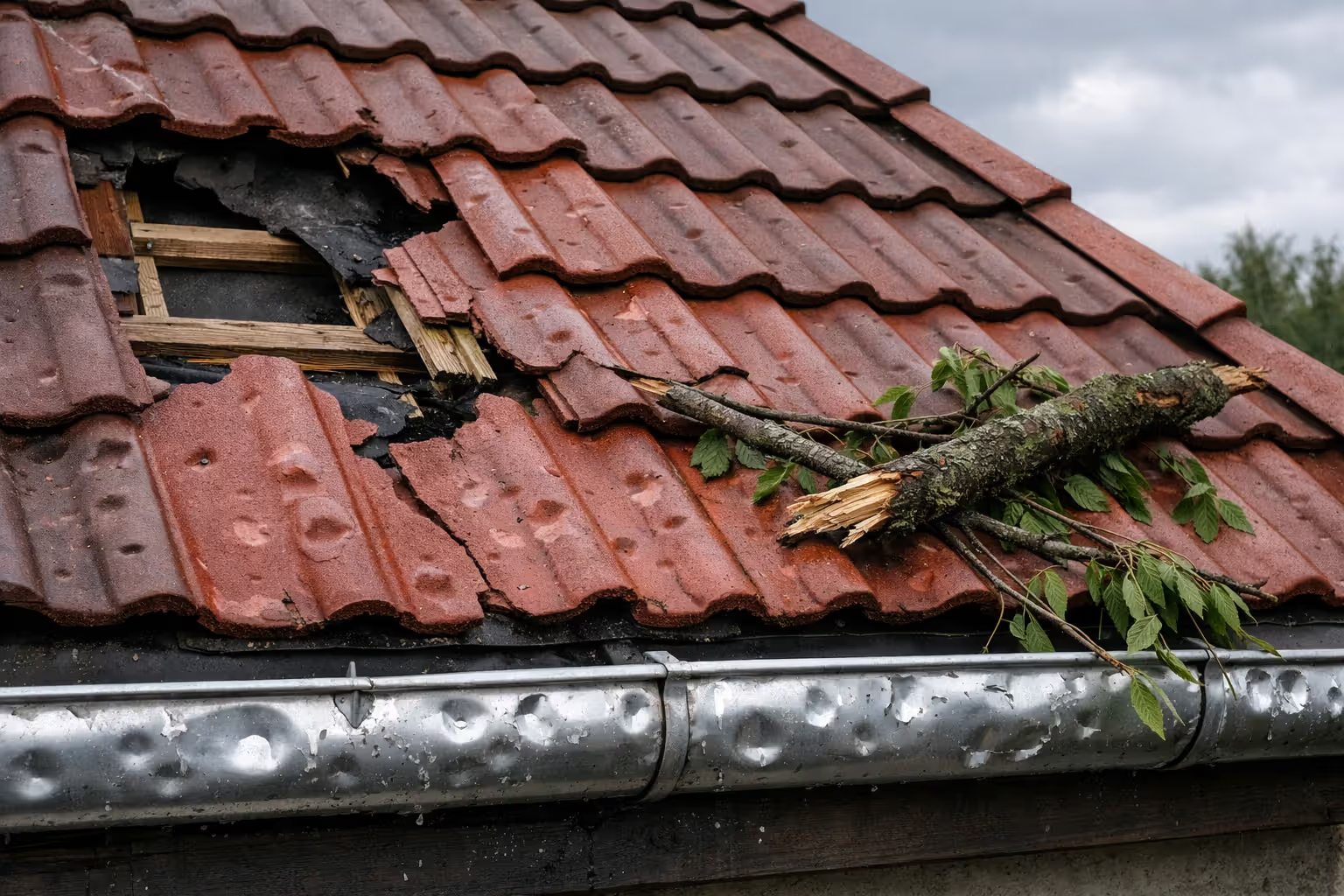
Wind and hail represent the most common storm perils covered by standard policies. When a windstorm tears shingles from your roof, breaks windows, or topples your fence, your policy generally responds. Hail damage to roofing, siding, and outdoor structures also falls within standard coverage parameters.
The coverage extends beyond structural elements. If wind blows rain through a damaged window, the resulting interior damage typically qualifies as covered wind damage. Your insurer should pay for drywall repair, flooring replacement, and damaged furnishings—assuming the wind created the opening that allowed water entry.
However, age and condition limitations apply. Many insurers now impose roof age restrictions, paying only actual cash value rather than replacement cost for roofs exceeding 15 or 20 years. Some carriers refuse to write policies on homes with roofs older than 20 years without a professional inspection confirming good condition.
Lightning Strike Protection
Lightning strikes receive straightforward coverage under virtually all homeowners policies. When lightning damages your electrical system, starts a fire, or destroys electronics through power surges, your policy responds. This includes both direct strikes and the electrical damage that occurs when lightning hits nearby.
The challenge with lightning claims involves proving causation. Power surges can result from various sources, and insurers sometimes dispute whether lightning actually caused your fried appliances. Maintaining documentation of the storm timing and having neighbors who experienced similar damage strengthens your claim position.
Author: Lauren Bishop;
Source: sixth-fleet.com
Tornado and Severe Weather Events
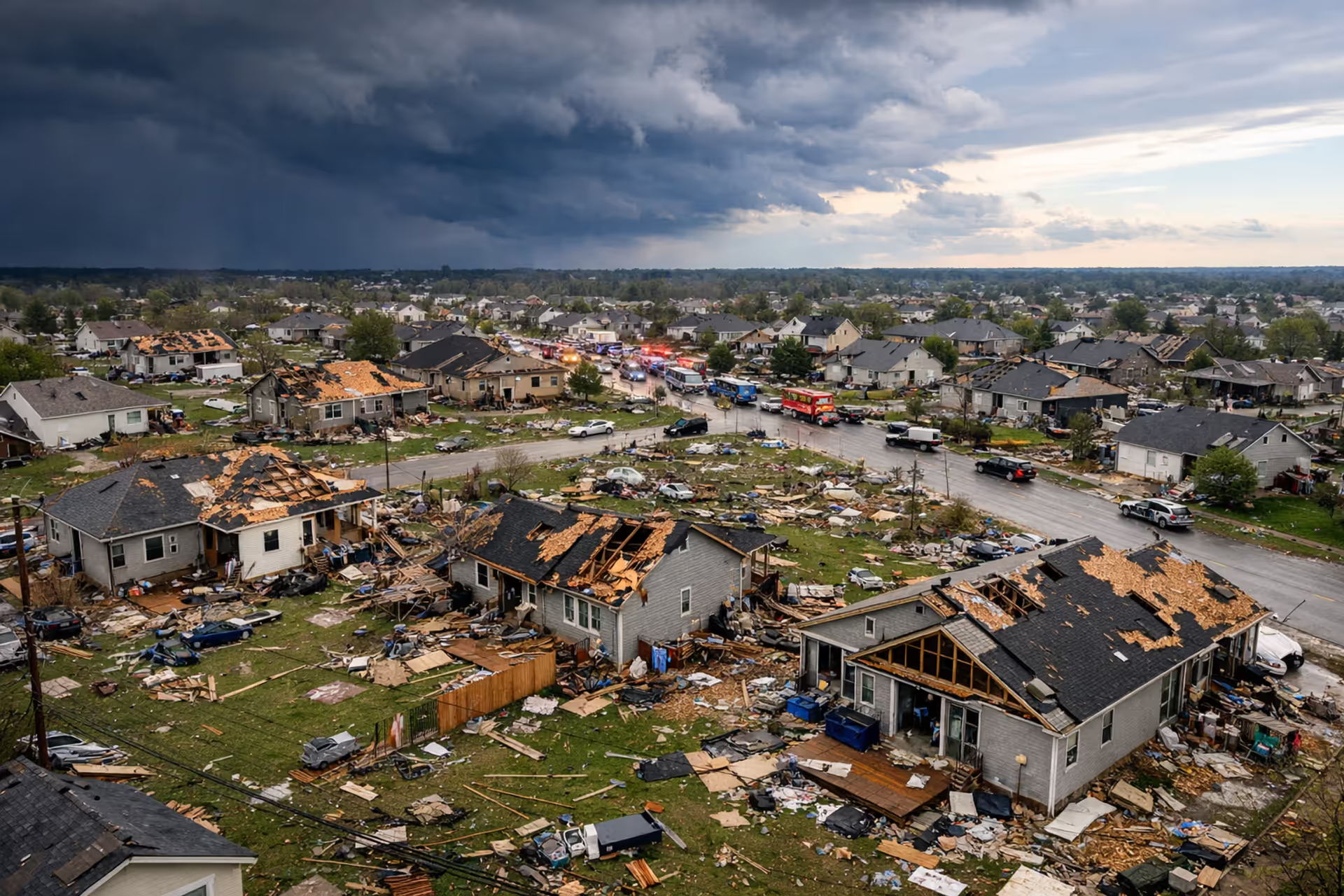
Tornadoes and severe thunderstorms fall squarely within covered perils under the storm peril homeowners insurance coverage guide framework. These catastrophic events generate wind speeds that exceed normal windstorm thresholds, but standard policies don't distinguish between "regular" wind and tornado-force winds for coverage purposes.
Total destruction from a tornado triggers your dwelling coverage limit—the maximum your policy will pay to rebuild your home. Partial damage gets evaluated based on repair costs, with your insurer paying the replacement cost (after depreciation is recovered) up to your policy limits.
One misconception: many homeowners believe tornado damage automatically qualifies for special treatment or higher limits. Your coverage remains bound by your policy's dwelling limit regardless of wind speed. If you're underinsured, even total tornado destruction won't provide enough funds to rebuild completely.
Common Storm Damage Exclusions That Catch Homeowners Off Guard
Understanding what's not covered prevents devastating surprises during the claims process. Insurers deny thousands of storm-related claims annually based on exclusions that homeowners either didn't know existed or misunderstood.
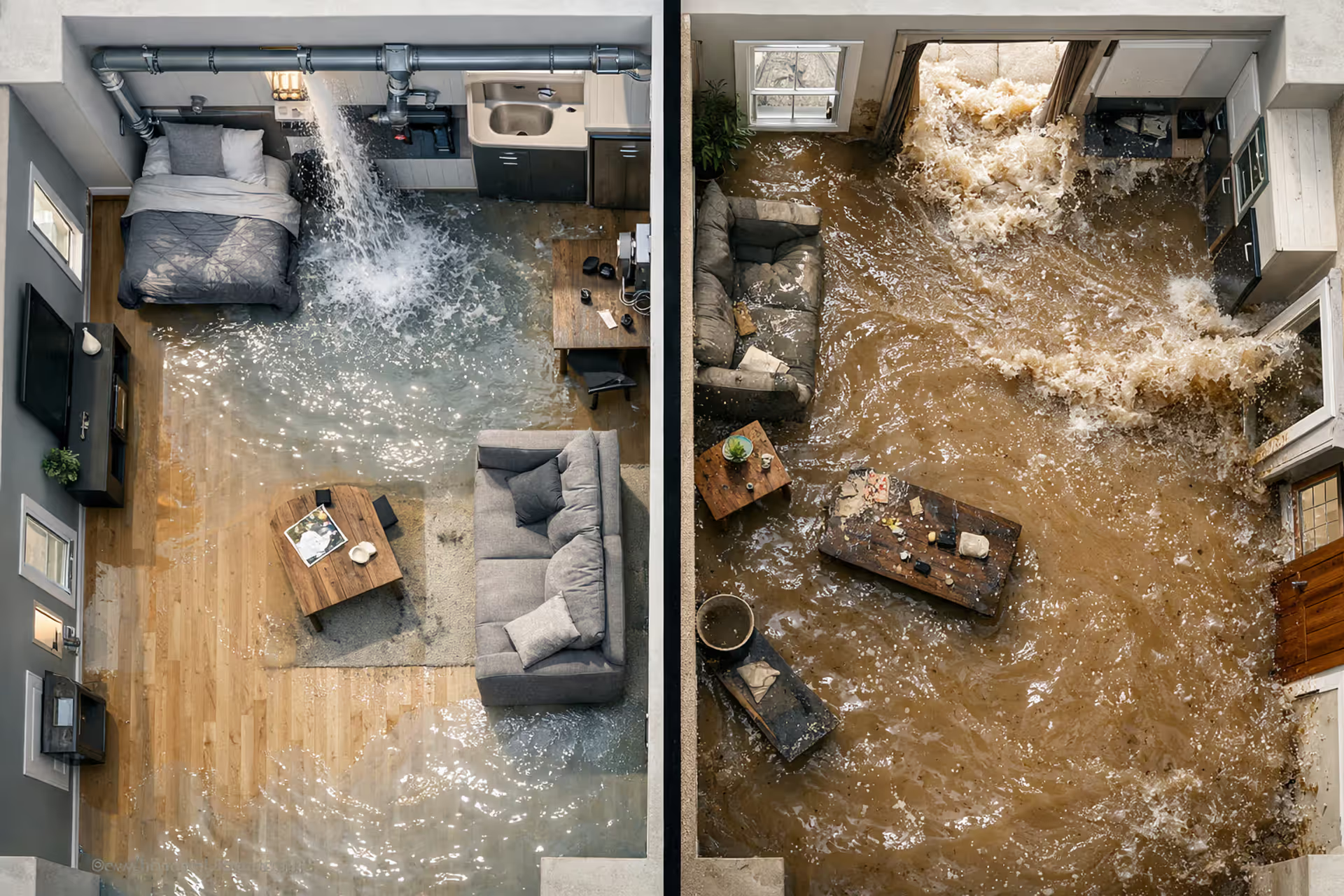
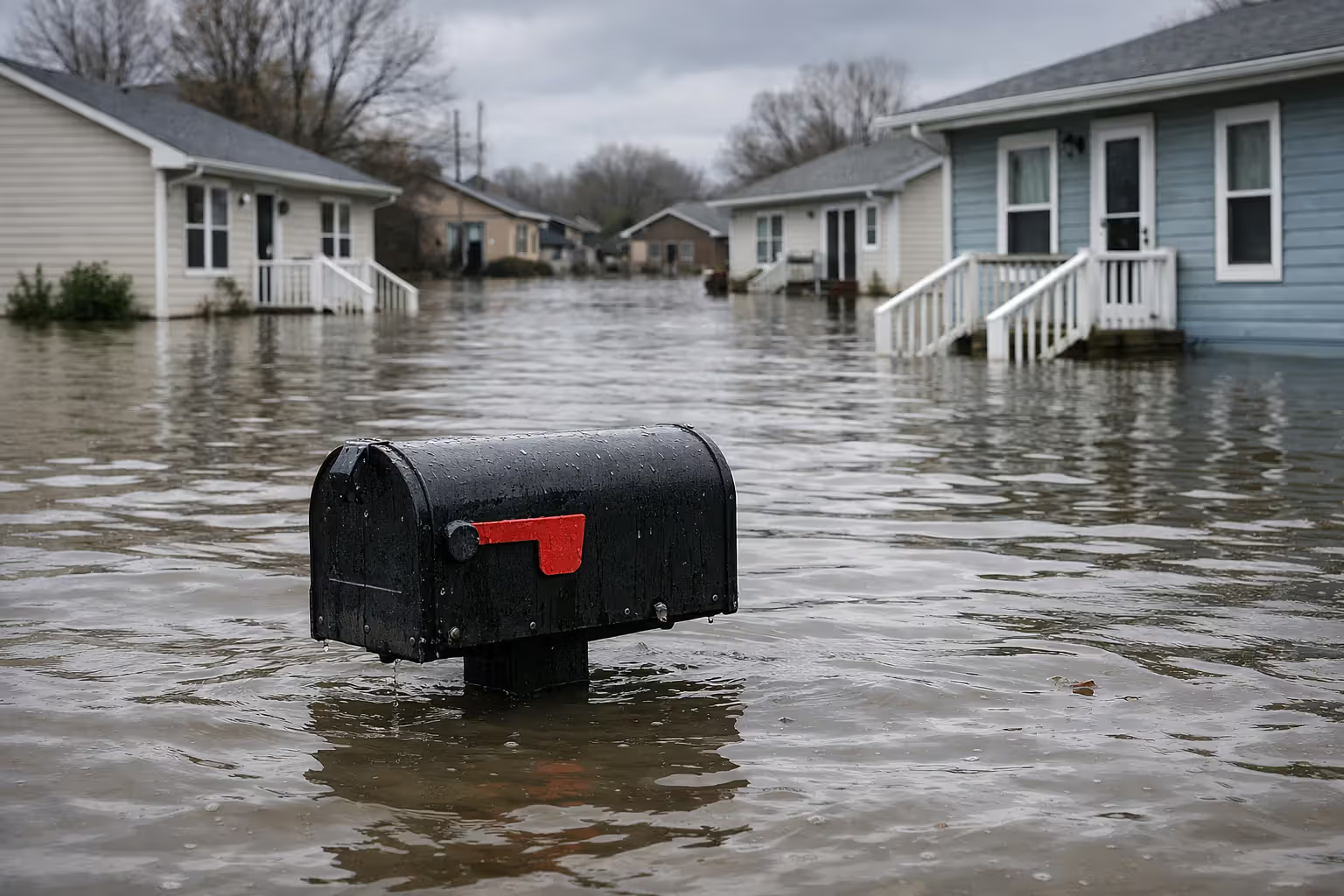
The flood exclusion represents the most significant gap in storm coverage. Standard homeowners policies explicitly exclude water damage from flooding, defined as surface water that accumulates and flows across the ground. When a storm's heavy rainfall overwhelms drainage systems and water enters your home from ground level, that's flood damage—not covered.
Storm surge from hurricanes falls under this flood exclusion. Even though hurricane winds may be covered, the wall of water pushed ashore by the storm isn't. This distinction devastated countless Gulf Coast homeowners who discovered their "hurricane damage" was actually classified as flood damage.
The water damage versus flood damage distinction requires careful attention when filing storm claim homeowners insurance policies guide processes. Water entering through a wind-damaged roof: covered. Water entering through foundation cracks due to hydrostatic pressure from saturated soil: excluded as flood. Water backing up through your sewer system during heavy rain: excluded unless you purchased a sewer backup endorsement.
Gradual damage and maintenance-related issues generate frequent claim denials. If your roof leaked during a storm because it was already deteriorated, your insurer will deny the claim based on lack of maintenance. Policies cover sudden and accidental damage, not the predictable results of deferred maintenance.
Ice dams present a gray area. These form when heat escaping through your roof melts snow, which refreezes at the eaves and forces water under shingles. Some policies exclude ice dam damage entirely. Others cover it but only if you've maintained adequate attic insulation—a maintenance requirement that shifts responsibility to the homeowner.
Earth movement exclusions eliminate coverage for landslides triggered by heavy rain. Even if a storm directly caused the ground to shift and damage your foundation, the earth movement exclusion typically applies. Earthquake insurance doesn't cover rain-induced landslides either, leaving homeowners without coverage options in many cases.
| Type of Storm Damage | Typically Covered | Usually Excluded | Additional Policy Needed |
| Wind damage to roof, siding, windows | Yes, under standard policy | Cosmetic damage, wear and tear | None, but check roof age limits |
| Hail damage to structure | Yes, subject to deductible | Pre-existing damage, roofs over age limit | Replacement cost endorsement for older roofs |
| Lightning strikes and fire | Yes, including power surge damage | Surge damage without direct strike evidence | Electronics/equipment floater for high-value items |
| Tornado destruction | Yes, full dwelling coverage applies | None, but limited by dwelling coverage amount | Increased dwelling limits if underinsured |
| Hurricane wind damage | Yes, often with separate higher deductible | Flood, storm surge, water intrusion from ground | Flood insurance (required for mortgaged coastal properties) |
| Flood and storm surge | No, explicitly excluded | All surface water intrusion | Flood insurance through NFIP or private carrier |
| Ice dams and frozen pipe bursts | Sometimes, with maintenance requirements | Damage from poor insulation or neglect | None, but maintain proper insulation |
| Fallen trees on structure | Yes, minus deductible | Tree removal without structure damage, landscaping | Debris removal endorsement for extended coverage |
| Detached garage/shed damage | Yes, typically 10% of dwelling coverage | Structures used for business | Increase other structures limit if needed |
How Windstorm Coverage Works in Hurricane-Prone and High-Risk States
Coastal and high-risk states impose special requirements that fundamentally change how windstorm coverage homeowners insurance policies function. If you live in Florida, Texas, Louisiana, North Carolina, South Carolina, or other hurricane-exposed areas, your policy likely includes provisions that don't exist in inland states.
Separate windstorm deductibles apply in these regions, typically calculated as a percentage of your dwelling coverage rather than a flat dollar amount. While your standard policy deductible might be $1,000 or $2,500, your windstorm deductible could be 2%, 5%, or even 10% of your dwelling coverage.
This percentage structure creates substantial out-of-pocket costs. On a home insured for $300,000 with a 5% windstorm deductible, you'll pay the first $15,000 of any hurricane or windstorm claim. Many homeowners discover this only after filing a claim, having never calculated the actual dollar amount their percentage deductible represents.
Windstorm deductible triggers vary by state and carrier. Some activate for named tropical storms and hurricanes only. Others apply to any windstorm event. Florida's system triggers hurricane deductibles based on National Hurricane Center declarations, creating a clear but sometimes controversial activation mechanism.
FAIR plans (Fair Access to Insurance Requirements) serve as insurers of last resort in high-risk coastal areas. When standard carriers refuse coverage, state-run FAIR plans provide basic protection—usually at higher premiums and with more limited coverage than standard policies. Texas operates the Texas Windstorm Insurance Association (TWIA) specifically for coastal properties, while Louisiana runs Louisiana Citizens.
These state programs typically cover only wind damage, requiring separate flood insurance and sometimes excluding certain perils that standard policies cover. Coverage limits may be lower than what you could obtain in the standard market, and claims handling can be slower during catastrophic events when thousands file simultaneously.
Homeowners in hurricane-prone regions should expect to pay windstorm deductibles that are substantially higher than their standard deductibles. The percentage-based structure means that as home values increase, so does your out-of-pocket exposure during major storms. Many families are financially unprepared for a $10,000 to $25,000 deductible, even when their claim is approved
— According to the Insurance Information Institute
Some insurers now require annual hurricane deductible payments per calendar year rather than per storm. If three hurricanes strike in one season, you might face three separate deductible payments under this structure. Other policies apply one deductible per hurricane season regardless of how many storms cause damage.
The storm risk homeowners insurance policies guide framework in these states also includes mandatory mitigation credits. Installing hurricane shutters, impact-resistant windows, or roof-to-wall reinforcement straps can reduce your premiums by 10% to 45%. These discounts partially offset the higher base premiums coastal residents face.
Filing a Storm Damage Claim: Step-by-Step Process and Documentation Tips
Proper claims handling begins before the adjuster arrives. Your actions in the first hours and days after storm damage directly impact claim approval and settlement amounts.
What to Do Immediately After Storm Damage
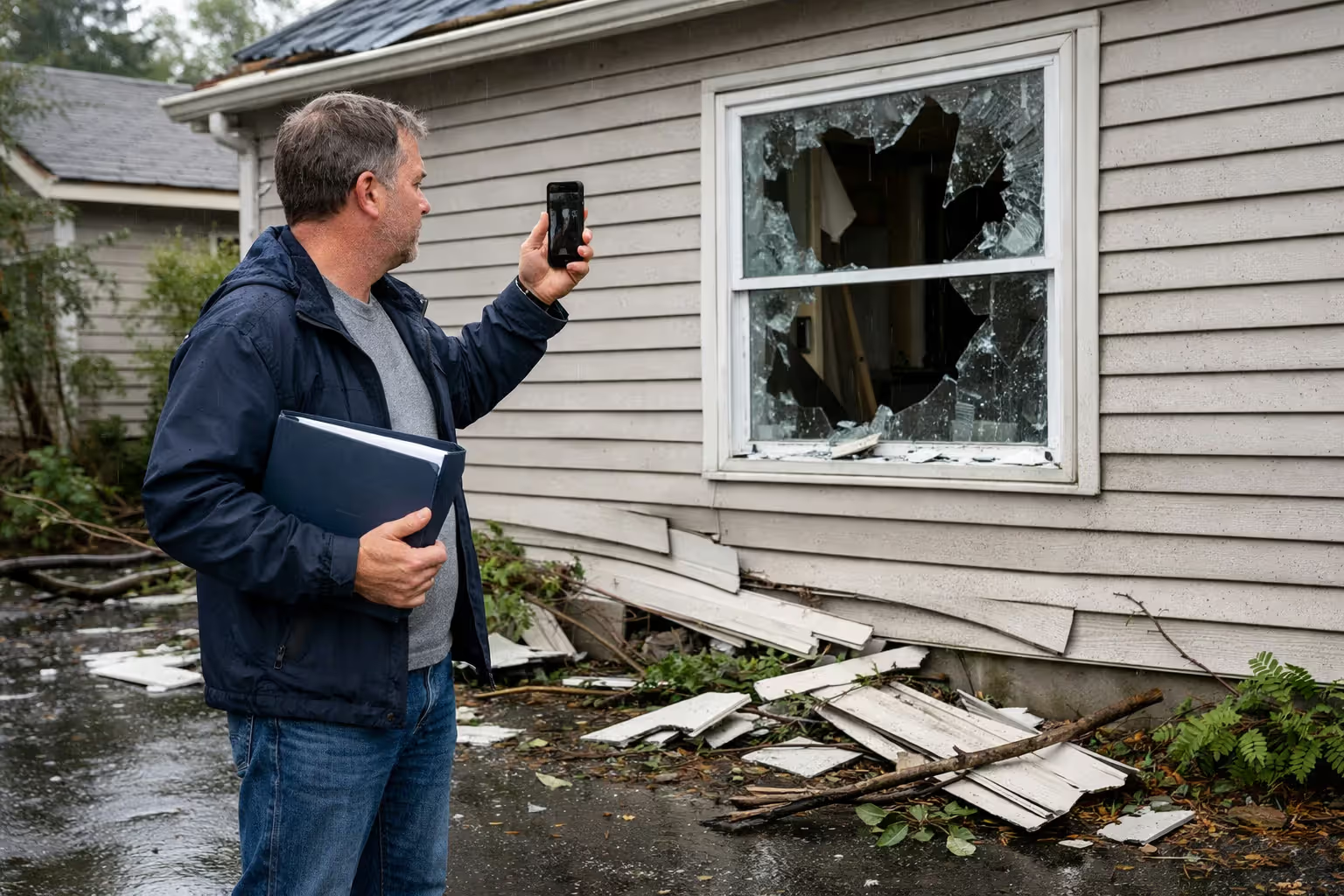
Safety takes priority, but once conditions permit, document everything before making repairs. Photograph and video all damage from multiple angles. Capture wide shots showing the overall scene and close-ups of specific damage. Date-stamp this evidence if possible.
Prevent further damage through reasonable temporary repairs. Your policy requires this, and failure to mitigate can reduce your settlement. Tarping a damaged roof, boarding broken windows, or placing buckets under leaks qualifies as reasonable mitigation. Save all receipts—these temporary repair costs are typically reimbursable.
Contact your insurance company within 24 to 48 hours. Most policies require "prompt" notification, and delays can complicate your claim. Some insurers offer extended reporting periods after catastrophic events, but don't rely on this—report quickly.
Create a detailed inventory of damaged personal property. List each item with its approximate age, original cost, and current condition. For significant items, gather purchase receipts, credit card statements, or online order confirmations. This documentation becomes critical when your adjuster calculates actual cash value versus replacement cost.
Don't discard damaged items until your adjuster photographs them. Insurers need to verify damage before authorizing payment. If health or safety concerns require immediate disposal, photograph items thoroughly before removal.
Author: Lauren Bishop;
Source: sixth-fleet.com
Evidence Your Insurance Adjuster Needs to See
Adjusters evaluate causation, extent of damage, and whether pre-existing conditions contributed to losses. Providing comprehensive evidence streamlines this process and supports full settlement.
Before-storm photographs prove your home's condition prior to damage. Many homeowners lack these, but check your phone's photo library, real estate listings from when you purchased, or social media posts. Even photos showing your home in the background of family pictures help establish pre-storm condition.
Contractor estimates from licensed professionals carry weight with adjusters. Get at least two written estimates detailing repair scope and costs. Ensure contractors itemize materials and labor separately and identify code upgrade requirements that might qualify for additional coverage under building code endorsements.
Weather data from the National Weather Service confirms storm timing and intensity. Adjusters access this information, but you can strengthen your claim by providing local weather station data, particularly for disputed perils like lightning or hail.
Maintenance records demonstrate proper upkeep. If your insurer questions whether damage resulted from neglect, receipts for roof inspections, gutter cleaning, or HVAC maintenance prove you maintained your property responsibly.
The storm claim homeowners insurance policies guide process requires patience during catastrophic events. After hurricanes or widespread tornado outbreaks, adjusters become overwhelmed with claims. Your individual claim might not receive attention for weeks. Document everything thoroughly so that when your adjuster finally arrives, you can present a complete, organized claim package.
When You Need Additional Storm Coverage Beyond Your Base Policy
Standard homeowners insurance leaves significant gaps that additional policies or endorsements must fill. Identifying these gaps before storms strike prevents financial devastation.
Flood insurance stands as the most critical addition for storm risk homeowners insurance policies guide protection. The National Flood Insurance Program (NFIP) provides coverage up to $250,000 for dwelling and $100,000 for contents. Private flood insurance has emerged as an alternative, sometimes offering higher limits and broader coverage at competitive prices.
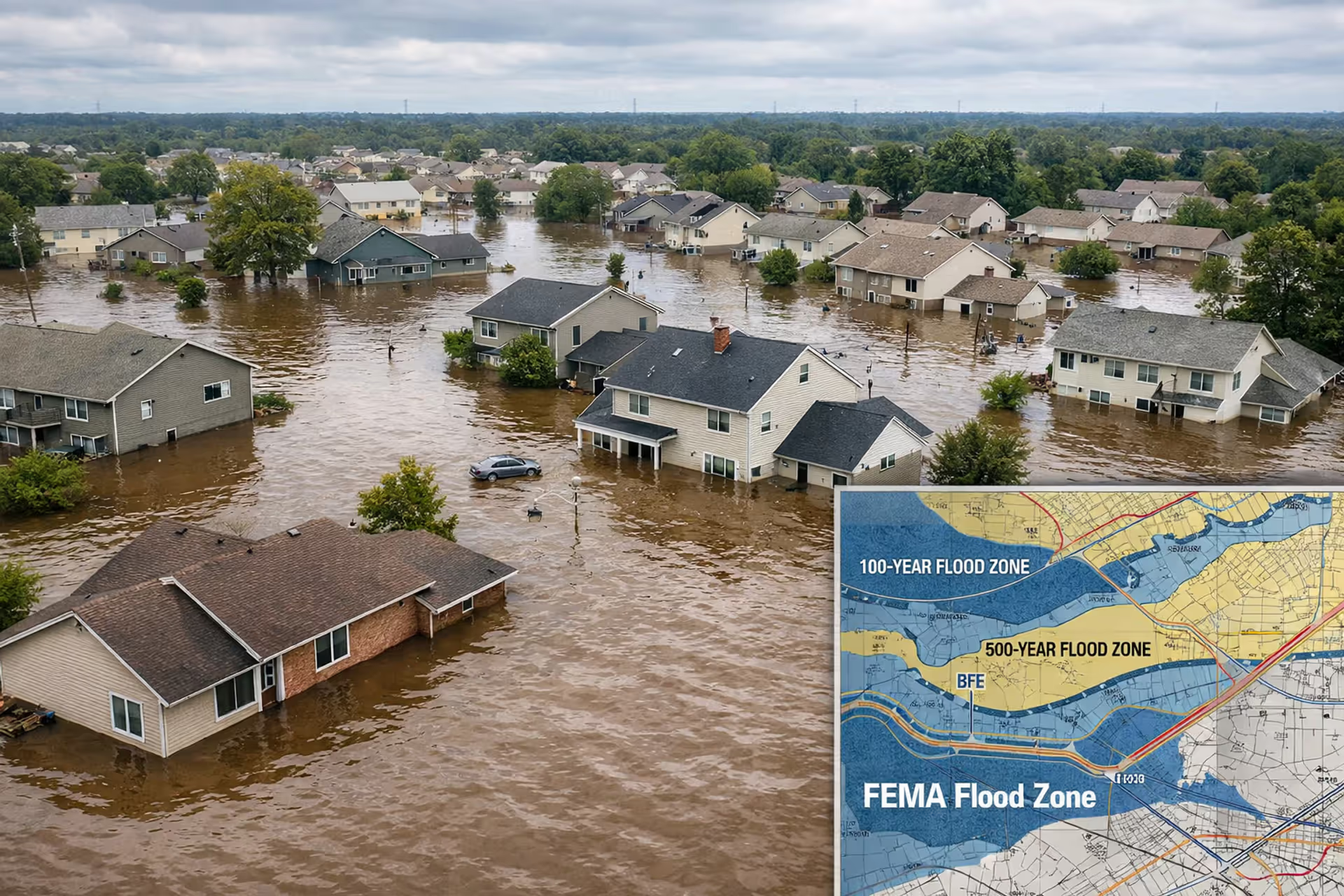
Flood insurance requires a 30-day waiting period before coverage begins. You cannot purchase it as a hurricane approaches and expect immediate protection. Mortgage lenders require flood insurance for properties in Special Flood Hazard Areas (100-year floodplains), but many homeowners outside these zones remain uninsured despite substantial flood risk.
Author: Lauren Bishop;
Source: sixth-fleet.com
Equipment breakdown endorsements cover mechanical damage to HVAC systems, water heaters, and appliances from power surges or lightning-related electrical issues. Standard policies may cover fire damage from electrical problems but not the equipment itself.
Ordinance or law coverage pays for code upgrades required during repairs. After storm damage, local building codes might require you to upgrade electrical systems, add hurricane straps, or meet new wind-resistance standards. Without this endorsement, you'll pay these upgrade costs out-of-pocket even though your dwelling coverage would have been sufficient for a like-for-like rebuild.
Detached structure coverage typically equals 10% of your dwelling coverage. If your $300,000 home policy provides $30,000 for detached structures, but your detached garage and shed together are worth $50,000, you're underinsured. Increasing this limit costs relatively little but prevents significant gaps.
Umbrella liability policies don't directly cover storm damage to your property, but they protect you if storm debris from your property damages a neighbor's home or injures someone. If your tree falls on a neighbor's house and they sue claiming you negligently maintained it, umbrella coverage provides defense and settlement funds beyond your homeowners liability limits.
Scheduled personal property endorsements cover high-value items like jewelry, art, or collectibles that exceed standard policy sub-limits. Storm damage coverage homeowners insurance policies typically cap jewelry at $1,500 and electronics at $2,500 without scheduling. If a tornado destroys your $10,000 engagement ring, you'll receive only $1,500 unless you scheduled it separately.
How Much Storm Damage Coverage Do You Actually Have? Reading Your Policy Limits
Understanding your coverage limits prevents underinsurance surprises when you file a claim. Many homeowners carry insufficient coverage without realizing it until disaster strikes.
Dwelling coverage represents the maximum your insurer will pay to rebuild your home. This should equal your home's rebuilding cost—not its market value. Market value includes land, which doesn't need insurance. Rebuilding cost reflects construction expenses at current material and labor prices.
Inflation has dramatically increased construction costs. Homes insured at $250,000 three years ago might require $300,000 to rebuild today. Annual policy reviews ensure your dwelling coverage keeps pace with construction cost increases. Many insurers offer inflation guard endorsements that automatically increase your coverage by a set percentage annually.
Actual cash value versus replacement cost determines how much you'll actually receive. Actual cash value pays replacement cost minus depreciation. For a 15-year-old roof, you might receive only 40% of replacement cost under ACV. Replacement cost coverage pays to replace items with new equivalents of similar quality, recovering depreciation after repairs are completed.
Most policies pay ACV initially, then reimburse depreciation after you complete repairs and submit receipts. This two-stage payment process catches homeowners off guard. You'll need to fund the depreciation gap upfront, then recover it later—requiring access to savings or contractor financing.
Loss of use coverage pays living expenses when storm damage makes your home uninhabitable. This includes hotel costs, restaurant meals, and storage fees. Standard policies provide 20% to 30% of your dwelling coverage for loss of use. On a $300,000 dwelling policy, you'd have $60,000 to $90,000 for temporary living expenses.
This sounds generous until you calculate actual costs. At $150 per night for hotels and $75 per day for meals, a family of four spends roughly $300 daily—$9,000 monthly. If repairs take six months, you'll exhaust $54,000 of your loss of use coverage. For extended displacement after catastrophic damage, even generous limits can prove insufficient.

Author: Lauren Bishop;
Source: sixth-fleet.com
Personal property coverage typically equals 50% to 70% of dwelling coverage. A $300,000 dwelling policy provides $150,000 to $210,000 for belongings. Conduct a home inventory to verify this amount adequately covers your possessions. Many families own more than they realize, particularly when accounting for clothing, kitchen items, linens, and accumulated household goods.
Deductibles directly reduce your claim payment. With a $2,500 deductible, $10,000 in storm damage yields a $7,500 check. Percentage-based windstorm deductibles, as discussed earlier, can create much larger out-of-pocket costs. Review both your standard deductible and any separate windstorm, hurricane, or hail deductibles your policy imposes.
FAQ: Storm Damage and Homeowners Insurance Policies
Understanding Your Storm Protection Before the Next Weather Event
Storm damage represents one of the most common and costly homeowners insurance claims. The difference between adequate protection and financial disaster often comes down to understanding your policy's specific terms before you need to file a claim.
Review your policy annually, paying particular attention to dwelling coverage limits, deductibles, and any separate windstorm provisions. Calculate your actual out-of-pocket exposure under percentage-based deductibles. Verify that your dwelling coverage reflects current construction costs, not outdated values from years ago.
Purchase flood insurance if you face any flood risk—not just if your mortgage lender requires it. The 30-day waiting period means you must plan ahead rather than react to approaching storms. Consider additional endorsements for code upgrades, equipment breakdown, and scheduled high-value personal property.
Document your home's condition through photographs and videos during calm weather. This pre-storm evidence proves invaluable when adjusters evaluate whether damage was storm-related or pre-existing. Maintain records of roof inspections, repairs, and routine maintenance to defend against maintenance-based claim denials.
After storm damage occurs, act quickly to document losses, prevent further damage, and notify your insurer. The quality of your documentation and speed of your response directly influence claim outcomes. Understanding these processes before disaster strikes positions you to navigate the claims process effectively when you're already stressed by property damage and displacement.
Storm coverage complexities vary dramatically by location, with coastal homeowners facing separate deductibles and coverage restrictions that inland residents never encounter. Know your state's specific requirements and limitations. Your policy provides substantial protection, but only if you understand its terms, maintain adequate limits, and supplement it with additional coverage where gaps exist.