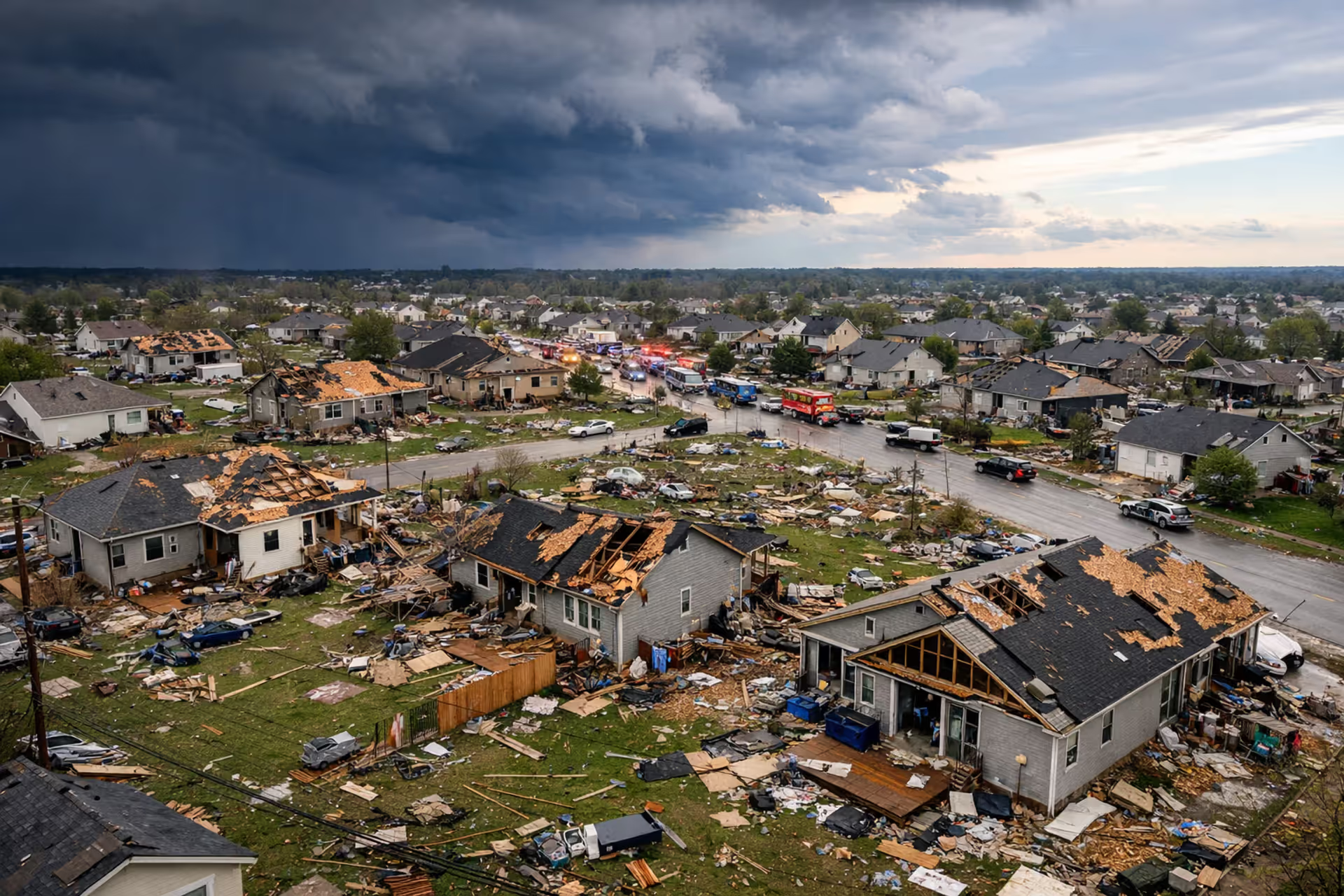
Aerial view of tornado-damaged residential neighborhood with destroyed roofs and scattered debris under clearing stormy sky
Does Home Insurance Cover Tornado Damage? Coverage Explained

Content
Standard homeowners insurance policies treat tornadoes as windstorm events, which are explicitly covered perils in most contracts. Your policy breaks down tornado damage insurance coverage into several distinct categories.
Dwelling coverage protects the physical structure of your home, including the roof, walls, foundation, and attached structures like garages. When a tornado rips off your roof or demolishes exterior walls, this coverage pays for repairs or reconstruction up to your policy limit. Most policies cover dwelling damage at replacement cost, meaning you'll receive enough to rebuild without depreciation factored in.
Personal property coverage extends to belongings inside your home that are damaged or destroyed by tornado winds. This includes furniture, electronics, clothing, and appliances. Unlike dwelling coverage, personal property is often covered at actual cash value unless you've purchased replacement cost coverage as an endorsement. The difference can be substantial—a five-year-old television might cost $800 to replace but have an actual cash value of only $300.
Other structures coverage protects detached buildings on your property, such as sheds, detached garages, fences, and gazebos. This coverage typically equals 10% of your dwelling coverage limit. If your home is insured for $300,000, you'd have $30,000 available for other structures damaged by tornado peril.
The tornado peril homeowners insurance coverage guide built into your policy also includes additional living expenses (ALE) or loss of use coverage. When your home becomes uninhabitable due to tornado damage, this pays for hotel stays, restaurant meals, and other costs above your normal living expenses while repairs are completed.
What Tornado Damage Is and Isn't Covered by Your Policy
Understanding the boundaries of windstorm damage coverage homeowners insurance policies provide prevents surprises during the claims process.
Covered: Wind Damage to Roof, Walls, and Structure
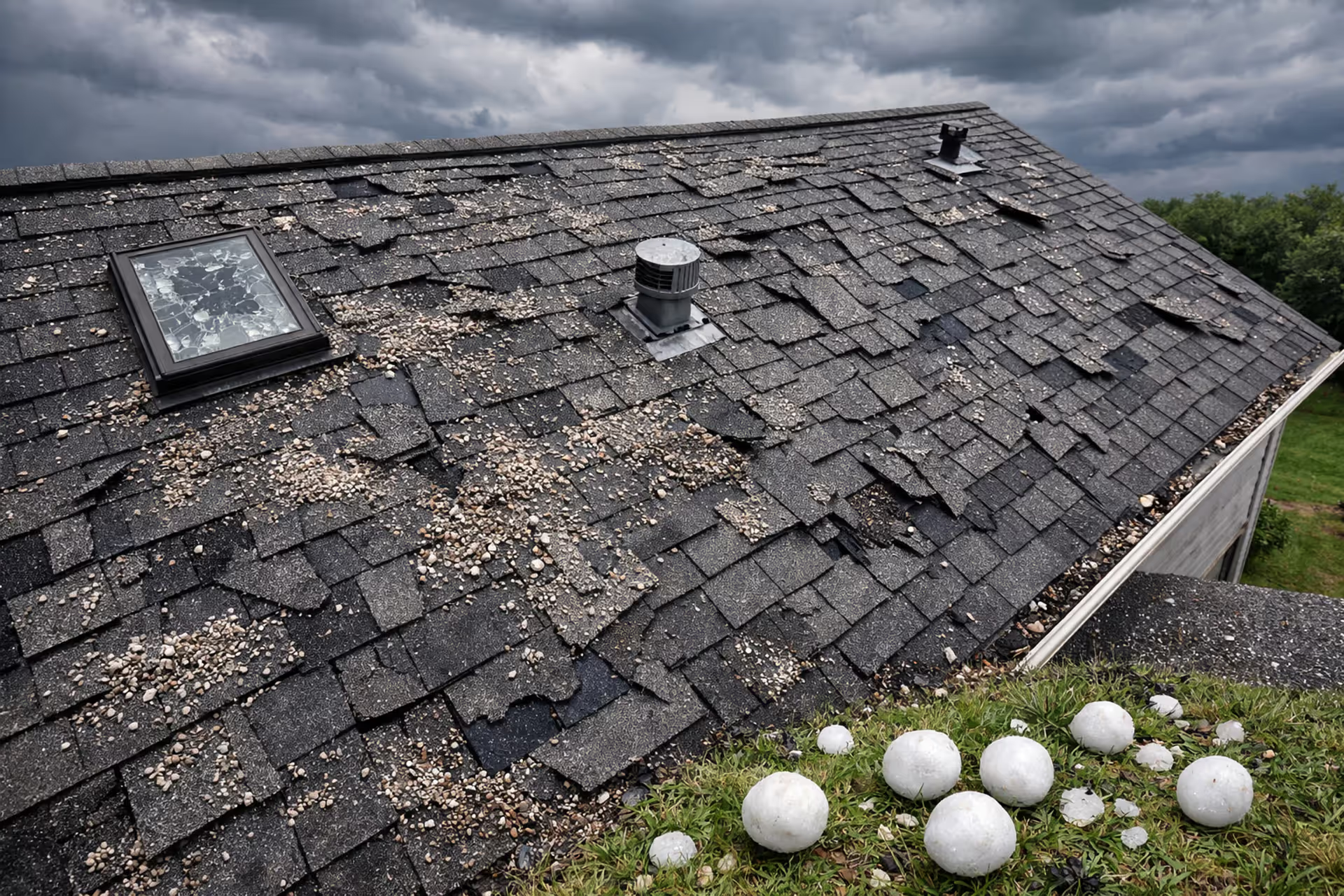
Direct wind damage from tornado forces receives full coverage under standard policies. This includes torn-off shingles, collapsed walls, broken windows from wind pressure, damaged siding, and structural compromise from extreme winds. If a tornado's rotating winds cause the damage, your policy responds.
Wind-driven rain that enters through tornado-created openings also qualifies as covered damage. When tornado winds break a window and rain subsequently damages your flooring or furniture, that's considered part of the windstorm event.
Covered: Debris Removal and Temporary Living Expenses
Debris removal coverage pays for clearing fallen trees, destroyed structures, and scattered belongings from your property. Standard policies typically include debris removal up to 5% of the dwelling coverage limit, with an additional $1,000 per tree for removal of fallen trees from the dwelling or other insured structures.
Temporary living expenses become critical when tornadoes render homes uninhabitable. Your policy covers reasonable hotel costs, increased food expenses, pet boarding, and even storage fees for salvaged belongings. This coverage continues until your home is repaired or you reach your policy limit—typically 20-30% of your dwelling coverage.
Not Covered: Flood Damage from Tornado-Related Rain
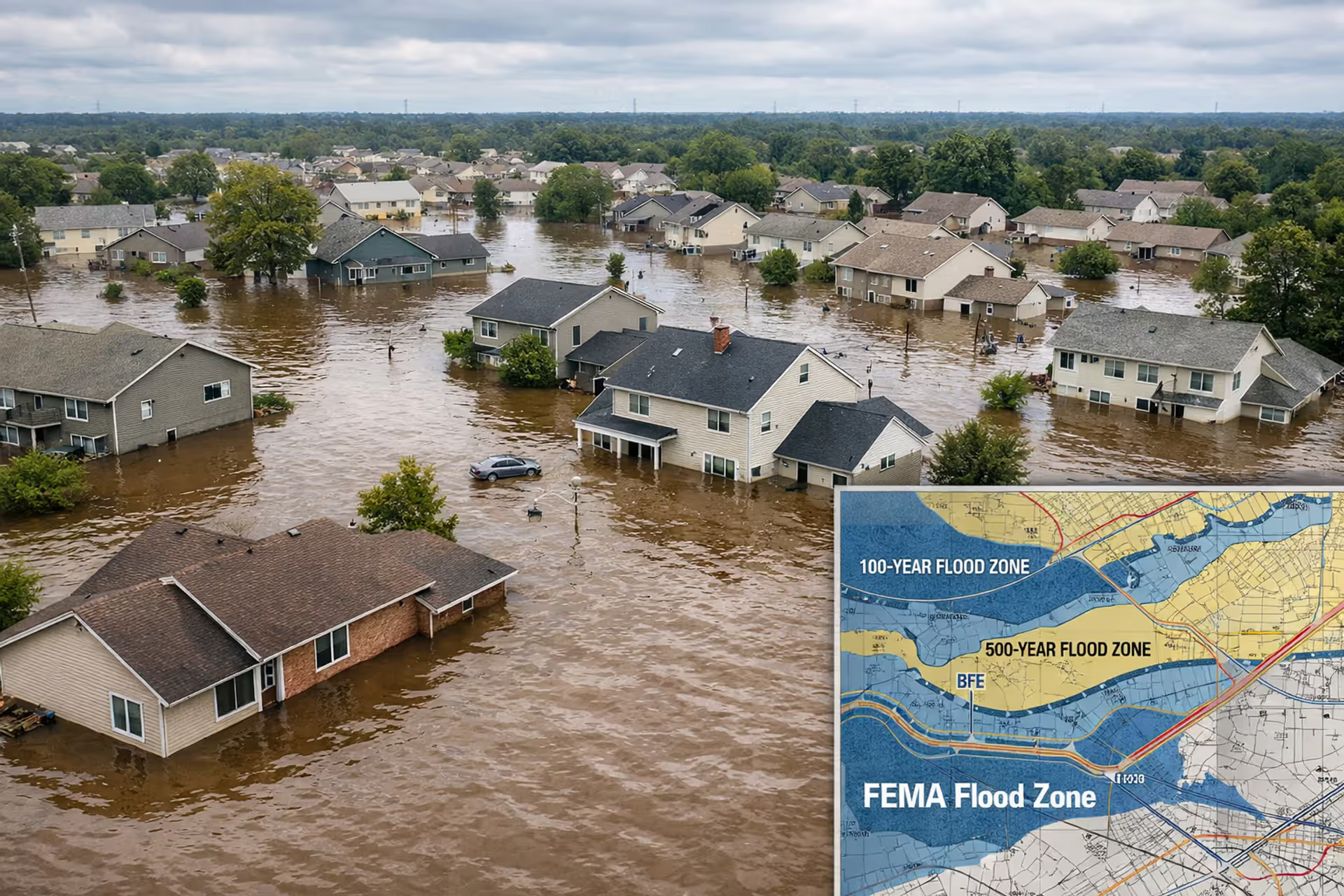
Standard homeowners policies exclude flood damage, even when tornadoes cause the flooding. If tornado-related rainfall overwhelms drainage systems or if the tornado damages levees causing flooding, you need separate flood insurance through the National Flood Insurance Program or private insurers.
This distinction creates confusion because wind-driven rain entering through tornado damage is covered, but rising water from any source is not. A basement flooded by groundwater during a tornado requires flood insurance, while water entering through a tornado-damaged roof falls under your homeowners policy.
Not Covered: Vehicle Damage and Landscaping Limits
Author: Lauren Bishop;
Source: sixth-fleet.com
Vehicles damaged by tornadoes require comprehensive auto insurance coverage, not homeowners insurance. Your home policy won't pay for a car crushed by tornado debris or blown into a ditch.
Landscaping coverage comes with strict limits. Most policies cap tree, shrub, and plant coverage at $500 per item and $5,000 total. A mature oak tree worth $15,000 that's destroyed by a tornado might yield only $500 in insurance proceeds. Policies also typically exclude landscaping damage caused by wind alone—only coverage for trees that damage insured structures applies.
Tornado Damage Coverage Comparison
| Damage Scenario | Covered? | Notes |
| Roof torn off by tornado winds | Yes | Full dwelling coverage applies |
| Windows shattered by wind pressure | Yes | Covered under dwelling and sometimes personal property |
| Water damage from rain through tornado-damaged roof | Yes | Considered part of windstorm event |
| Basement flooding from heavy tornado rainfall | No | Requires separate flood insurance |
| Detached garage destroyed | Yes | Covered under other structures (typically 10% of dwelling limit) |
| Furniture damaged by wind-driven debris | Yes | Personal property coverage applies |
| Tree removal from yard (not on structure) | Limited | Usually $500-$1,000 per tree, $5,000 maximum |
| Vehicle crushed by tornado debris | No | Requires comprehensive auto insurance |
| Hotel stay while home is uninhabitable | Yes | Additional living expenses coverage |
| Fence blown down | Yes | Other structures coverage applies |
Windstorm Deductibles vs. Standard Deductibles: What You'll Pay Out of Pocket
Homeowners insurance policies often impose special deductibles for windstorm damage that differ significantly from your standard deductible.
Standard deductibles are flat dollar amounts—commonly $500, $1,000, or $2,500. You pay this fixed amount before insurance coverage begins, regardless of the total damage.
Windstorm deductibles frequently use percentage-based calculations in tornado-prone regions. A 2% windstorm deductible on a home insured for $250,000 means you pay the first $5,000 of tornado damage costs. For a $400,000 home, that same 2% deductible equals $8,000 out of pocket.
Percentage-based deductibles range from 1% to 5% depending on your location and insurer. Coastal areas vulnerable to hurricanes commonly see 2-5% windstorm deductibles, while Tornado Alley states might have 1-2% deductibles specifically for wind and hail claims.
Some states regulate windstorm deductibles. Texas, for example, allows percentage deductibles only in certain coastal counties. Oklahoma restricts when insurers can apply percentage deductibles for wind and hail. Check your state's insurance department regulations to understand what applies in your area.
The financial impact matters tremendously. A homeowner with $75,000 in tornado damage and a $1,000 standard deductible pays $1,000 out of pocket. That same homeowner with a 2% windstorm deductible on a $300,000 dwelling pays $6,000—a sixfold difference.
You can sometimes choose your deductible structure. Opting for a flat deductible instead of a percentage-based one increases your premium but caps your out-of-pocket exposure. For homeowners on tight budgets, this trade-off deserves careful consideration.

Author: Lauren Bishop;
Source: sixth-fleet.com
Filing a Tornado Damage Claim: Step-by-Step Process
The tornado claim homeowners insurance policies guide built into your contract establishes specific requirements and timelines that affect your recovery.
Document Damage Immediately with Photos and Video
Before touching anything, create a comprehensive visual record. Photograph damage from multiple angles, capturing wide shots showing context and close-ups revealing details. Video walkthroughs provide additional documentation that photos might miss.
Document every damaged item, even if it seems minor. That cracked window trim or small roof leak can indicate larger structural problems. Take photos of damaged belongings before moving them, including serial numbers and brand labels when possible.
Create an inventory list matching your visual documentation. Note the item, purchase date (if known), estimated value, and damage extent. This list becomes your roadmap during the claims process.
Contact Your Insurance Company Within Required Timeframe
Most policies require "prompt" or "immediate" notice of loss, though specific timeframes vary. Some insurers specify 48-72 hours, while others use vaguer language. Contact your insurer within 24 hours of the tornado to ensure compliance.
When calling, you'll receive a claim number and initial guidance. The insurer will ask basic questions about damage extent and whether the home is habitable. Be honest but avoid speculating about damage you haven't fully assessed.
Ask about emergency repairs. Most policies allow reasonable temporary repairs to prevent further damage—boarding up broken windows, tarping damaged roofs, or securing exposed areas. Keep all receipts, as these costs are typically reimbursable.
Working with Adjusters and Getting Repair Estimates
The insurance company assigns an adjuster to inspect your property and estimate repair costs. This typically happens within 3-7 days of filing your claim, though major tornado outbreaks can delay the process.
During the adjuster's visit, walk through the damage together. Point out everything documented in your photos and inventory. Adjusters are professionals, but they can miss damage, especially in attics, crawl spaces, or other less accessible areas.
The adjuster's estimate may differ from contractor quotes you obtain. Insurance estimates often use standard pricing that doesn't reflect local market conditions, especially after disasters when contractor demand spikes. You're entitled to hire your own contractor and negotiate with the insurer if their estimate falls short.
The biggest mistake I see homeowners make is accepting the first settlement offer without getting independent contractor estimates.Insurance adjusters work for the insurance company. Getting your own estimates gives you negotiating power and often reveals damage the adjuster missed. I've seen initial settlement offers increase by 40-50% after homeowners presented thorough contractor assessments
— Jennifer Martinez
Tornado Risk Zones: Does Your Location Affect Coverage or Premiums?
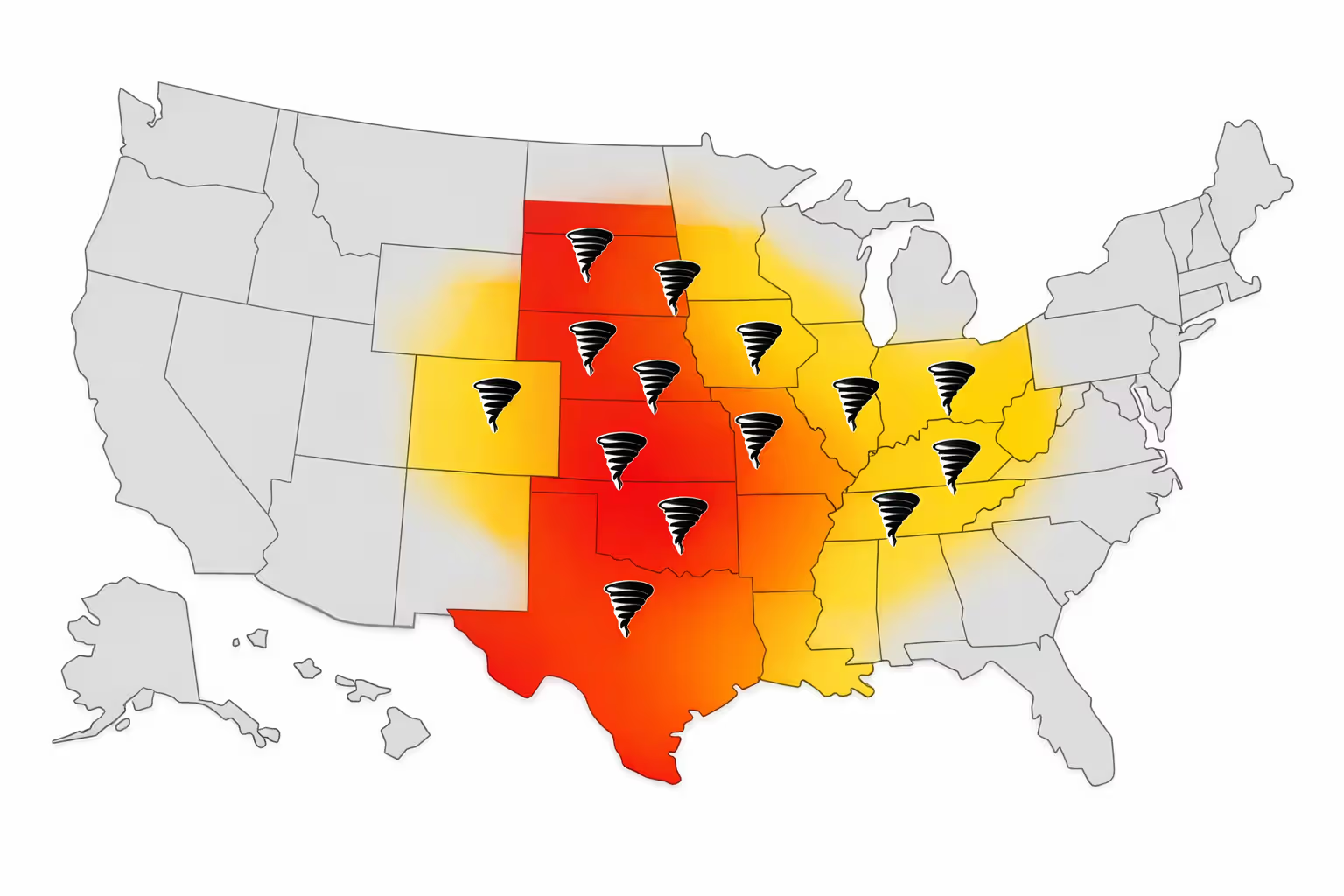
Geography significantly influences tornado risk homeowners insurance policies pricing and availability. Tornado Alley—spanning parts of Texas, Oklahoma, Kansas, Nebraska, and South Dakota—experiences the highest tornado frequency in the United States, but tornado risk extends far beyond these states.
High-risk tornado states include Alabama, Mississippi, Arkansas, Missouri, Iowa, and Illinois. These areas see frequent tornadoes, including violent EF4 and EF5 events. Insurers price policies in these regions with tornado frequency and severity in mind.
Premiums in tornado-prone areas run 15-40% higher than comparable homes in low-risk regions. An Oklahoma City homeowner might pay $2,200 annually for coverage that costs $1,500 in Vermont. The difference reflects not just tornado risk but also hail damage, which often accompanies severe thunderstorms that produce tornadoes.
Some insurers limit coverage availability in highest-risk areas. After significant tornado losses, companies may stop writing new policies in certain ZIP codes or non-renew existing customers. This creates insurance deserts where homeowners struggle to find affordable coverage.
State insurance departments often intervene when availability problems emerge. Fair Access to Insurance Requirements (FAIR) Plans exist in some states as insurers of last resort, though coverage is typically more expensive and limited compared to standard market policies.
Your specific location within a state matters too. Homes in open plains face different risk profiles than those in forested areas or urban centers. Insurers use sophisticated modeling that considers topography, historical tornado tracks, and building density when calculating premiums.
Author: Lauren Bishop;
Source: sixth-fleet.com
Common Mistakes When Filing Tornado Claims
Avoiding these errors can save thousands of dollars and significant stress during an already difficult time.
Delaying claim filing. Some homeowners wait to file claims, hoping to assess all damage first. This backfires when hidden damage emerges weeks later and insurers question whether it resulted from the tornado or subsequent events. File immediately, even if you're still discovering damage.
Inadequate damage documentation. Relying on memory or minimal photos weakens your claim. Insurers need proof of damage and pre-loss condition. Take hundreds of photos rather than dozens. Err on the side of over-documentation.
Making permanent repairs before adjuster inspection. While emergency repairs are necessary and covered, completing permanent repairs before the adjuster sees the damage can void coverage for those items. The insurer needs to verify the damage and its cause. Temporary measures only until the adjuster completes inspection.
Accepting the first settlement offer without review. Initial offers frequently underestimate damage, particularly for less visible structural issues. Get independent contractor estimates before accepting any settlement. You can negotiate with insurers when documentation supports higher costs.
Not understanding replacement cost versus actual cash value. Policies with replacement cost coverage for personal property require you to actually replace items to receive full value. If you accept the actual cash value payment without replacing the item, you forfeit the additional replacement cost benefit. Read your policy's requirements carefully.
Failing to track all expenses. Additional living expenses require documentation. Keep every hotel receipt, restaurant bill, and mileage log. Without receipts, insurers may deny or reduce reimbursement for temporary living costs.
Missing policy deadlines. Many policies require sworn proof of loss statements within 60 days of the insurer's request. Missing this deadline can jeopardize your entire claim. Mark all deadlines in multiple places and set reminders.

Author: Lauren Bishop;
Source: sixth-fleet.com
FAQ: Tornado Coverage Questions Homeowners Ask
Protecting Your Home and Financial Future
Tornado damage falls squarely within standard homeowners insurance coverage, but understanding the specifics separates smooth recovery from financial struggle. Your policy covers wind damage to structures and belongings, debris removal, and temporary living costs while excluding flood damage and imposing special windstorm deductibles in many regions.
The claims process demands immediate action, thorough documentation, and persistent follow-through. Photograph everything, file quickly, and don't accept initial settlement offers without independent verification. Remember that adjusters work for insurance companies—protecting your interests requires you to gather evidence supporting full recovery costs.
Review your policy now, before tornado warnings sound. Verify your dwelling coverage limit reflects current replacement costs, understand whether you have percentage-based windstorm deductibles, and confirm you carry replacement cost coverage for personal property. These details matter enormously when you're rebuilding after a tornado tears through your neighborhood.
Consider flood insurance if you live anywhere near Tornado Alley or other high-risk areas. The gap between covered wind-driven rain and excluded flooding has bankrupted homeowners who assumed their tornado coverage was comprehensive.
Your home represents your largest investment and your family's shelter. Understanding exactly what protection your insurance provides—and what gaps exist—lets you make informed decisions about additional coverage, emergency funds, and risk management. When tornadoes strike, knowledge translates directly into faster recovery and financial stability.