Aerial view of a flooded suburban neighborhood with residential houses partially submerged in floodwater
Flood Insurance Requirements for Homeowners With Federal Mortgages

Content
Figuring out your flood insurance obligations? It's messier than you'd think. Three things matter most: where FEMA's maps place your property, whether you've got a federally backed mortgage, and what your specific lender demands. Some homeowners have zero choice in the matter. Others fall into this weird middle ground where nobody's forcing them to buy coverage, but skipping it could wreck them financially.
Here's what makes this confusing: your regular homeowners policy won't pay a dime for flood damage. Not one cent. That surprises people when they're standing in two feet of water, wondering why their insurance company just denied their claim. Getting ahead of this keeps you compliant with federal requirements and protects you from losses that can hit six figures.
When Federal Law Mandates Flood Insurance for Your Property
The National Flood Insurance Act draws bright lines around who must buy coverage. You're legally required to carry flood insurance when both these conditions exist: your property sits inside what FEMA calls a Special Flood Hazard Area, and you've financed your home through a federally regulated or federally insured lender. When these two factors overlap, mandatory flood insurance mortgage rules kick in—affecting millions of American property owners.
High-Risk FEMA Flood Zones That Trigger Requirements
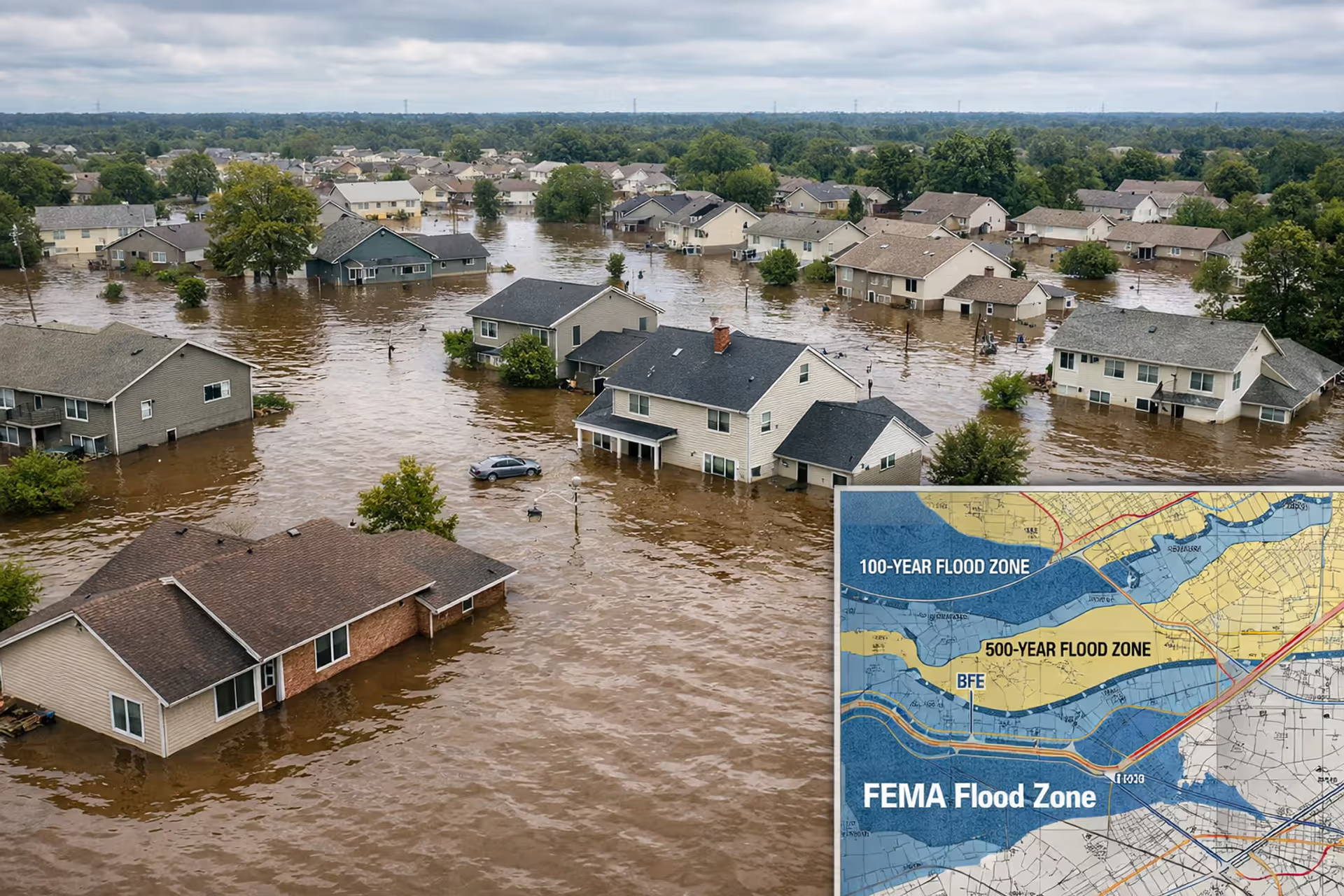
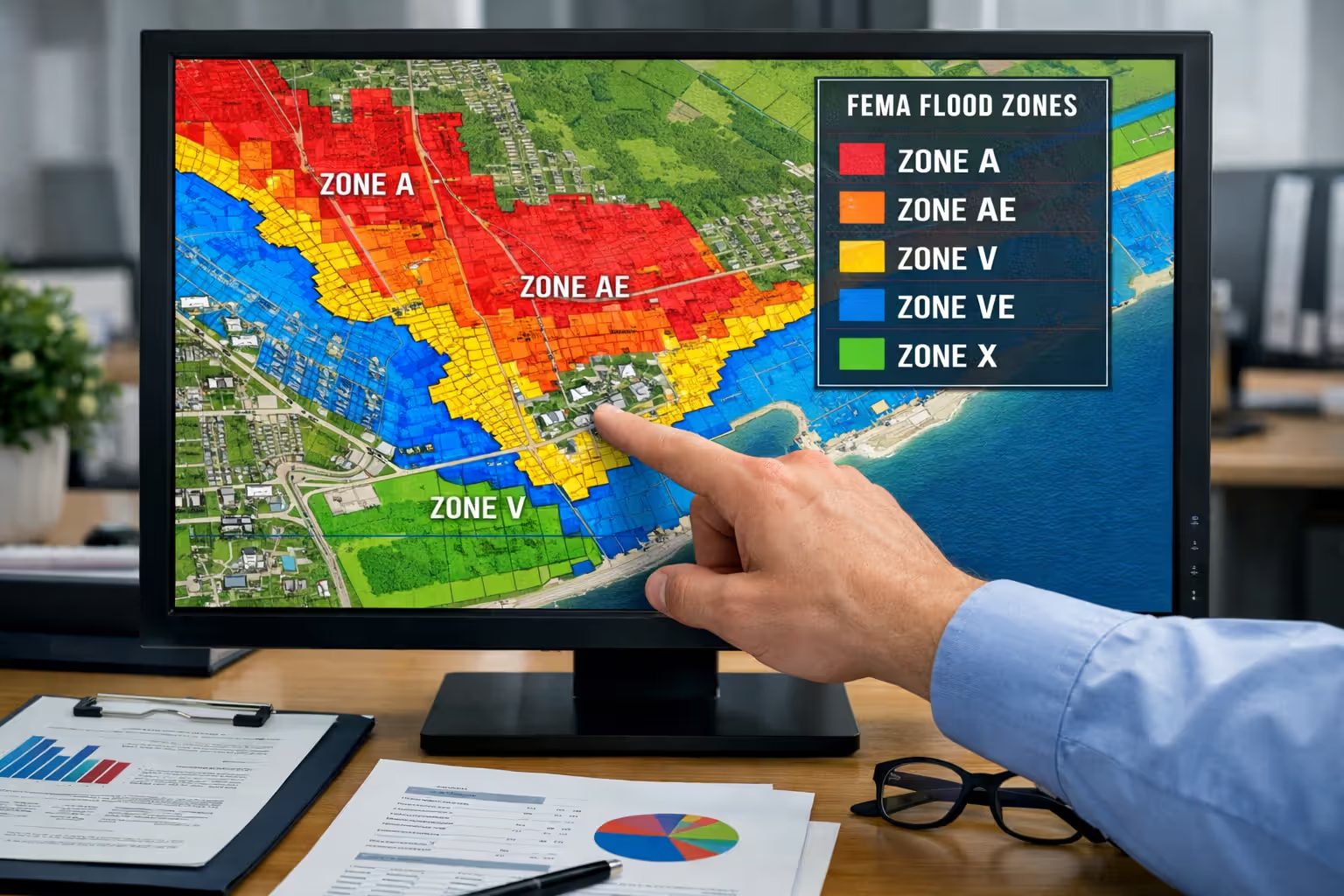
Special Flood Hazard Areas face at least 1% flood probability each year. Government officials call this the "100-year floodplain," which confuses everyone because it sounds like flooding happens once per century. Wrong. That 1% yearly risk actually means you've got a 26% chance of experiencing a flood during a standard 30-year mortgage—way higher than most people realize.
Any zone starting with A or V falls into this category. The A zones include multiple subcategories: AE, AH, AO, and A1 through A30. Each one differs based on flood characteristics and whether FEMA's collected detailed elevation data. Coastal A zones deal with storm surge and waves. Inland A zones typically see river flooding.
V zones mark the absolute highest-risk coastal locations. These areas get pummeled by both rising water and wave velocity—meaning waves three feet tall or bigger crashing into structures. Your premiums here? They'll run double or triple what somebody pays in an A zone for a similar property.
Author: Ethan Caldwell;
Source: sixth-fleet.com
The Role of Federally Backed Mortgages in Insurance Mandates
What counts as federally backed? Any loan purchased, guaranteed, or insured by government entities and government-sponsored enterprises. That includes FHA loans, VA mortgages, USDA rural development financing, and conventional mortgages that Fannie Mae or Freddie Mac buy. Together, these represent roughly 70% of all home loans across the United States.
Banks and credit unions carrying federal deposit insurance also operate under these rules—even for portfolio loans they keep in-house instead of selling. The regulatory framework catches nearly every traditional mortgage lender doing business in America.
The mandatory purchase requirement exists because federal taxpayers shouldn't subsidize lending in high-risk areas without appropriate flood insurance protection. This requirement protects both the property owner's investment and the financial institution's collateral
— David Maurstad
Skip these requirements and you're in trouble. Lenders face civil penalties reaching $2,000 per violation when they don't enforce flood insurance mandates. They protect themselves by buying force-placed insurance on your behalf, then billing your mortgage payment—usually at rates way higher than what you'd pay shopping independently.
How Mortgage Lenders Determine Your Flood Insurance Obligation
Your lender orders a Standard Flood Hazard Determination during the mortgage application process. A third-party company reviews FEMA's current maps to pinpoint your property's exact zone. This determination gets filed with your loan permanently, and lenders must update it whenever FEMA releases new maps affecting your location.
When that determination shows you're in a Special Flood Hazard Area, you'll need proof of coverage before closing day. The policy must start on or before your closing date—zero wiggle room here. Most lenders bundle premiums into escrow accounts alongside property taxes and homeowners insurance, guaranteeing continuous coverage while you're carrying the loan.
Refinancing triggers a fresh flood determination even if you've owned the place for decades. FEMA might've updated their maps since you originally bought the property, potentially creating new insurance obligations. Some homeowners discover they need mandatory coverage only when refinancing properties they own free and clear or bought with cash years earlier.
Your lender can impose stricter requirements than federal law demands. Some institutions require coverage for properties in moderate-risk X zones when you're borrowing more than 80% of the home's value or when the property sits just outside high-risk boundaries. These company-specific rules stem from the lender's internal risk management rather than federal regulation.
Escrow accounts do offer one benefit: you spread the annual premium across twelve monthly payments instead of writing one big check. The downside? Your monthly payment jumps whenever premiums increase, which happens periodically as FEMA adjusts rates or your property's risk assessment changes.
FEMA Flood Zone Designations and What They Mean for Homeowners
FEMA's zone classifications look like alphabet soup, but each letter combination carries specific weight for your insurance requirements and costs. Decoding these categories helps you anticipate what you'll pay and whether coverage is mandatory.
| FEMA Zone | Flood Risk | Must You Insure? | Annual Premium Estimates | What Makes It Different |
| A, AE, AH, AO, A1-A30 | High likelihood | Required with federal loans | $700–$2,000+ depending on elevation | 1% yearly flood probability; detailed elevation data available for AE zones, limited data for A zones |
| V, VE, V1-V30 | Extreme coastal risk | Required with federal loans | $1,500–$5,000+ based on exposure | Oceanfront locations facing wave action; toughest construction standards apply |
| X (shaded designation) | Moderate chance | Not required | $400–$600 with preferred pricing | Between 0.2% and 1% yearly probability; eligible for reduced-cost policies |
| X (no shading) | Minimal risk | Not required | $400–$500 with preferred pricing | Under 0.2% yearly probability; qualifies for lowest available premiums |
| D | Unknown factors | Lender decides | Case-by-case pricing | FEMA hasn't studied these areas yet; banks make their own calls |
Properties in Zone AE benefit from comprehensive flood studies establishing Base Flood Elevations—the height floodwaters are expected to reach. Your home's elevation compared to that BFE number dramatically affects premiums. Houses built above BFE can slash premiums by 30% to 60%. Properties sitting below face surcharges that really hurt.
AO zones see shallow flooding, usually one to three feet deep. AH zones get shallow pooling with specific flood depths mapped out. These details matter less for whether you need coverage but affect how much you'll pay and what mitigation makes sense.
The shaded X zone (sometimes labeled "Zone X 0.2% annual chance") sits in the middle. Federal law doesn't mandate coverage here, yet about one in four National Flood Insurance Program claims originate from these supposedly moderate-risk areas. Preferred Risk Policies make protection affordable, starting around $400 yearly—not a bad deal considering you're not legally forced to buy.
What Standard Homeowners Insurance Actually Covers (And Doesn't)
Homeowners policies explicitly exclude flood damage through standardized language the entire insurance industry uses. This exclusion applies no matter how water gets into your property—rising groundwater, rivers jumping their banks, storm surge, heavy rainfall overwhelming drains. All of it falls outside your homeowners coverage.
Why the exclusion? Flooding hits huge geographic areas simultaneously, creating catastrophic loss potential that private insurers historically refused to touch at prices normal people could afford. The National Flood Insurance Program launched in 1968 specifically to plug this gap through federally backed policies.
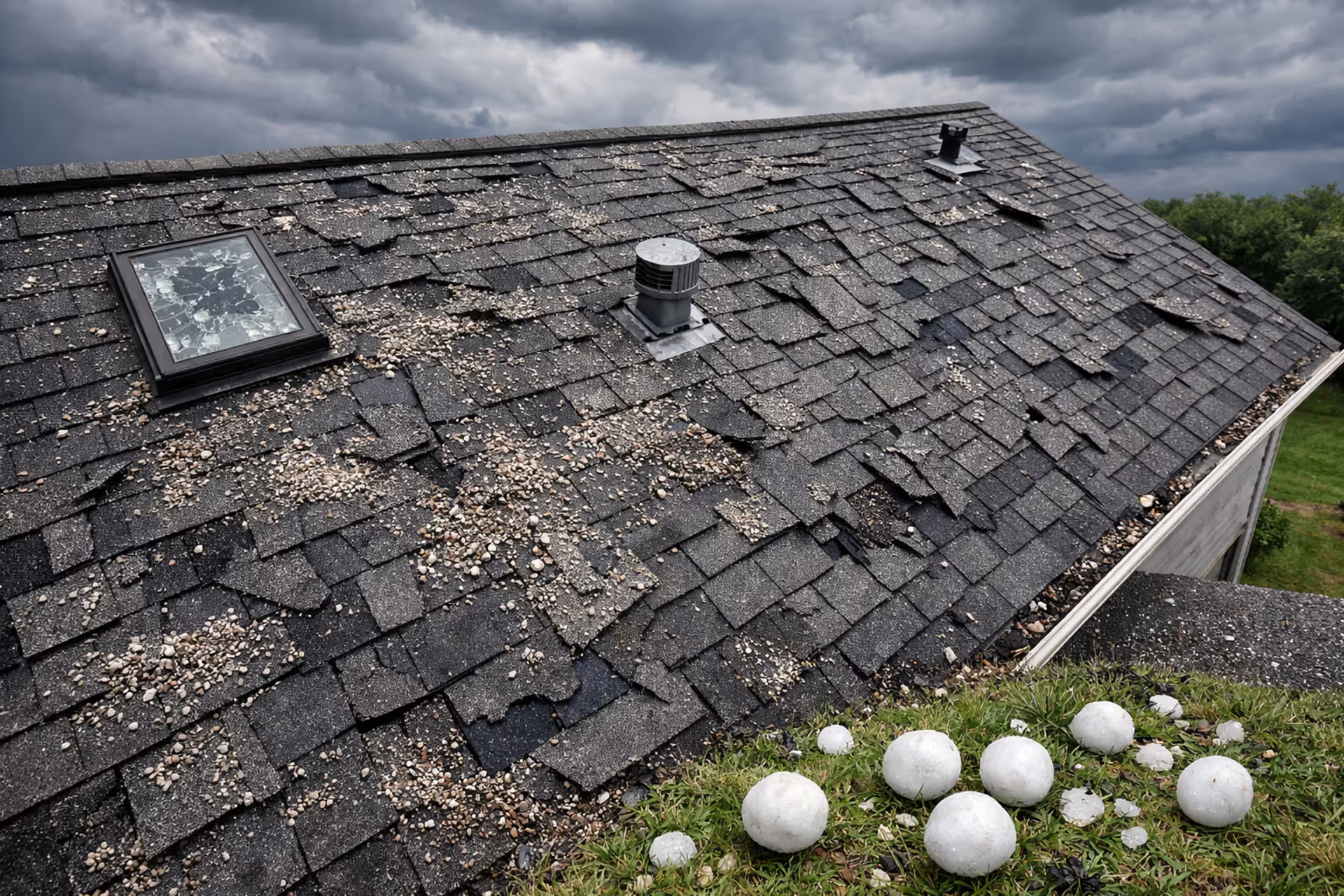
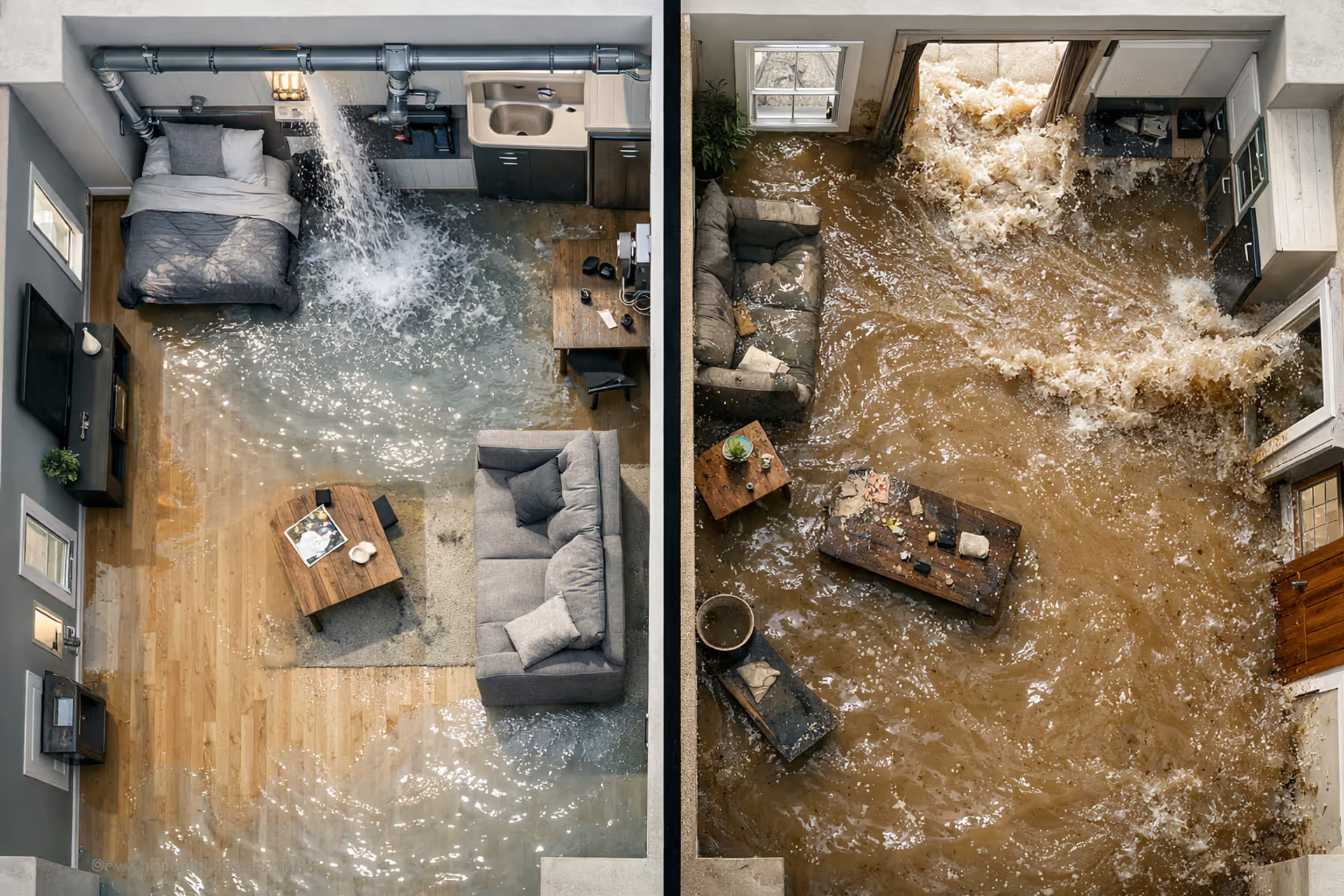
Your homeowners policy does cover water damage from internal sources: burst pipes, leaking water heaters, roof damage letting rain penetrate, appliance failures. The distinction hinges on whether water originates inside or outside your home's structure. A windstorm tears up your roof and rain pours through? That's covered. That same storm's floodwaters rushing through your doors? Not covered.
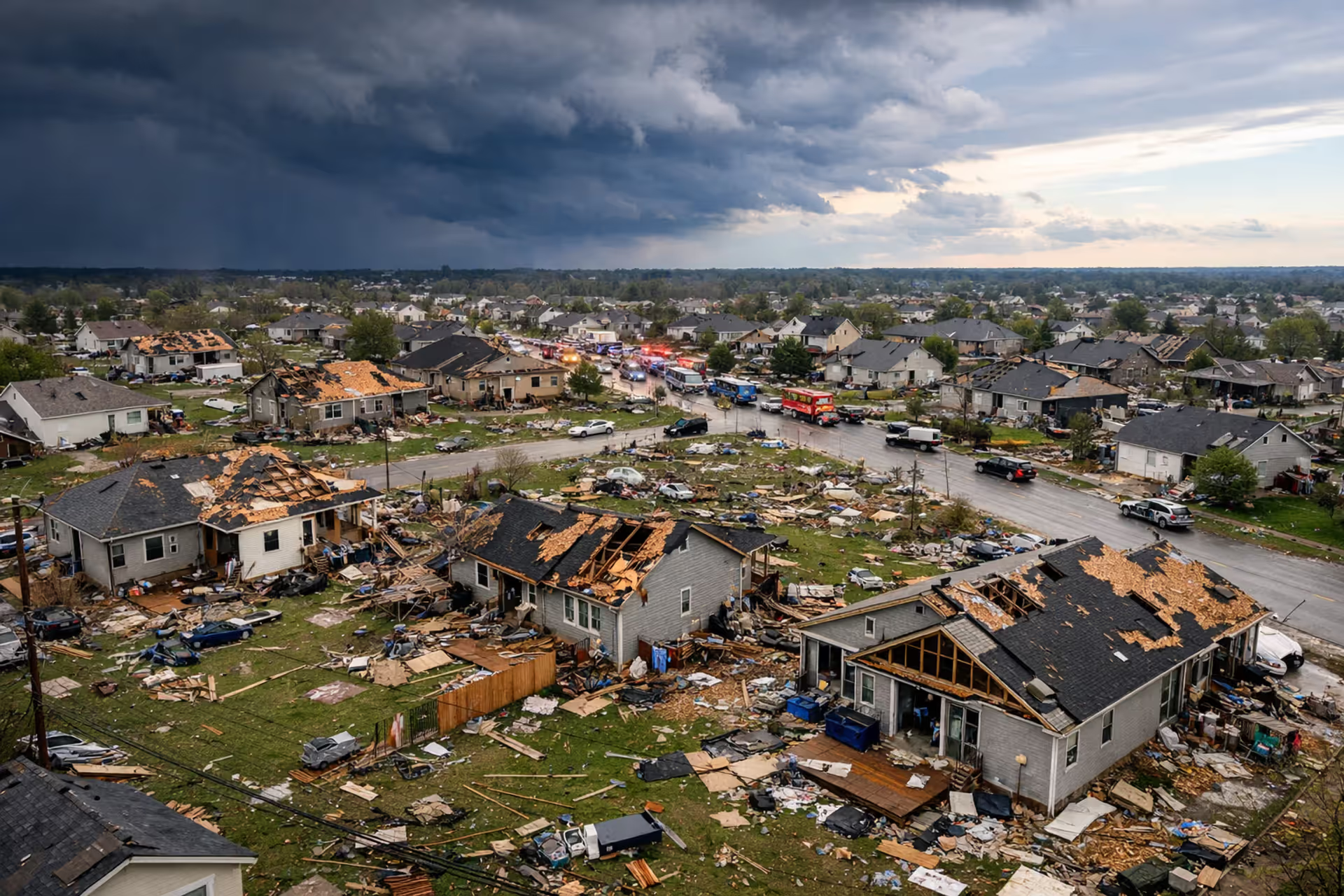
This coverage gap creates massive confusion during hurricanes and tropical storms. Wind damage falls under homeowners policies (though coastal states often have separate wind/hail deductibles). Associated storm surge requires flood insurance. Adjusters meticulously document damage sources, and arguments over where water came from frequently bog down claims settlements.
Basement coverage represents another critical difference. Standard flood policies provide bare-bones basement coverage, excluding finished improvements, personal belongings, and most mechanical equipment beyond basic furnaces and water heaters. Homeowners policies typically cover basement contents when internal water sources cause damage—but not flooding.

Author: Ethan Caldwell;
Source: sixth-fleet.com
When You Should Buy Flood Insurance Even If It's Not Required
Here's a statistic that should get your attention: more than one in five flood insurance claims come from properties outside high-risk zones. That tells you something important. Moderate and low-risk labels don't mean zero danger—they just indicate lower probability. Several situations argue for voluntary coverage even when nobody's forcing you to buy.
Properties purchased with cash or financed through non-federal sources face no legal requirements regardless of flood zone. But if your SFHA property goes uninsured, you're gambling with serious money. FEMA estimates average flood damage restoration hits $25,000 per incident, with plenty of claims exceeding $50,000.
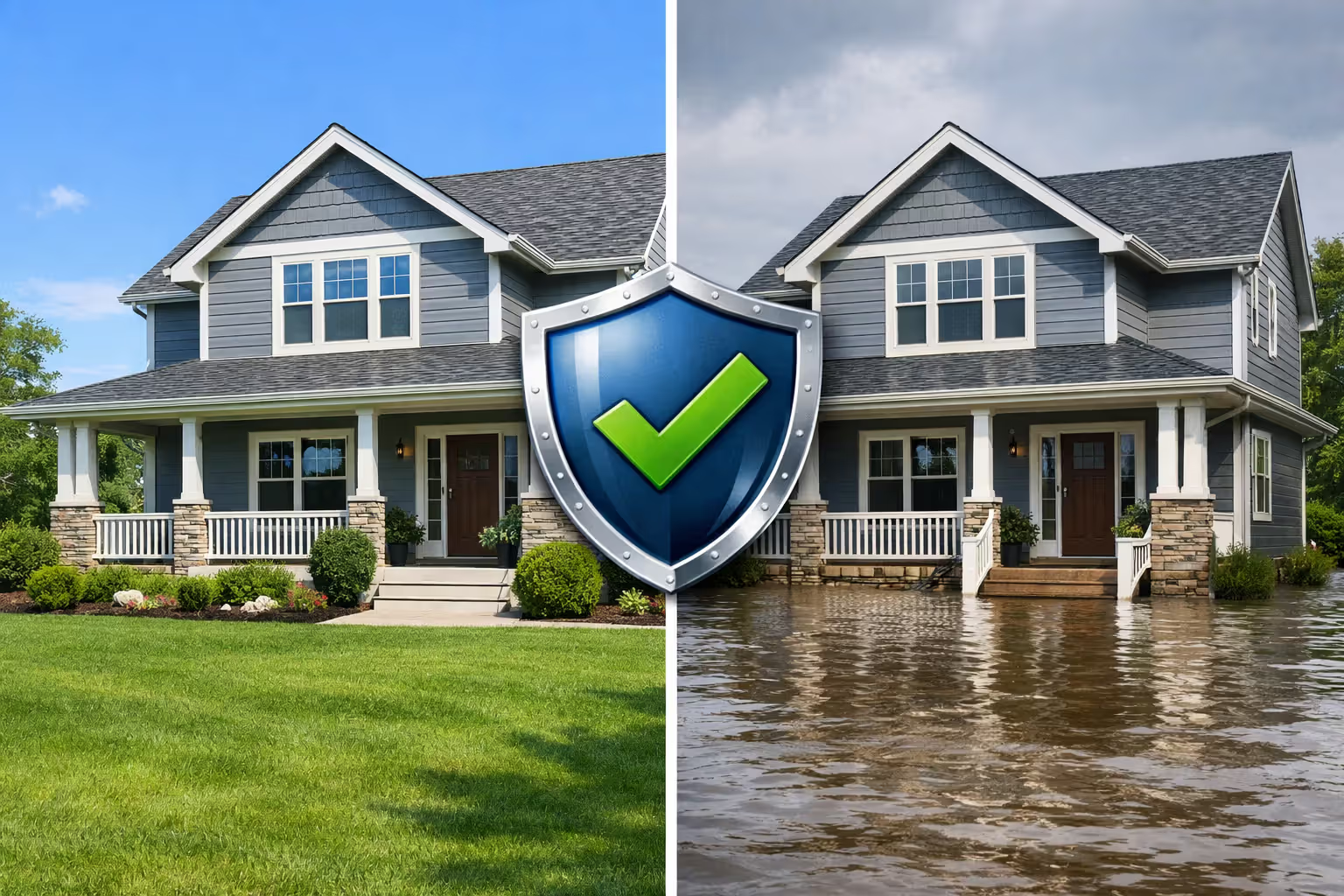
Moderate-risk zones (shaded X) qualify for special Preferred Risk Policy pricing, typically running $400 to $600 per year. That relatively small annual expense buys up to $250,000 in building protection and $100,000 for contents. When you consider one inch of water can cause $25,000 in damage to a 2,000-square-foot home, the math favors coverage.
Author: Ethan Caldwell;
Source: sixth-fleet.com
Climate patterns and nearby development alter flood risks constantly. Urban expansion increases impervious surfaces—concrete, asphalt, rooftops—accelerating runoff and overwhelming drainage systems designed decades ago for different conditions. Aging infrastructure struggles with intense rainfall events that weather data suggests are happening more frequently and severely.
Live near active construction? Your short-term risks just jumped. New development changes natural drainage, potentially redirecting water toward homes that never flooded before. These shifts won't show up on FEMA maps for years, leaving nearby property owners clueless about their changing risk profile.
That 30-day waiting period between buying a policy and coverage kicking in demands advance planning. You can't purchase flood insurance once storm warnings get issued. Homeowners who wait until hurricanes approach or spring flooding starts face gaps in protection. Buy coverage during quiet periods and you're protected before you need it.
Got a finished basement, ground-level garage, or valuable equipment stored at lower levels? Consider coverage even in low-risk zones. Standard policies exclude most basement contents, though building coverage still protects structural components, foundations, and basic mechanical systems.
How to Verify Your Property's Flood Zone and Insurance Requirements
FEMA's Flood Map Service Center at msc.fema.gov gives you free access to current flood maps. Type in your address and you'll see your property's zone, nearby flood boundaries, and when the map became effective. The interface shows both current maps and any preliminary versions that might change your designation down the road.
Author: Ethan Caldwell;
Source: sixth-fleet.com
Flood Insurance Rate Maps get updated periodically as new studies refine risk assessments. FEMA releases preliminary maps for community review before making them official, giving property owners advance warning about potential zone changes. When preliminary maps push your property into a Special Flood Hazard Area, tracking the adoption timeline helps you prepare for new insurance obligations.
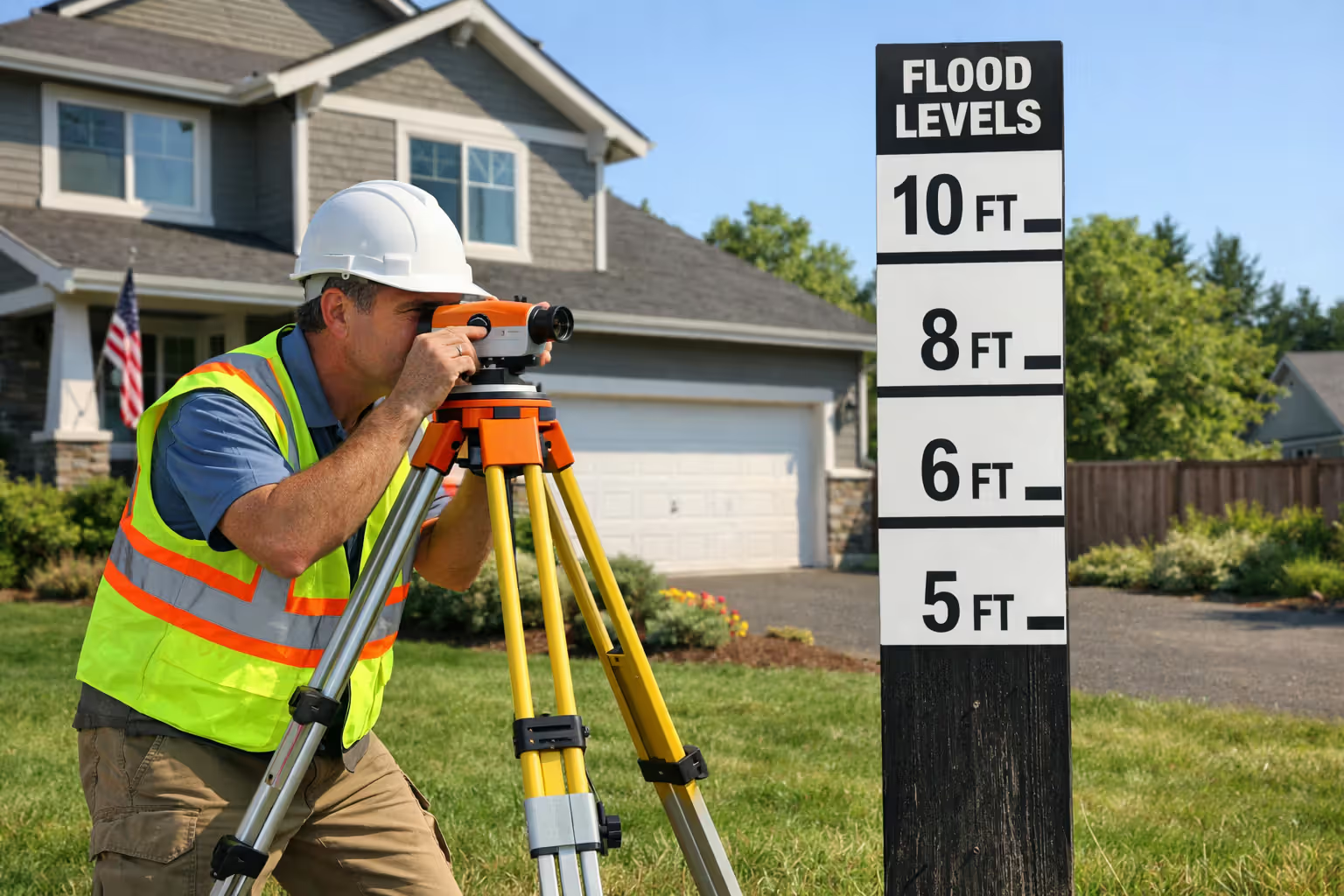
Elevation certificates document your property's height relative to Base Flood Elevation in detail. Licensed surveyors or engineers complete these using precise measurements. They typically cost $500 to $800, but can cut your premiums by hundreds of dollars yearly for properties built above BFE. You'll recoup that investment within two or three years.
The Letter of Map Amendment process offers recourse when you believe FEMA incorrectly placed your property in a high-risk zone. Properties naturally elevated above Base Flood Elevation may qualify for LOMA removal from the SFHA. FEMA reviews your submitted elevation data and supporting documentation at no charge. Successful applications eliminate mandatory insurance requirements and can substantially drop premiums if you keep voluntary coverage.
Your mortgage lender gets copies of flood determinations, but review these documents yourself to catch errors. Determination companies occasionally misidentify properties or work from outdated maps. Spotting mistakes early avoids force-placed insurance headaches and compliance problems.
Community Rating System participation by your municipality affects what you pay. Communities implementing floodplain management practices beyond minimum federal standards earn CRS discounts ranging from 5% to 45% on flood insurance premiums. Your insurance agent can confirm whether your community participates and what discount percentage applies.
Frequently Asked Questions About Flood Insurance Requirements
Your flood insurance requirements depend on your specific combination of property location, mortgage type, and lender policies. High-risk zone properties with federally backed mortgages face clear legal mandates. Other homeowners must weigh voluntary coverage against financial exposure and personal risk tolerance.
FEMA's flood zone designations provide standardized risk assessments, but individual circumstances vary wildly. Properties sitting just outside Special Flood Hazard Area boundaries still face measurable flood probability, and climate patterns keep evolving in ways historical data doesn't fully capture. That 30-day waiting period for coverage makes advance planning essential—you can't wait until storms approach.
Verification through FEMA's map service, elevation certificates, and Letter of Map Amendment applications when appropriate ensures you understand your true requirements and pay appropriate premiums. Force-placed insurance costs substantially more than policies you secure independently, making proactive compliance financially smart even beyond legal obligation.
Whether mandated by law or chosen for financial protection, flood insurance fills a critical gap your standard homeowners policy explicitly excludes. Given that just one inch of water causes thousands in damage and one-quarter of claims originate outside high-risk zones, coverage deserves serious consideration regardless of legal requirements.