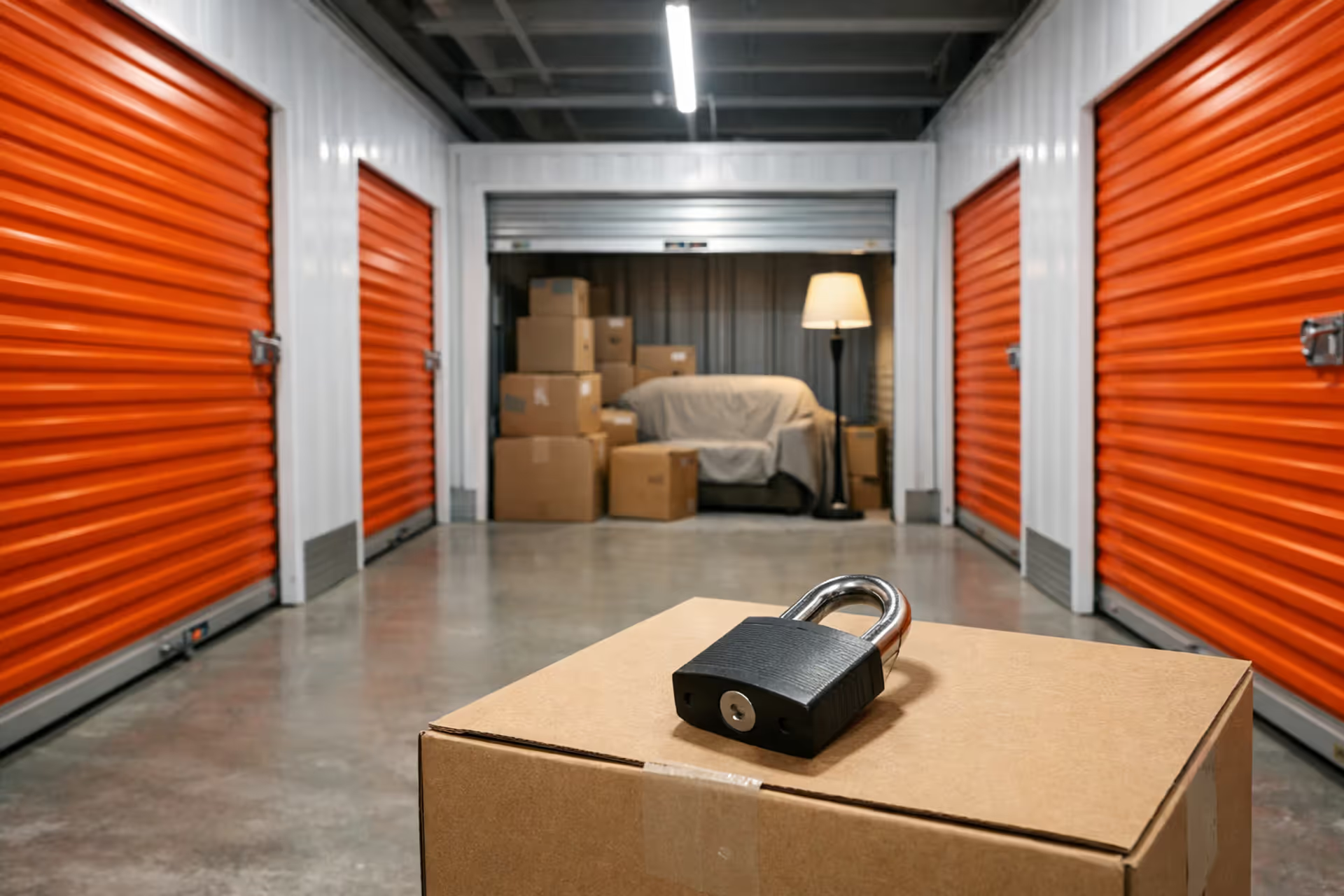
Indoor storage facility hallway with orange unit doors and one open unit showing stacked boxes and furniture inside
Does Homeowners Insurance Cover Storage Units Off Your Property

Content
Moving excess furniture into a rented unit? Storing seasonal decorations while you renovate? Many homeowners assume their belongings are fully protected wherever they go, but the reality of storage unit coverage is more nuanced than most people expect.
Standard homeowners insurance policies do extend limited protection to items stored off-premises, but that coverage comes with significant restrictions that can leave you underinsured. Understanding exactly what's covered—and what isn't—before you lock that storage unit door can save you from expensive surprises later.
How Homeowners Insurance Typically Covers Off-Premises Property
Most homeowners policies include what insurers call "off-premises coverage" for personal property. This protection typically covers 10% of your policy's personal property limit when your belongings are temporarily stored away from your primary residence.
Here's how the math works: if your homeowners policy provides $150,000 in personal property coverage, you'd have up to $15,000 in coverage for items stored in a storage unit. That 10% rule applies whether your belongings are in a climate-controlled facility across town or a basic unit in another state.
The coverage activates for the same perils listed in your policy—fire, theft, vandalism, and certain weather events, depending on whether you have an HO-3 or HO-5 policy. If someone breaks into your storage unit and steals your furniture, or a fire damages your stored boxes, your homeowners policy would typically respond, subject to your deductible and coverage limits.
Important distinction: This off-site storage insurance homeowners coverage applies to temporary storage situations. Your policy considers storage units as temporary locations for your personal property, even if you rent the unit for years. The key factor is that the items still belong to your household and aren't being used for business purposes.
Most policyholders don't realize that the 10% off-premises limit applies to everything stored away from home combined. If you have items in a storage unit, your college student's apartment, and a vacation home all at once, you're not getting 10% for each location—you're splitting that 10% across all of them. That's where people get caught short.
— Sarah Mitchell
Geographic boundaries matter less than you might think. Your off site storage insurance homeowners coverage generally extends nationwide, and many policies even provide worldwide coverage for your personal belongings, though some insurers impose time limits for international storage.
Coverage Limits and Restrictions for Storage Unit Contents
The 10% rule represents just the first layer of limitations. Several additional restrictions can dramatically reduce your actual protection for stored items.
Your deductible still applies to storage unit claims. If you carry a $1,000 deductible and someone steals $2,500 worth of items from your unit, you'd receive $1,500 after the deductible. For smaller losses, you might find the claim doesn't exceed your deductible at all.
Many policies impose waiting periods or require you to notify your insurer if you're storing items for extended periods. Some insurers want to know if you're using commercial storage facilities versus storing items at a friend's house, as the risk profile differs.
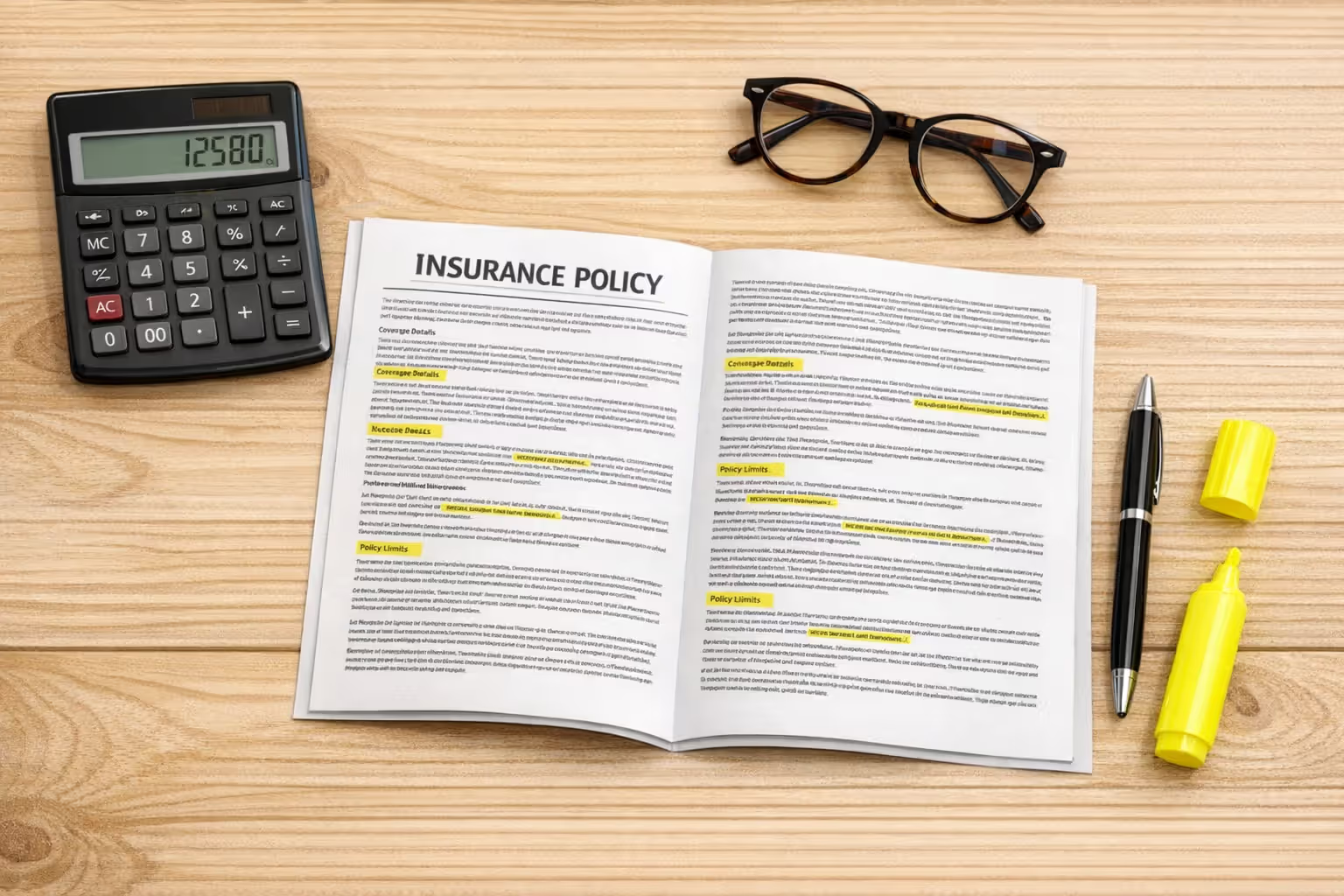
Personal property storage insurance homeowners coverage also carries the same sublimits that apply to items at home. These category-specific caps can significantly reduce your payout for certain belongings.
Author: Marcus Hollowell;
Source: sixth-fleet.com
What Types of Belongings Are Usually Excluded
Homeowners policies exclude several categories of property from coverage, regardless of where you store them:
Motor vehicles and their parts: Your car, motorcycle, ATV, or boat stored in a unit won't be covered under your homeowners policy. You need separate auto or watercraft insurance for these items.
Business property and inventory: If you're storing products for your side business, equipment you use to earn income, or inventory for resale, your homeowners policy won't cover these items. You need a business owners policy or commercial coverage.
Property of roommates or tenants: Items that belong to people who aren't named on your policy receive no coverage, even if stored in a unit you're renting.
Animals, birds, and fish: Livestock, pets, or any living creatures aren't covered personal property.
Aircraft and their parts: Even small drones or model aircraft parts may fall under this exclusion, depending on your policy language.
Special Limits for Jewelry, Electronics, and Collectibles
Storage coverage homeowners insurance policies impose the same sublimits on high-value items that apply at home. These restrictions catch many people off guard when filing claims.
Typical sublimits include:
- Jewelry, watches, and furs: $1,000 to $2,500 total for theft (fire coverage may be higher)
- Firearms: $2,000 to $2,500 total
- Silverware and goldware: $2,500
- Electronics: $1,000 to $1,500 for theft
- Cash and coins: $200 to $500
- Securities and stamps: $1,000 to $1,500
- Collectibles and sports cards: Often limited to $1,000 or less
If you're storing your grandmother's jewelry collection worth $15,000 in a storage unit and it's stolen, you'd receive only the sublimit amount—potentially just $1,500—unless you've purchased additional coverage through a scheduled personal property endorsement.
When Your Homeowners Policy Won't Cover Storage Unit Losses
Beyond standard exclusions, several scenarios can leave your stored belongings completely unprotected.
Policy lapses: If you stop paying your homeowners premium or your policy cancels for any reason, your storage unit contents immediately lose coverage. This happens more often than you'd think when people sell their home, move into an apartment, and forget they still have items in storage that were covered under their old homeowners policy.
Intentional acts: Damage you cause deliberately, or losses resulting from criminal acts you commit, aren't covered.
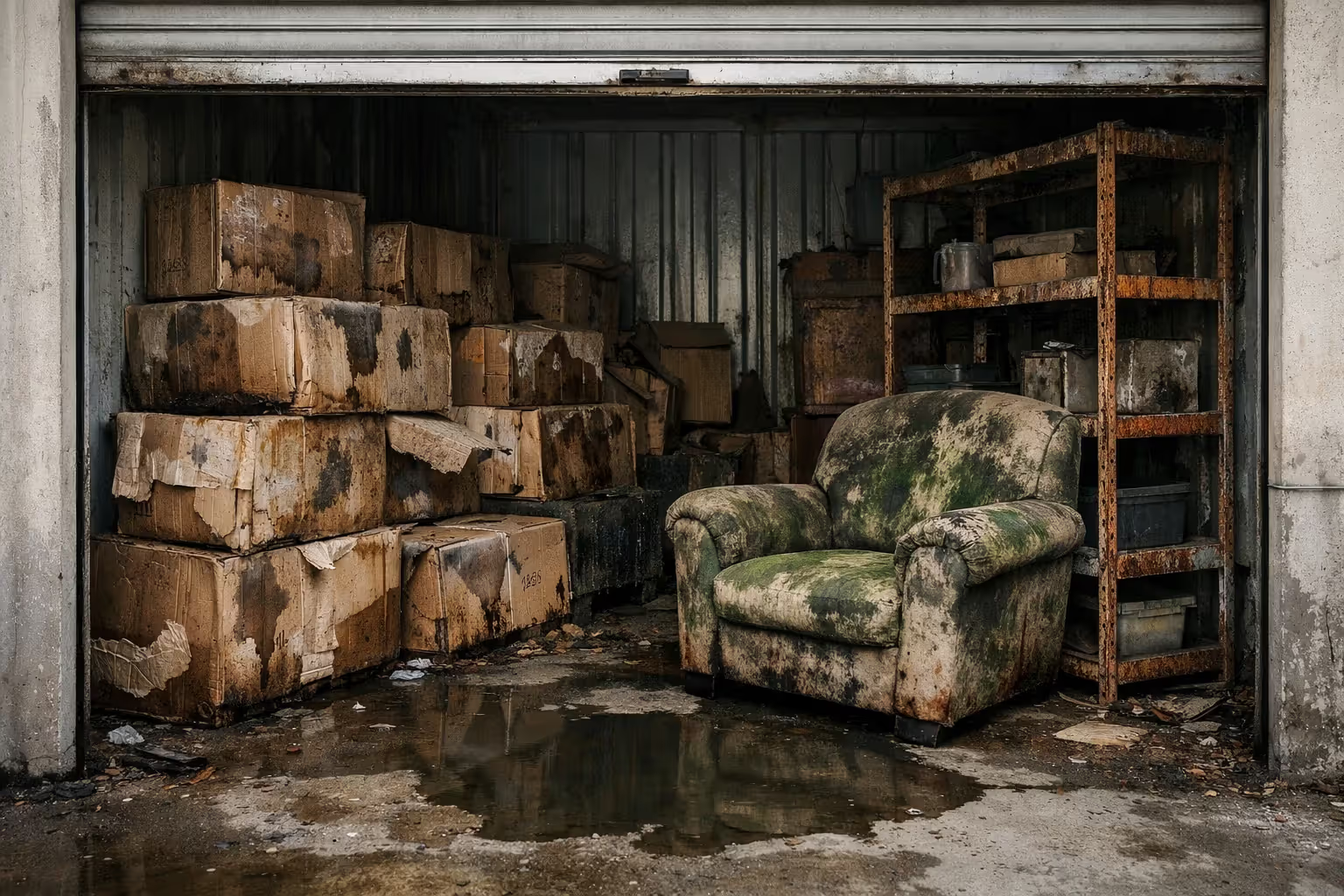
Wear and tear and vermin: Mold, mildew, rust, insects, or rodents damaging your stored belongings won't trigger coverage. These fall under maintenance issues rather than covered perils. This is particularly relevant for stored belongings insurance homeowners coverage because items in storage for long periods face higher risks of gradual deterioration.
Flood and earthquake: Unless you've purchased separate flood insurance or earthquake coverage, these perils aren't covered for your storage unit contents, just as they're not covered at your home under a standard policy.
War and nuclear hazard: These standard policy exclusions apply to stored property as well.
Mysterious disappearance: If you simply can't find items you think you stored, without evidence of a covered peril like theft, your claim will likely be denied. You need proof that a covered event occurred.
Extended vacancy of your primary home: Some policies reduce or eliminate off-premises coverage if your main home sits vacant for 60 days or more. Check this provision if you're between homes or traveling extensively.
The claims adjuster will investigate whether the loss resulted from a covered peril. Finding your stored couch ruined by mold after two years won't generate a payout, but discovering your unit was flooded when a sprinkler pipe burst might—if the damage was sudden and accidental rather than gradual seepage.
Author: Marcus Hollowell;
Source: sixth-fleet.com
Storage Unit Insurance Options Beyond Your Homeowners Policy
When homeowners coverage falls short, three alternative options can fill the gap.
Storage facility insurance: Most storage companies offer tenant protection plans, sometimes called facility insurance. These programs typically cost $10 to $30 per month and provide $2,000 to $5,000 in coverage for your unit contents.
These plans are convenient—you add them when signing your rental agreement—but they're often expensive relative to the coverage provided and may have significant exclusions. Read the terms carefully; many facility plans are actually liability waivers rather than true insurance policies, meaning they limit the facility's responsibility for losses rather than providing you with comprehensive coverage.
Standalone storage insurance: Specialty insurers offer policies designed specifically for storage unit contents. These policies provide broader coverage than facility plans, often with higher limits and fewer exclusions. Premiums typically range from $50 to $150 annually for $10,000 to $25,000 in coverage.
Scheduled personal property endorsements: You can add riders to your homeowners policy to increase coverage for specific high-value items. This approach works well if you're storing jewelry, art, musical instruments, or collectibles. You'll pay an additional premium based on the item's appraised value, but you'll get broader coverage—often including accidental damage—without deductibles.
| Coverage Type | Typical Coverage Limits | Annual Cost | Covered Perils | Claims Process | Best For |
| Homeowners Policy Extension | 10% of personal property limit (e.g., $15,000) | Included in existing premium | Same as home policy (fire, theft, vandalism, etc.) | File through your homeowners insurer | Temporary storage of moderate-value household items |
| Storage Facility Insurance | $2,000–$5,000 | $120–$360 | Limited; often excludes flood, earthquake, and mysterious disappearance | File through storage facility | Low-value items when convenience matters most |
| Standalone Storage Insurance | $10,000–$25,000+ | $50–$150 | Comprehensive; typically broader than homeowners | File directly with storage insurer | High-value items, long-term storage, or when homeowners coverage is insufficient |
The right choice depends on what you're storing and for how long. Someone storing $3,000 worth of seasonal decorations during a six-month renovation can probably rely on their homeowners policy. Someone storing $20,000 in furniture and electronics for two years while working abroad should consider standalone coverage.
Steps to Verify Your Storage Coverage Before You Need It
Don't wait until after a loss to discover your coverage gaps. Take these steps before moving items into storage:
Request your declarations page: This document summarizes your coverage limits, including your personal property limit. Calculate 10% to understand your baseline storage coverage.
Read your policy's off-premises provision: Look for Section I, Coverage C in most policies. Note any special conditions, time limits, or notification requirements for off-premises property.
Ask your agent specific questions:
- "What's my exact coverage limit for items in a storage unit?"
- "Do I need to notify you that I'm using storage, and if so, how long can I store items before coverage is affected?"
- "What documentation will I need if I file a storage unit claim?"
- "Are there any perils that would be excluded for stored items that are covered at home?"
- "What are the sublimits for jewelry, electronics, and other high-value categories?"
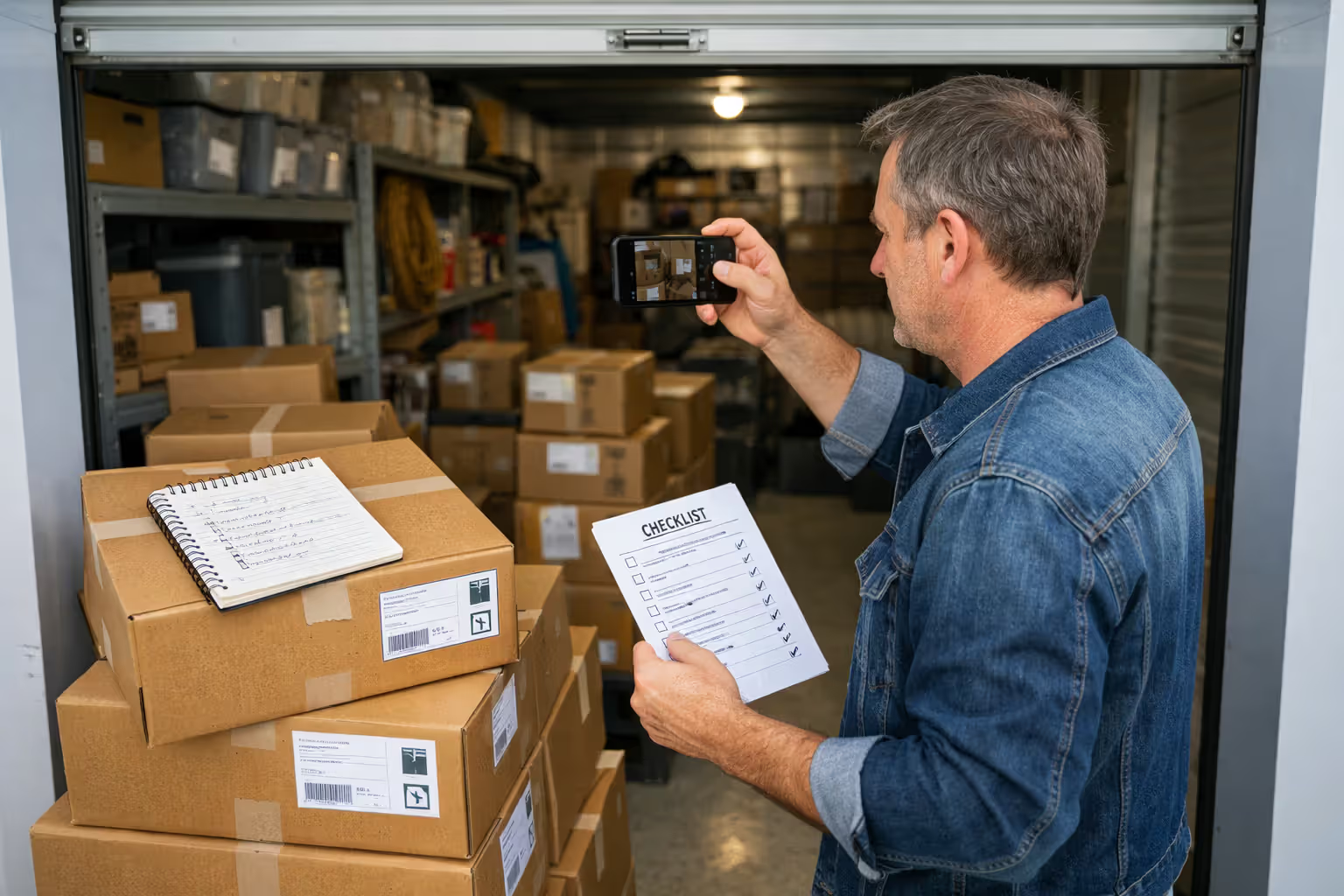
Create a detailed inventory: Photograph or video every item before storing it. Document serial numbers for electronics, take close-ups of valuable items, and keep receipts. Store this documentation somewhere other than the storage unit—cloud storage or a safe deposit box works well.
Consider an appraisal: For valuable items like antiques, art, or collectibles, get a professional appraisal before storing them. This documentation becomes crucial if you need to file a claim or purchase additional coverage.
Review annually: Your storage situation and the value of stored items can change. Make it a habit to review your coverage each year when your policy renews, especially if you've added items to storage or if your stored belongings have appreciated.
How to File a Claim for Damaged or Stolen Storage Unit Items
When the worst happens, quick action and thorough documentation improve your chances of a smooth claims process.
Report the loss immediately: Contact your insurance company within 24 hours of discovering the damage or theft. Also file a police report if theft or vandalism occurred—your insurer will require the report number.
Document everything: Photograph the damage before cleaning up or removing items. If the storage facility's security was breached, photograph that too. Collect any evidence that supports your claim.
Provide your inventory: Submit the inventory and photos you created before the loss. If you don't have a pre-loss inventory, gather any documentation you can find—purchase receipts, credit card statements, photos from when items were in your home, or appraisals.
Separate damaged from undamaged items: Don't discard damaged property until the adjuster gives you permission. Insurers need to verify the loss before you dispose of evidence.
Meet deadlines: Your policy requires you to submit a sworn proof of loss within a specific timeframe, typically 60 days. Missing this deadline can result in claim denial.
Common mistakes to avoid:
- Inflating values: Claiming items were worth more than their actual cash value or replacement cost will raise red flags and could result in claim denial or fraud investigation.
- Claiming items you didn't actually store: Only claim property that was genuinely in the storage unit at the time of loss.
- Accepting the first offer too quickly: Review the settlement carefully. If it seems low, ask questions and provide additional documentation to support higher values.
- Not understanding depreciation: Unless you have replacement cost coverage, the insurer will pay actual cash value—what the used item was worth immediately before the loss, not what you originally paid for it.
The adjuster may want to inspect the storage unit and damaged items. Make yourself available and cooperative. The smoother the investigation goes, the faster you'll receive your settlement.
Author: Marcus Hollowell;
Source: sixth-fleet.com
FAQ: Storage Unit Insurance and Homeowners Policies
Moving belongings into storage creates a coverage gap that many homeowners don't recognize until filing a claim. The 10% off-premises limit built into standard policies provides baseline protection, but sublimits, exclusions, and deductibles can leave you significantly underinsured.
Before renting that storage unit, calculate your actual coverage, document everything you store, and consider whether you need additional protection for high-value items. The small investment in proper coverage and documentation now can prevent major financial losses later. Your insurance agent can help you understand your specific policy's provisions and recommend cost-effective ways to close any coverage gaps for your stored belongings.