
Suburban house exterior with insurance policy documents and calculator in the foreground
Does Home Insurance Go Up After a Claim? What Homeowners Need to Know

Content
Filing a homeowners insurance claim feels like activating a financial trap door. You're already dealing with damage to your property, and now you're wondering whether your insurer will punish you with higher premiums for actually using the coverage you've been paying for all along.
The short answer: yes, your home insurance can go up after a claim, but not always. The increase depends on what happened, your history with claims, where you live, and how your insurer calculates risk. Some homeowners see their rates jump 20% or more after a single claim. Others file claims and notice no change at all.
Understanding how insurers make these decisions helps you avoid unnecessary rate hikes and make smarter choices about when to file versus when to pay out of pocket.
How Insurance Companies Decide to Raise Your Premium After a Claim
Insurance companies don't raise rates arbitrarily. They use actuarial data and risk models to predict how likely you are to file future claims. When you file a claim, you move into a higher-risk category in their system, which often triggers a premium adjustment at your next renewal.
The Role of Claim Severity and Type
A $50,000 fire claim signals different risk than a $3,000 theft claim. Insurers categorize claims by type and analyze patterns. Water damage from a burst pipe suggests potential maintenance issues. Multiple small claims indicate you might file again. Large liability claims—like someone getting injured on your property—can trigger significant rate increases because they expose the insurer to legal costs and high payouts.
The insurance risk rating homeowners claims system weighs both the payout amount and the nature of the incident. Preventable claims (like dog bites or trampoline injuries) typically result in steeper increases than truly accidental events.
Your Claims History and Frequency
Filing one claim in ten years looks responsible. Filing three claims in three years marks you as high-risk, regardless of the amounts. Insurers track your Comprehensive Loss Underwriting Exchange (CLUE) report, which records every claim you've filed for the past seven years.
Two claims within a short period can double your premium or result in non-renewal. Some insurers implement a "three strikes" policy—after three claims in five years, they drop you entirely. Finding new coverage after being dropped is expensive and difficult.

Author: Marcus Hollowell;
Source: sixth-fleet.com
State Regulations That Limit Rate Increases
Not all states allow insurers free rein over rate adjustments. California, for example, restricts how much weight insurers can give to claim history when setting rates. Massachusetts requires insurers to justify rate increases to state regulators. Florida limits surcharges on hurricane claims.
Some states prohibit rate increases for the first claim in a given period, particularly if you've been claim-free for several years. Check your state's department of insurance website to understand your specific protections. The claim impact insurance premiums home varies significantly based on local regulations.
Average Premium Increases by Claim Type
Not all claims affect your rates equally. Here's what homeowners typically experience:
| Claim Type | Average Increase (%) | Typical Duration | National Average Payout |
| Water damage | 9–15% | 3–5 years | $11,650 |
| Fire | 14–23% | 5–7 years | $79,000 |
| Theft | 7–12% | 3–5 years | $4,900 |
| Liability | 15–28% | 5–7 years | $23,000 |
| Wind/Hail | 10–18% | 3–5 years | $12,200 |
| Multiple claims (2+) | 25–40% | 7 years | Varies |
These figures represent national averages. Your actual premium increase after homeowners claim depends on your insurer, location, and individual risk profile. A homeowner in Oklahoma with wind damage will experience different rate treatment than someone in Vermont with the same claim type.
The duration column shows how long the claim stays factored into your rate. After this period, assuming no new claims, your premium should decrease toward your pre-claim baseline.
When Your Rates Won't Increase After Filing a Claim
Certain situations protect you from rate increases, though insurers don't always advertise these exceptions.
No-Fault Claims and Natural Disasters
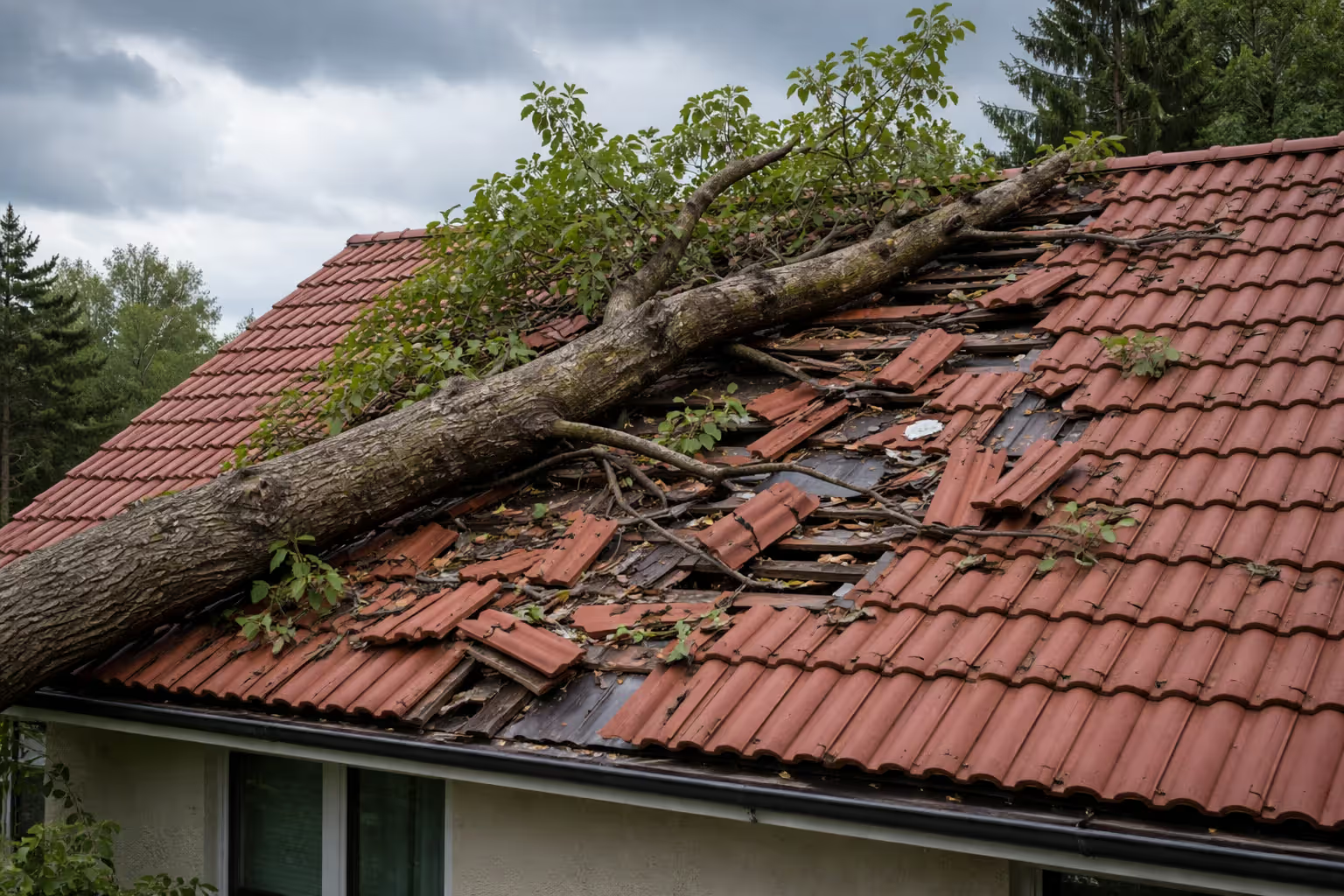
If a tree from your neighbor's yard falls on your roof during a storm, that's not your fault. Many insurers won't penalize you for claims resulting from someone else's negligence or acts of nature beyond your control. However, this varies by company and state.
Catastrophic weather events declared as disasters sometimes receive special treatment. After a major hurricane or wildfire, state regulators may prohibit rate increases for affected homeowners. But standard weather claims—like hail damage in an area where hail is common—often do trigger increases because insurers view your location as part of your risk profile.
Author: Marcus Hollowell;
Source: sixth-fleet.com
First-Time Claimants in Some States
Several states and individual insurers offer "claim forgiveness" for policyholders with long claim-free histories. If you haven't filed a claim in five or more years, your first claim might not affect your rate. This benefit isn't universal, and it typically doesn't apply to large or liability claims.
Read your policy declarations page or call your agent to ask whether your policy includes claim forgiveness. Don't assume you have it.
Insurance is a promise, and like any promise, its value depends on the fine print. Homeowners must understand that every claim they file becomes a data point in an algorithm that will determine their financial future. The smartest policyholders are the ones who know when to use their coverage and when to absorb the cost themselves
— Robert P. Hartwig
Claims Below Your Deductible
Filing a claim for $800 in damage when your deductible is $1,000 accomplishes nothing except putting a claim on your record. You receive no payout, but the claim still appears in the CLUE database. Insurers can see it and may still factor it into their risk assessment, even though they paid nothing.
Never file a claim unless the damage exceeds your deductible by a meaningful margin—ideally by at least $2,000 to $3,000 above your deductible.
How Long Does a Claim Affect Your Homeowners Insurance Rate?
Claims don't haunt you forever, but they linger longer than most homeowners expect. The typical impact window ranges from three to seven years, depending on claim severity and your insurer's underwriting guidelines.
Most insurers review your CLUE report at renewal. This report includes seven years of claim history. Even if your current insurer stops surcharging you after three years, a new insurer reviewing your application five years later will still see that claim and may price accordingly.
Homeowners premium adjustments claims follow a declining impact model at many companies. Your rate might increase 15% immediately after a claim, then decrease to a 10% surcharge after two years, then 5% after four years, before returning to normal. Other insurers maintain a flat surcharge for a set period, then drop it entirely.
The most expensive claims—fire, liability, and multiple claims—typically carry the longest impact periods. Smaller claims like theft may only affect your rate for three years.
Strategies to Minimize Premium Increases After a Claim
Once your rate increases, you're not stuck paying more forever. Several strategies can reduce your costs.
Shopping for New Coverage After a Rate Hike
Insurers weigh claims differently. One company might increase your rate 20% after a water damage claim while a competitor increases it only 8%. Shopping around after a rate increase homeowners insurance claims often uncovers significant savings.
Get quotes from at least three companies. Be honest about your claim history—lying about claims constitutes fraud and gives insurers grounds to deny future claims or cancel your policy.
Expect some insurers to decline coverage if you have multiple recent claims. Others specialize in higher-risk homeowners and will offer coverage at competitive rates despite your history.
Bundling Policies and Loyalty Discounts
Bundling your home and auto insurance with the same company typically saves 15–25% on both policies. If your home insurance increases after a claim, this discount can offset some or all of the increase.
Some insurers also offer loyalty credits that grow over time. If you've been with your current insurer for many years, switching might cost you these credits. Calculate the total cost difference, including all discounts, before jumping to a new company.

Author: Marcus Hollowell;
Source: sixth-fleet.com
Raising Your Deductible to Offset Higher Premiums
Increasing your deductible from $1,000 to $2,500 or $5,000 can reduce your premium by 15–30%. This strategy makes sense if you have emergency savings to cover the higher deductible and you want to avoid filing smaller claims in the future.
Higher deductibles also change your behavior. You'll think twice before filing a claim for $4,000 in damage when your deductible is $2,500, which helps you avoid additional claims that could further increase your rate or trigger non-renewal.
The real cost of an insurance claim isn’t the deductible you pay today — it’s the compounding effect of higher premiums over the next five to seven years. Homeowners who do the math before picking up the phone to file a claim consistently save more money over time than those who file reflexively for every loss
— Loretta Worters
Should You File a Claim or Pay Out of Pocket?
This decision causes more anxiety than almost any other aspect of homeowners insurance. File too often and your rates skyrocket. Never file and you're paying for coverage you don't use.
The Break-Even Calculation
Compare the damage cost against the potential premium increase over time. If repairs cost $5,000 and your premium will increase $800 per year for five years, you'll pay $4,000 extra in premiums. Filing the claim saves you $1,000 overall.
But this calculation misses an important factor: future insurability. A claim on your record makes it harder to switch insurers and may result in non-renewal if you file again. Many homeowners use a "double your deductible" rule—only file if the damage exceeds twice your deductible.
For a $1,000 deductible, that means paying out of pocket for anything under $2,000 to $2,500. For a $2,500 deductible, don't file unless damage exceeds $5,000.

Author: Marcus Hollowell;
Source: sixth-fleet.com
Small Claims That Aren't Worth Filing
According to Amy Bach, Executive Director at United Policyholders, a nonprofit insurance consumer advocacy organization, "Homeowners should treat their insurance policy like major medical coverage, not a maintenance plan. Filing claims for relatively minor damage can cost you thousands in increased premiums over the years and potentially lead to non-renewal. Save your coverage for true disasters."
Common mistakes include filing claims for: - Damaged appliances under $3,000 - Minor roof repairs under $4,000 - Small theft losses under $2,000 - Fence or deck damage under $3,000
These claims rarely make financial sense when you factor in the deductible, premium increases, and risk to your insurability.
Frequently Asked Questions About Claims and Premium Increases
Making Smart Decisions About Claims and Your Coverage
Your homeowners insurance premium will likely increase after filing a claim, but the increase varies widely based on factors you can partially control. Understanding how insurers evaluate risk helps you make informed decisions about whether to file or pay out of pocket.
Before filing any claim, calculate the net cost including your deductible and potential premium increases over three to seven years. For smaller losses, paying directly often costs less in the long run and preserves your claims-free status.
When you do need to file—for major damage like fires, significant water damage, or large liability claims—don't hesitate. That's exactly what your coverage is for. Then shop around at renewal to ensure you're getting the best rate despite the claim on your record.
Maintain your home proactively to prevent preventable claims. Fix small leaks before they become water damage claims. Trim trees before they fall on your roof. Address safety hazards that could lead to liability claims. The best way to keep your rates low is to avoid needing to file in the first place.