
Homeowner’s insurance claim documents, smartphone with photos, house keys, and folder on a kitchen table
How to File a Homeowners Insurance Claim: A Step-by-Step Guide

Content
The process itself? It's surprisingly complicated, even for homeowners who've owned property for decades. Skip one critical documentation step or miss a deadline buried in your policy, and you might forfeit thousands in coverage you've been paying for.
Here's something that shocked me when I started researching this: identical roof damage on two houses, same street, same storm. First homeowner received a $32,000 settlement. Second got $18,500. Same insurance company, same policy type. What changed the outcome? The first homeowner understood exactly how to document everything and push back on the initial lowball offer.
Sarah Mitchell has worked as a licensed public adjuster for 15 years, reviewing hundreds of residential claims. She told me something that should worry every homeowner: "Documentation quality determines everything. I regularly see people forfeit $20,000 or more in legitimate coverage because they discarded damaged belongings before the adjuster inspected them. Or they snapped three quick photos and called it done. Your smartphone can hold thousands of images—there's zero excuse for inadequate documentation."
This guide walks you through the entire claims process, from the immediate aftermath of damage through receiving your final settlement payment. We'll cover what to do before the adjuster arrives, how to avoid the mistakes that tank most claims, and when to escalate if your insurer isn't playing fair.
When Should You File a Homeowners Insurance Claim?
Not every mishap deserves an insurance claim. That cracked window pane? The small roof leak you caught early? Sometimes paying out of pocket makes more financial sense than filing.
Insurance companies track your claims history for five to seven years, sometimes longer. Stack up too many claims during that window—even minor ones—and you'll watch your premiums skyrocket. Worse, you might get dropped entirely when your policy comes up for renewal.
The decision to file boils down to math and long-term consequences. You're weighing immediate repair costs against potential rate increases that could last years.
Damage Scenarios That Warrant a Claim
Most insurance advisors suggest filing only when repair costs exceed your deductible plus $2,000 minimum. Some push that threshold even higher—$3,000 above your deductible—because even a single claim can trigger premium increases that cost more than that difference over time.
Certain situations clearly warrant filing, though:
Major weather events: A tornado ripped through your neighborhood and tore off 40% of your roof. You're staring at $12,000 to $28,000 in repairs depending on square footage and roofing materials. With a standard $2,500 deductible, you'd pay more than $10,000 without filing. That's claim-worthy damage.
Fire incidents: Even contained kitchen fires frequently cause $15,000 in damage. Smoke doesn't just blacken walls—it penetrates fabric, carpets, furniture, ductwork, and clothing. Professional smoke remediation isn't cheap, and costs multiply fast. A fire that spreads beyond one room? You're entering six-figure territory.
Significant water events: One burst pipe flooding multiple rooms can generate $12,000 to $35,000 in total costs. You need professional water extraction, demolition of saturated materials, mold prevention treatment, and complete reconstruction. Water heaters fail. Washing machine hoses rupture. Toilet supply lines crack. All create expensive messes.
Theft over $5,000: Someone broke in while you were at work and cleaned out your home office, bedroom, and garage. Even with sub-limits on certain categories (jewelry typically caps at $1,500 to $5,000 unless you purchased additional coverage), substantial theft losses justify filing.
Any liability situation: Your dog attacked the UPS driver. A dinner guest tripped on your uneven patio and fractured their wrist. The neighborhood kid broke their arm jumping on your trampoline. File immediately, even if everyone seems understanding. Medical bills arrive months later, often followed by attorney demand letters. You need that claim documented from day one.
The worst financial decisions in insurance are made in the first 48 hours — either by filing a claim that should have been paid out of pocket, or by failing to file one that absolutely should have been reported. Knowing where that line falls is half the battle for any homeowner
— Robert P. Hartwig
When It's Better to Pay Out of Pocket
Skip filing if repair costs hover within $1,500 of your deductible amount. That $1,700 repair with a $1,000 deductible gives you $700 from insurance, but the claim follows your record for years and could trigger premium increases costing far more.
Other situations where self-funding makes sense:
Maintenance failures: Your roof is simply old and worn out. Foundation cracks developed gradually over five years. Mold grew because you never fixed that chronic condensation problem. Standard policies specifically exclude damage stemming from poor maintenance or homeowner neglect.
Cosmetic concerns: Minor hail dings in vinyl siding. Small scratches on hardwood that don't affect structural integrity. One bedroom with worn carpeting. Insurance covers functional damage and sudden accidents, not normal wear or aesthetic preferences.
Borderline claims: You received a repair estimate for $1,400 and carry a $1,000 deductible. Filing nets you $400 while creating a claims record that could haunt you for years. Pay it yourself.
New policy situations: You switched insurance companies three months ago. Unless you're facing catastrophic damage, consider paying for repairs yourself if feasible. Establishing yourself as a stable, no-claims customer for at least your first year creates goodwill and demonstrates you're not a high-risk policyholder.
What to Do Immediately After Property Damage Occurs
Your actions in the first 24 hours often determine whether you receive fair compensation or fight a frustrating claims battle for months. Insurance contracts include a "mitigation" requirement—you must take reasonable steps to prevent additional damage. Fail to act, and insurers can reduce your payout or deny coverage for damage you could have prevented.
Prioritize safety above everything: This should go without saying, but people make dangerous decisions during emergencies. Structural damage? Gas odors? Electrical sparking? Standing water near outlets? Get out immediately and call 911. No possession is worth risking injury.

Author: Ethan Caldwell;
Source: sixth-fleet.com
Prevent ongoing damage: Is water still gushing from a broken supply line? Locate your main water shutoff—typically found where your water line enters the building or positioned near your water heater. Storm damage left a hole in your roof? Secure a tarp over it, even a temporary one. Windows shattered during a hailstorm? Cover them with plywood or heavy plastic sheeting. Keep every single receipt for emergency materials—tarps, plywood, plastic, whatever you buy gets reimbursed under most policies.
Document with photos and video before touching anything: This step separates successful claims from nightmares. Take at least 50 photos, preferably 100 or more. Start with wide shots showing entire rooms and overall damage scope, then capture close-ups of every damaged item and surface. Video works even better—walk slowly through affected areas while narrating what you're seeing. Capture timestamps by photographing your phone's date/time display or including a dated newspaper in some shots.
List every damaged item while details are fresh: Walk through affected areas with your phone's voice memo app or a notepad. Record everything: "Samsung 55-inch 4K TV, bought at Best Buy in June 2021 for $850" or "Pottery Barn Pearce sectional sofa, caramel microfiber, purchased spring 2019 for around $2,400." Within 48 hours, you'll forget half the damaged items. Stress and shock erase details fast.
Don't discard damaged property yet: That soaked carpet seems like biohazard trash, but adjusters need physical evidence supporting your claimed losses. No damaged items means no proof, which often means reduced payment or outright denial. If health or safety concerns force you to remove debris, photograph it extensively first and check with your adjuster about temporary storage options.
Secure temporary housing for uninhabitable homes: Severe smoke damage, loss of heating in winter, or major water damage can make your house unsafe or unlivable. Most policies include "loss of use" or "additional living expenses" provisions. Book a hotel or short-term rental, but save absolutely every receipt—lodging, restaurant meals, laundry services, pet boarding, parking fees, everything.
Step-by-Step Process for Submitting Your Claim
Following the proper sequence creates a documented trail and prevents costly gaps in your claim.
Contacting Your Insurance Company
Call within 24 hours of discovering damage. Policy contracts require "prompt" notification—most companies define this as 24 to 72 hours. Waiting a week or longer puts your coverage at serious risk.
Gather this information before calling:
- Policy number (check your declarations page or insurance ID card)
- Property address where damage occurred
- Date and approximate time damage occurred or when you discovered it
- Clear description of what happened and what's damaged
That initial phone call generates your claim number. Write it down immediately and reference it in every subsequent conversation, email, or document.
Ask these specific questions while you have someone on the line:
- What's my deductible for this specific type of damage? (Deductibles vary by peril)
- Does my policy cover temporary housing during repairs?
- When will an adjuster inspect my property?
- Which specific documents do you need from me?
- Can I hire my own contractor, or must I use your preferred vendors?
- What's the direct contact information for my assigned adjuster?
Record names, direct phone numbers, and email addresses for everyone you speak with. You'll need these for follow-ups.
Completing the Claim Form
Within one to three days, expect a formal claim form via email or postal mail. This becomes your official record, so accuracy matters enormously.
Fill out every single field. Blank spaces delay processing. Focus on these sections:
Damage description: Specificity helps. Rather than writing "water damage," try: "Second-floor bathroom toilet supply line burst at approximately 2:30 PM on March 15, 2024. Water flooded the bathroom, hallway, master bedroom, and leaked through the ceiling into the first-floor living room. Damaged items include hardwood flooring, baseboards, drywall, ceiling materials, and multiple furniture pieces."
Date and time: Be as precise as possible. "March 15, 2024, approximately 2:30 PM" works better than "sometime in mid-March." If damage occurred days before you discovered it (like a hidden leak), note both dates: "Damage likely began around March 10 based on mold development, but discovered March 15."
Cause of damage: Use language that mirrors your policy wording when possible. For burst pipes, "sudden and accidental discharge from plumbing system" aligns with standard policy language. You're not manipulating anything—you're communicating in terms the insurer recognizes.
Damage estimate: Provide a reasonable range based on contractor estimates or online research. Estimating too low weakens your negotiating position; wild exaggeration destroys your credibility. If you genuinely can't estimate, write "Unknown pending professional assessment and contractor estimates."
Submit the completed form within the specified deadline, typically 20 to 60 days depending on your policy and state regulations.
Working with the Claims Adjuster
Adjusters evaluate damage and determine payout amounts on behalf of insurance companies. They don't advocate for you—they work for the insurer. Stay professional and cooperative while understanding their true incentives.
During the property inspection:
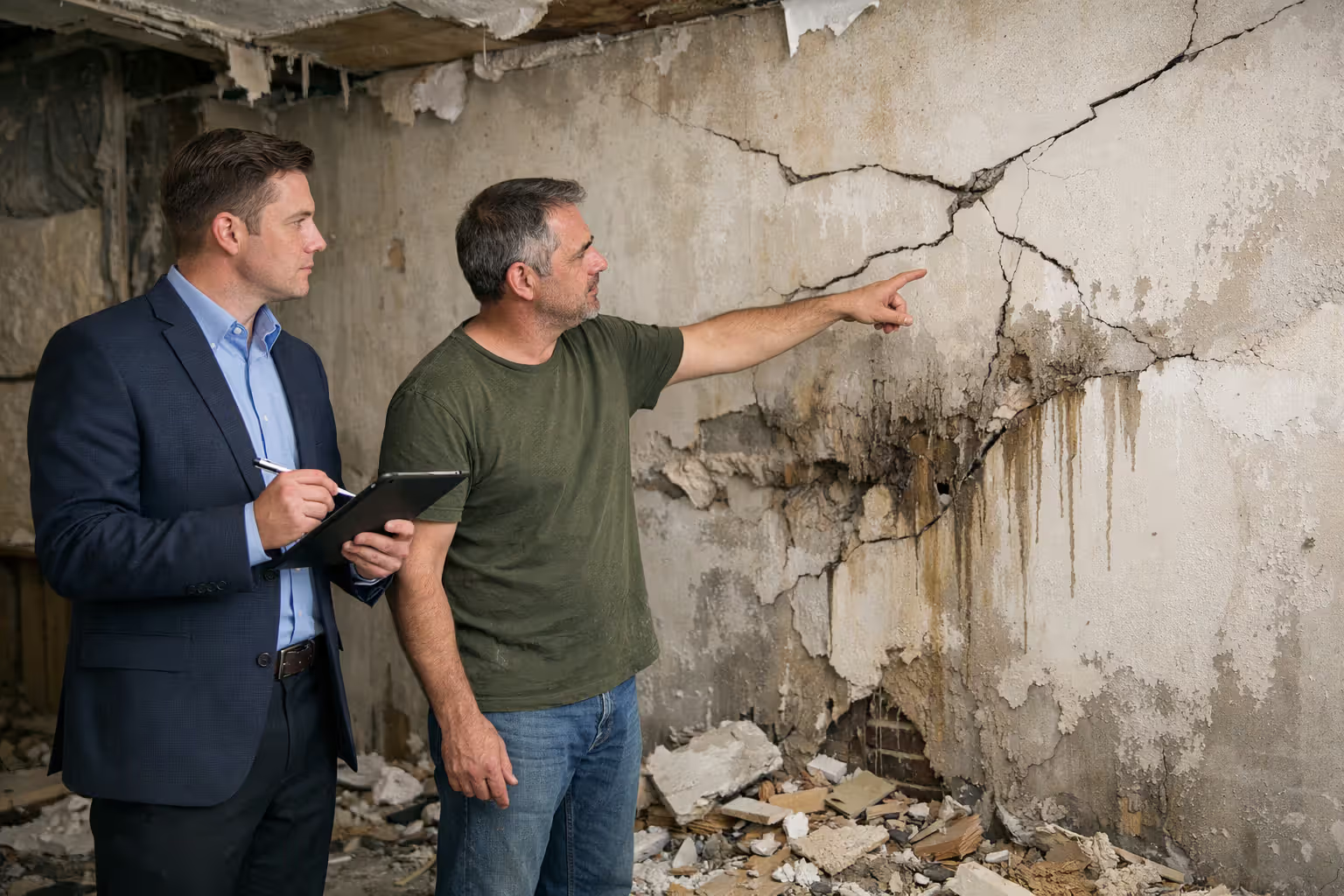
Walk adjusters through every damaged area personally. Don't assume they'll spot everything. Point out details: ceiling water stains indicating hidden damage in walls or attic, cracks that concern you structurally, smoke odor contaminating the HVAC system. Adjusters typically juggle 50 to 100 active claims simultaneously, and they miss things.
Provide printed copies of your documentation during the visit—photos, videos burned to a USB drive, receipts, contractor estimates. Yes, you already emailed these files. Physical copies handed over during face-to-face meetings get more attention than digital files languishing in crowded inboxes.
Ask questions about their assessment in real-time. If they categorize something as "cosmetic only" that you believe affects safety or function, ask them to walk you through their reasoning. Understanding their position helps you craft effective responses.
Never sign documents during the inspection. Some adjusters pressure homeowners to sign settlement agreements on the spot. Politely decline: "I need to review this carefully with my contractor before signing." Legitimate adjusters won't push back.
Author: Ethan Caldwell;
Source: sixth-fleet.com
Providing Documentation and Estimates
Obtain repair estimates from at least three different licensed contractors. This accomplishes two critical goals: it demonstrates you've done proper research, and it gives you leverage when the adjuster's estimate seems suspiciously low.
Select contractors who:
- Hold current state licenses and carry proper insurance
- Have specific experience with insurance claim work (ask them directly)
- Provide itemized estimates breaking down materials and labor separately
- Will communicate directly with adjusters if questions come up
Submit all three estimates within one week of the adjuster's property inspection. Delays suggest you're not serious about repairs, which slows the insurer's response.
Essential Documentation Your Insurer Will Require
Incomplete paperwork causes most claim delays. Industry studies show roughly 60% of stalled claims are missing proper documentation. Here's what you need:
| Document Type | Why Insurers Require It | What You Should Submit |
| Proof of Loss Form | Legal sworn statement itemizing all damage and claimed dollar amounts; state law mandates this for claims exceeding $5,000 in most jurisdictions | Standard form provided by your insurance company, completed in full, notarized, listing each damaged item with your estimated replacement value |
| Visual Documentation | Establishes damage extent, cause, and timing; proves loss actually happened and didn't exist before the incident | Minimum 50+ timestamped photographs from multiple angles, complete video walkthrough showing affected areas, detailed close-up shots highlighting specific damage |
| Value Verification Records | Proves ownership and establishes item value; determines whether you receive replacement cost or depreciated actual cash value | Original purchase receipts when you have them, credit card or bank statements, professional appraisals for valuables, any pre-loss home inventory documentation |
| Official Incident Reports | Third-party documentation of theft, vandalism, fires, or criminal activity; absolutely required for theft and liability claims | Police report case number and complete copy of filed report, fire department incident documentation if fire was involved |
| Repair Cost Estimates | Establishes fair market restoration costs; used to calculate your settlement offer | Minimum two detailed bids from licensed contractors, comprehensive scope of work, specific materials with pricing, separated labor cost breakdowns |
| Pre-Loss Property Records | Documentation of possessions before damage occurred; dramatically strengthens personal property claims | Room-by-room inventory lists with item descriptions, photos of home contents taken before the loss, serial numbers for electronics and appliances, existing jewelry or artwork appraisals |
Organize everything claim-related in one dedicated folder. Digital organization works fine, but print important documents as backup—technology fails during stressful situations. Label clearly: "March 2024 Water Damage - Photos," "Contractor Bids," "Correspondence," etc.
After every phone conversation with your adjuster, send yourself an email summarizing the discussion, any agreements reached, and next steps. This creates a timestamped record protecting you if disputes emerge later.
Common Mistakes That Delay or Reduce Your Settlement
Even straightforward claims get derailed by avoidable mistakes. Watch out for these:
Delaying damage reports for weeks or months: Sometimes you don't immediately discover damage—a slow leak behind drywall causing hidden mold, for example. File the instant you discover it, even if damage is older. Explain the timeline clearly: "Discovered mold March 20, 2024; appears to have developed over several months based on extent of growth." Delaying filing after you already know about damage raises red flags and can void coverage completely.
Inadequate photo documentation: Five quick photos of a flooded basement won't cut it. I know a homeowner who took a comprehensive 90-second video walking through their flooded finished basement, then captured 60+ individual photos of specific damage points—they received a $35,000 settlement. Their neighbor with identical damage took three photos and settled for $18,000. Documentation quality was the difference.
Accepting initial offers without pushback: First settlement offers typically come in 20% to 40% below fair value. Adjusters build negotiation room into their initial offers—it's standard practice. When offers seem low, obtain independent contractor estimates and submit a detailed written explanation of why higher compensation is justified. Most insurers negotiate in good faith when you present solid supporting evidence.
Overlooking policy limits and sub-limits: Your declarations page might show $300,000 dwelling coverage, but buried within the policy might be a $5,000 jewelry cap, $2,500 electronics limit, or $1,000 restriction on cash. Review these limits before filing so you understand what to expect.
Completing permanent repairs before adjuster documentation: Emergency mitigation—tarps, window boarding, water shutoff—is required. Full reconstruction isn't. If you replace all your water-damaged flooring before the adjuster photographs it, you've eliminated their ability to verify your loss. Without physical evidence, they may deny or slash your payment dramatically.
Forgetting to track temporary living expenses: Displaced from your home? Every restaurant meal, hotel night, laundry service trip, and pet boarding fee potentially qualifies for reimbursement under loss-of-use coverage. But only with receipts. Keep a dedicated envelope or folder and collect absolutely everything.
Inconsistent follow-up: Your adjuster juggles 50 to 100 active files simultaneously. Your claim isn't their priority unless you make it one. Contact them weekly for status updates via phone or email. Persistent homeowners receive faster settlements—that's reality.
An insurance policy is only as good as the claim you file against it. The homeowners who recover fully are not the luckiest — they are the most organized. Detailed records, persistent communication, and a refusal to accept the first low offer separate those who rebuild from those who settle for less
— Loretta Worters
What to Expect During the Claims Timeline
Timelines vary wildly based on damage complexity, insurer workload, and your responsiveness. Here are realistic timeframes:
| Damage Category | Initial Insurer Contact | Adjuster Visit Scheduled | Typical Payment Timeline |
| Minor Water (one room) | 1-2 business days | 2-5 business days post-filing | 2-4 weeks filing to check |
| Fire | 12-24 hours | 1-3 business days post-filing | 6-12 weeks filing to check |
| Theft/Burglary | 1-3 business days | 3-7 business days post-filing | 3-6 weeks filing to check |
| Major Storm | 2-4 business days (extends to 1-3 weeks during catastrophic events affecting thousands) | 1-3 weeks post-filing | 4-8 weeks filing to check |
| Liability | 1-2 business days | 5-10 business days post-filing | 8-16 weeks minimum (potentially months to years with litigation) |
These represent averages under normal conditions. Hurricane, wildfire, or tornado affecting your entire region? Every timeline extends substantially because adjusters are overwhelmed with claims.
Red flags indicating your claim is stuck:
- No adjuster assignment within seven days of filing
- Adjuster scheduled your inspection but has rescheduled twice
- No settlement offer within 30 days of inspection for straightforward, simple damage
- Insurer repeatedly requests identical documentation
- No response to your calls or emails for 10+ days
When you hit these warning signs, escalate immediately. Request to speak with the adjuster's manager or supervisor. Send certified mail outlining the complete timeline and requesting resolution within 10 business days. Contact your state Department of Insurance if the company remains unresponsive—state regulators take consumer complaints seriously and can apply significant pressure.

Author: Ethan Caldwell;
Source: sixth-fleet.com
FAQ: Filing Homeowners Insurance Claims
Protecting Your Investment
Successfully navigating a homeowners insurance claim demands preparation, comprehensive documentation, and persistence. Homeowners who receive full, fair settlements treat the process seriously from the moment damage occurs.
Begin with thorough documentation—capture hundreds of photos, save every receipt, and maintain detailed notes documenting every conversation with your insurance company. Study your policy before disaster strikes so you already understand what's covered and what documentation you'll need.
Remember that adjusters represent the insurance company's interests, not yours. Remain professional and cooperative, but verify their damage assessments with independent contractors. Don't accept lowball settlement offers without negotiation—most initial offers include negotiating room when you present solid evidence justifying higher amounts.
Recognize when to escalate. If your claim stalls without explanation, the insurer denies coverage you believe is legitimate, or settlement offers seem unreasonably low, involve supervisors, state insurance regulators, or professionals like public adjusters or attorneys. You've paid premiums for years—you're entitled to fair compensation when coverage becomes necessary.
The claims process works smoothly when handled correctly. Homeowners who file methodically, with thorough documentation and clear communication, typically receive settlements that fully restore their property and possessions. You now have the knowledge to navigate the process successfully.