
Insurance policy documents with calculator pen cash and coffee on wooden desk top view
Should I File a Home Insurance Claim for Water Damage? A Decision Framework for Homeowners

Content
The answer isn't automatic. Filing a claim might cost you thousands more over the next five years than simply writing a check today. But paying out-of-pocket for major damage could drain your emergency fund and leave repairs incomplete. This decision requires calculating actual numbers, understanding your policy's fine print, and thinking beyond the immediate crisis.
How to Evaluate the True Cost of Water Damage vs. Your Deductible
Most homeowners focus solely on repair costs when deciding whether to file. That's only half the equation. The insurance deductible water damage claim creates an immediate threshold, but the real financial impact extends years beyond the initial incident.
Calculating repair costs: DIY estimates vs. professional assessments
Your initial damage estimate is probably wrong. Homeowners typically underestimate water damage by 40-60% because they see surface problems while missing structural issues. That wet drywall might hide saturated insulation, compromised framing, or mold beginning to colonize behind walls.
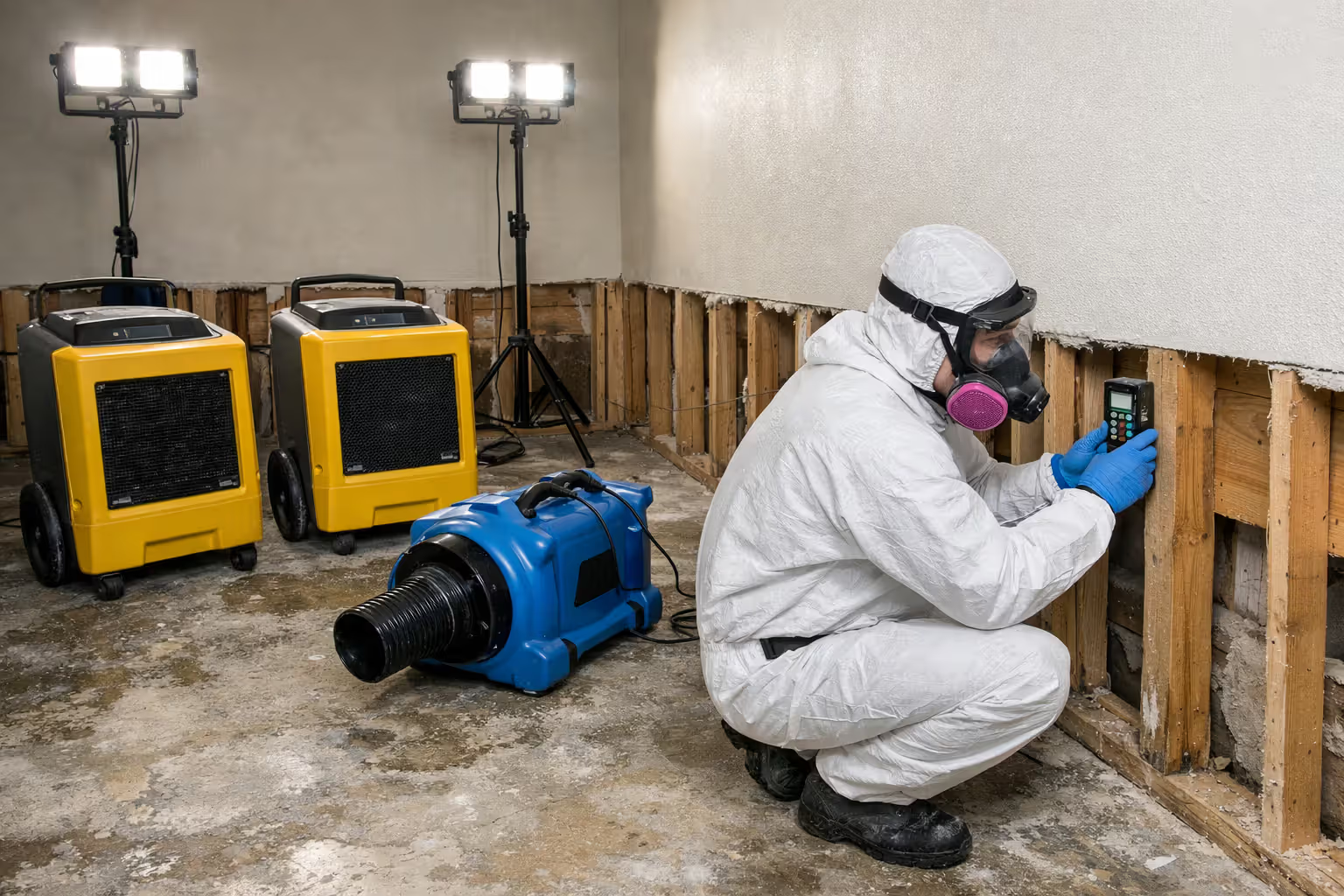
Get three written estimates from licensed contractors who specialize in water restoration. These professionals use moisture meters to detect hidden saturation and thermal imaging cameras to identify problem areas invisible to the naked eye. A restoration company might charge $150-300 for a detailed assessment, but this investment prevents catastrophic miscalculations.
Meanwhile, online calculators and DIY estimates serve as rough benchmarks only. A "simple" bathroom leak repair might cost $800 in materials if you do the work yourself, but professional remediation including drying equipment, antimicrobial treatment, and reconstruction typically runs $3,500-7,000 for the same damage.
Document everything before any repairs begin. Insurance companies can't evaluate undocumented damage, and starting repairs before assessment might void coverage for hidden problems discovered later.
The biggest mistake homeowners make after water damage isn’t choosing the wrong contractor — it’s making an emotional decision about their insurance claim within the first forty-eight hours. Water damage demands urgent action for mitigation, but the filing decision deserves the same careful analysis you’d give any five-figure financial commitment.
— Robert Chambers
Understanding your deductible and out-of-pocket threshold
Your deductible represents the claim decision homeowners water damage threshold where insurance becomes relevant. Standard deductibles range from $500 to $2,500, though some policies use percentage-based deductibles (typically 1-5% of your home's insured value).
A percentage deductible on a $300,000 home means you're responsible for $3,000 to $15,000 before insurance pays anything. If your water damage costs $4,000 and your deductible is $3,000, insurance covers only $1,000—hardly worth the claim's long-term consequences.
Calculate your true out-of-pocket threshold by adding your deductible to potential premium increases. If your deductible is $1,500 and you expect premiums to rise $400 annually for five years, your real threshold is $3,500. Damage below that number costs less to self-fund.
Check whether your policy includes a separate water damage deductible. Some insurers impose higher deductibles specifically for water claims, sometimes double your standard deductible.

Author: Ethan Caldwell;
Source: sixth-fleet.com
5 Factors That Determine Whether Filing Makes Financial Sense
The water damage insurance claim evaluation process requires weighing multiple variables simultaneously. No single factor determines the right choice.
Damage severity and total repair costs: Claims make sense when damage exceeds your deductible by at least $5,000. This buffer accounts for premium increases and claim history impacts. A $15,000 repair with a $1,000 deductible justifies filing; a $2,500 repair with a $1,000 deductible probably doesn't.
Your current deductible amount: Higher deductibles create larger gaps before insurance helps. Homeowners who chose $2,500 deductibles to save on premiums must self-fund more damage. Review your deductible annually and adjust based on your emergency fund capacity.
Premium increase risk: Water damage claims typically increase premiums 9-20% for 3-7 years. The increase depends on your insurer, state regulations, claim amount, and claims history. Some states prohibit premium increases for first-time claims under certain thresholds, while others allow increases for any claim.
Your claims history: A clean claims history (no claims in 5-7 years) gives you more filing flexibility. Multiple claims within three years can trigger non-renewal or policy cancellation. If you filed a claim two years ago for hail damage, think carefully before adding a water damage claim to your record.
Coverage limits and policy terms: Review your policy's water damage coverage limits and sublimits. Some policies cap water damage claims at $10,000 or limit coverage for specific causes. Filing a claim that hits your sublimit wastes your claims-free status for partial recovery.
When Water Damage Claims Backfire: Scenarios Where Paying Out-of-Pocket Wins
Understanding when to file water damage insurance claim requires recognizing situations where claims create more problems than they solve.
Author: Ethan Caldwell;
Source: sixth-fleet.com
Minor damage below your financial threshold: Damage costing less than double your deductible rarely justifies filing. A $1,800 repair with a $1,000 deductible nets you $800 from insurance but marks your record and likely increases premiums $300-500 annually. You'll pay $1,500-2,500 in increased premiums over five years to recover $800 today.
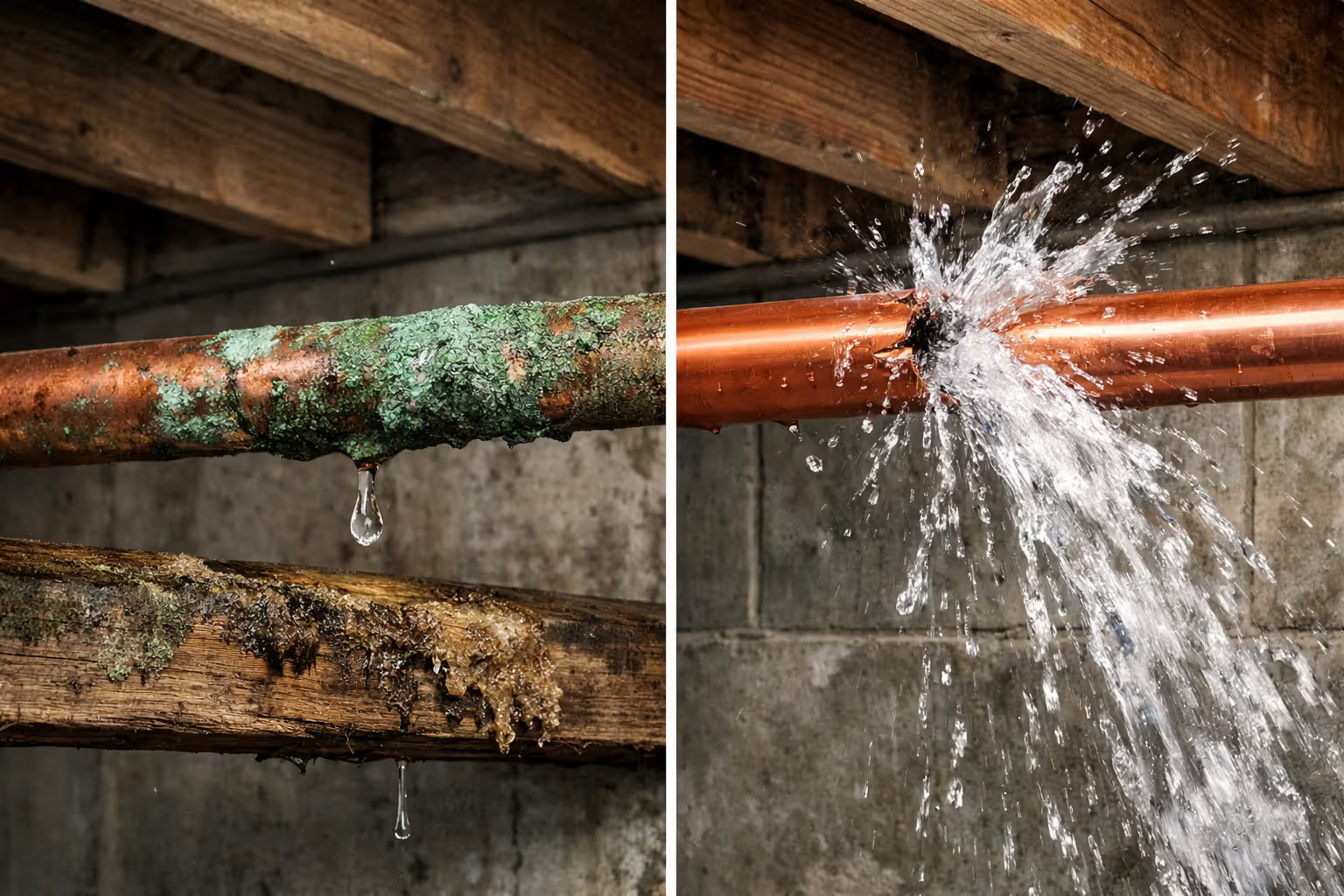
Preventable maintenance issues: Insurance covers sudden, accidental damage—not neglect. A pipe that burst due to freezing might be covered, but the same pipe leaking for months due to ignored corrosion isn't. Filing claims for maintenance-related damage invites denial and wastes time during crisis response.
Multiple claims risk scenarios: Your second claim within three years dramatically increases non-renewal risk. If you filed a claim 18 months ago and now face water damage, consider paying out-of-pocket unless damage is catastrophic. Losing your insurance entirely costs far more than one repair bill.
Non-covered damage types discovered during assessment: Many homeowners file claims before confirming coverage, then face denial. The claim still appears on your record even when denied, potentially affecting future applications. Verify coverage before filing, not after.
Insurance is a financial tool, not a reflex. Every claim you file is a withdrawal from your credibility account with your insurer. For water damage under ten thousand dollars, most homeowners would be financially better off treating their emergency fund as their first line of defense and reserving their claims-free status for the truly catastrophic events
— David Harrington
Damage near your deductible amount: The insurance claim threshold water damage home creates a gray zone where claims provide minimal benefit. Damage within $3,000-5,000 of your deductible typically costs less to self-fund when factoring in long-term premium impacts.
Step-by-Step: How to Document and Evaluate Water Damage Before Deciding
Proper evaluation prevents rushed decisions that haunt you for years. Follow this sequence before contacting your insurer.
Stop the water source immediately: Shut off water supply, tarp roof leaks, or contain the source. Insurance covers resulting damage but might deny claims if you failed to mitigate further damage. Your policy requires "reasonable steps" to prevent additional loss.
Document everything with photos and video: Capture wide shots showing affected areas and close-ups of specific damage. Photograph water sources, standing water, damaged materials, and affected belongings. Time-stamped photos from your phone provide crucial evidence whether you file or not.
Extract water and begin drying within 24-48 hours: Mold begins growing within 24-48 hours in wet conditions. Rent commercial dehumidifiers and fans immediately. This mitigation work is typically covered even if you later decide not to file a full claim, and it prevents uncovered mold damage.
Get written estimates from three contractors: Licensed restoration companies provide free estimates. Compare their assessments for consistency. Significant variations suggest you need additional opinions or more thorough inspection.
Review your policy's water damage provisions: Read the actual policy language, not just the declarations page. Check for coverage exclusions, sublimits, separate deductibles, and definitions of covered water damage. Policies distinguish between sudden pipe bursts (typically covered) and seepage or groundwater intrusion (often excluded).
Call your insurer for a hypothetical discussion: Many insurers allow "coverage questions" without opening a formal claim. Describe the damage generally and ask whether it would be covered. Get the representative's name and reference number. This conversation doesn't constitute a claim filing but provides guidance.
Calculate your five-year cost projection: Add your deductible to estimated premium increases over five years. Compare this total to your repair estimates. If self-funding costs less, skip the claim.
Consult a public adjuster for major damage: For damage exceeding $20,000, a public adjuster's expertise often recovers significantly more from insurers than homeowners negotiate themselves. They typically charge 10-15% of the settlement but can increase settlements by 30-50%.
The Premium Increase Reality: What Filing a Water Damage Claim Actually Costs Long-Term
Premium increases represent the hidden cost that transforms seemingly obvious claim decisions into financial mistakes.
Insurance companies view water damage claims as predictors of future claims. Their actuarial data shows that homes with one water damage claim are 40% more likely to have another within five years. This risk assessment drives premium increases that often exceed the original claim payout.
The increase varies by insurer, state, claim amount, and your history. First-time claimants in states with consumer protection laws might see 5-10% increases. Homeowners with previous claims in states without rate increase caps might face 20-30% increases.
5-Year Cost Comparison: Filing vs. Paying Out-of-Pocket
| Claim Amount | Deductible | Insurance Payout | Estimated Annual Premium Increase | 5-Year Premium Impact | Total Cost (Filing) | Total Cost (Self-Pay) | Break-Even Analysis |
| $3,000 | $1,000 | $2,000 | $250 (10%) | $1,250 | $2,250 | $3,000 | Filing saves $750 (marginal) |
| $5,000 | $1,000 | $4,000 | $300 (12%) | $1,500 | $2,500 | $5,000 | Filing saves $2,500 |
| $10,000 | $1,500 | $8,500 | $400 (15%) | $2,000 | $3,500 | $10,000 | Filing saves $6,500 |
| $15,000 | $1,500 | $13,500 | $450 (18%) | $2,250 | $3,750 | $15,000 | Filing saves $11,250 |
| $25,000 | $2,500 | $22,500 | $500 (20%) | $2,500 | $5,000 | $25,000 | Filing saves $20,000 |
These projections assume a $2,500 annual premium baseline. Your actual increases depend on your insurer's formula and state regulations. Some insurers cap increases at specific percentages; others compound increases annually.
Homeowners consistently underestimate the long-term financial impact of filing smaller claims. I've seen clients pay $3,000 in increased premiums over five years to recover $1,200 from a claim. The math seems obvious in hindsight, but during a water emergency, panic overrides calculation. Always run the numbers before you file
— Jennifer Martinez
Premium increases typically last 3-5 years, though some insurers maintain increases for seven years. After this period, your rates should return to standard levels, assuming no additional claims.
Red Flags: Types of Water Damage Your Insurer Won't Cover
Not all water damage qualifies for coverage. Understanding exclusions prevents wasted time filing claims destined for denial.
Gradual leaks and seepage: Slow leaks developing over weeks or months fall under maintenance, not sudden accidents. If your adjuster finds rust, corrosion, or mold growth indicating long-term moisture, expect denial. Policies cover the sudden pipe burst but not damage from the leak you ignored for six months.
Flooding and groundwater intrusion: Standard homeowners policies exclude flooding from external water sources. Basement water entering through foundation cracks during heavy rain isn't covered. Sewer backups require separate endorsements. Only dedicated flood insurance (typically through NFEMA) covers flooding.
Maintenance-related failures: Worn-out water heaters, deteriorated pipe connections, and aging roof materials represent maintenance issues. The resulting damage isn't covered when failure stems from lack of upkeep. Insurers expect reasonable maintenance and may deny claims showing neglect.
Mold remediation beyond initial damage: Policies cover mold resulting directly from covered water damage, but only if you mitigated promptly. Mold spreading because you delayed drying and cleanup often exceeds coverage limits or faces denial. Many policies cap mold remediation at $5,000-10,000 regardless of actual costs.
Cosmetic damage without functional impairment: Stained ceiling tiles or discolored flooring might not qualify for replacement if materials remain functional. Some policies cover only functional restoration, not aesthetic improvements.
Damage from frozen pipes in vacant homes: Most policies exclude damage occurring while your home was vacant for 30+ consecutive days unless you maintained heat or drained the plumbing system. Winter vacation pipe bursts might not be covered.
Check your policy's water damage section specifically. Exclusions appear in dense policy language that requires careful reading. When uncertain, get written clarification from your insurer before filing.
Author: Ethan Caldwell;
Source: sixth-fleet.com
FAQ: Common Questions About Filing Water Damage Claims
Making the Right Decision for Your Situation
The decision to file a home insurance claim for water damage comes down to math, not emotion. Calculate your true five-year cost including deductibles and premium increases. Compare that figure to your repair estimates. Factor in your claims history and the risk of future non-renewal.
File claims for catastrophic damage exceeding your deductible by $5,000 or more. Pay out-of-pocket for minor damage below this threshold. Document everything regardless of your decision—photos and estimates protect you whether you file now or discover additional damage later.
Your insurance exists for disasters, not routine maintenance or minor incidents. Preserving your claims-free status for genuinely catastrophic events provides long-term financial protection worth more than recovering a few thousand dollars today. Run the numbers, understand your policy's specific terms, and make the decision that minimizes your total cost over the next five years, not just the immediate crisis.
When in doubt, get professional assessments from both restoration contractors and public adjusters before contacting your insurer. Once you file, you can't unring that bell—the claim enters your permanent record regardless of the outcome. Take time to evaluate properly. Water damage creates urgency for mitigation, not for filing decisions. You can dry, document, and estimate first, then file later if the numbers support it.