
Homeowner insurance claim denial letter on a desk next to a house model and insurance policy documents
What to Do If Home Insurance Denies Your Claim: A Step-by-Step Guide

Content
Getting a rejection letter after you've filed a home insurance claim—that's like getting kicked when you're already down. Your property's damaged, you're stressed about repairs, and suddenly the coverage you've been paying premiums for seems to have vanished into thin air. Here's something most homeowners don't realize: that rejection letter isn't necessarily the end of the road. Insurance companies have formal processes for reconsidering their decisions, and plenty of initially-rejected claims end up getting paid when homeowners fight back with solid evidence and refuse to give up.
What separates homeowners who successfully overturn denials from those who don't? Usually it's understanding what went wrong in the first place and knowing the specific steps to take in response.
Why Insurance Companies Deny Homeowners Claims
Something like 10-15% of homeowner claims get rejected—that's what industry data suggests, anyway. Sure, some of these rejections make sense because the policy genuinely doesn't cover what happened. But plenty of others? They're based on paperwork problems or misunderstandings that you can actually fix. When you understand what triggers most rejections, you're better positioned to address whatever weakness caused your claim to get denied.
Policy Exclusions and Coverage Gaps
Pick up any homeowners policy and you'll find a whole section spelling out what they absolutely won't pay for, no matter what. Floods? Almost never covered in standard policies. Earthquakes, termite damage, things that wear out over time, damage you caused on purpose—all typically excluded. You might even find exclusions for certain dog breeds, backyard trampolines, or running particular types of businesses from your house.
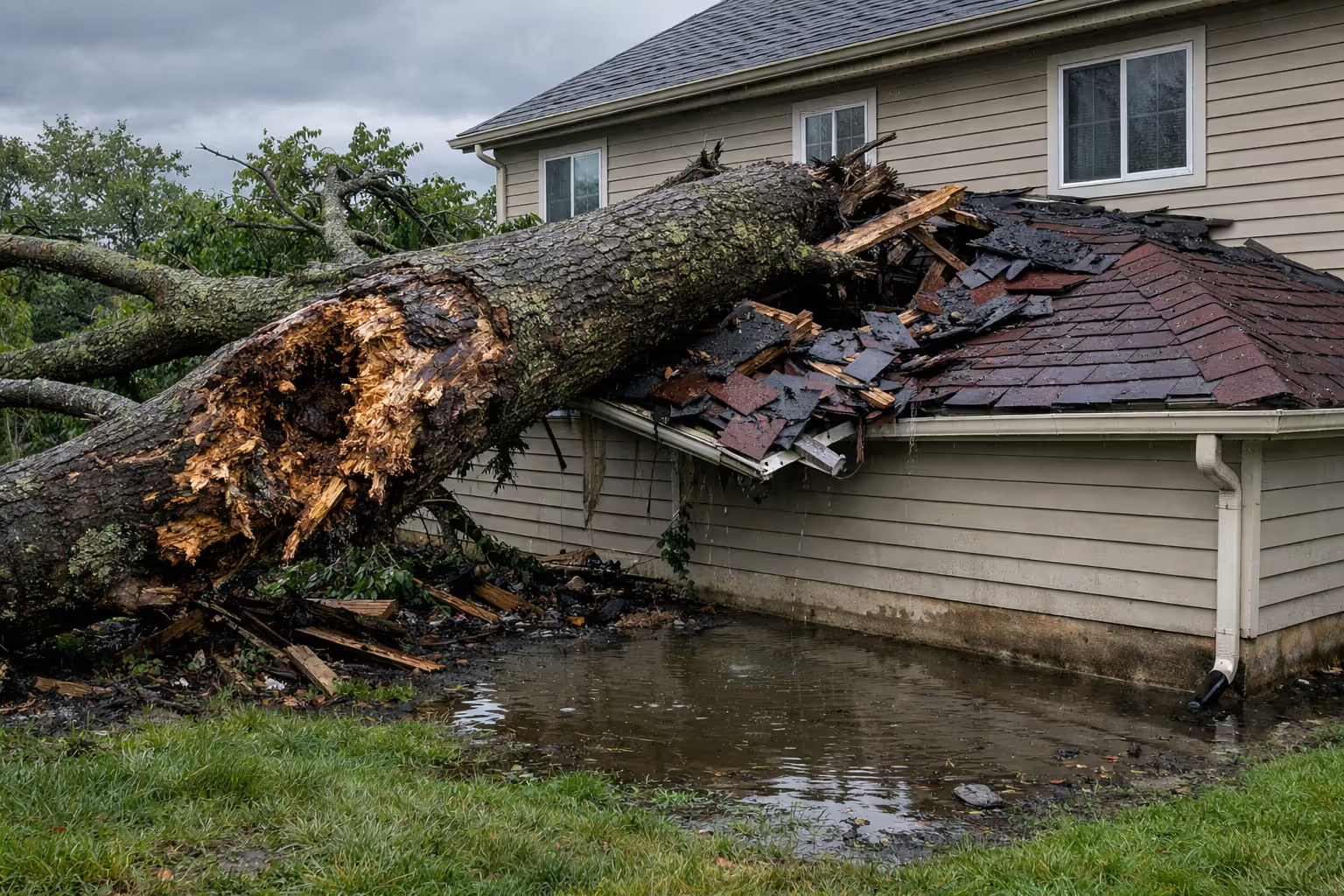
Things get messy when multiple causes contributed to your damage. Say a tree crashes through your roof during a storm. Wind damage—that's covered. But wait, was the tree already rotting from a pest infestation you'd been ignoring? Now the insurer might reject everything instead of separating the covered wind damage from the uncovered maintenance issue. Water damage creates similar headaches constantly. Your pipe bursts and floods the basement? Usually covered. Water's been seeping through your foundation for six months? That's almost always excluded as gradual damage.
Pull out your policy's declarations page and read through the exclusions section—actually read it, don't just skim. When your rejection letter references an exclusion, verify whether that exclusion genuinely applies to what happened. Don't just take the insurance company's word for it.
Author: Samantha Kessler;
Source: sixth-fleet.com
Insufficient Documentation or Late Filing
Most policies give you a deadline for reporting claims—something like "promptly" or maybe a specific window like 60 days after the damage happened. Blow past that deadline and insurers can reject your claim completely, even when the damage itself would normally be covered. Late filing rejections are tough to fight because your policy contract explicitly makes coverage conditional on telling them quickly.
Documentation problems cause plenty of rejections too, but these are usually easier to fix. Maybe you reported the damage right away but didn't take enough photos before making emergency repairs. Or you didn't get written estimates from contractors. Or you can't prove when the damage actually occurred. Insurers reject these claims citing "insufficient proof of loss" or "we can't verify the damages."
The documentation standards are stricter than most people expect. Snapping a few quick phone pictures and giving a verbal description? That won't cut it for anything beyond minor claims. For significant damage, insurers want dated photographs from every angle, detailed written estimates from licensed contractors, receipts for whatever emergency repairs you made, and sometimes expert reports explaining what caused the damage.
Disputes Over Cause of Damage
Some of the nastiest fights with insurers involve disagreements about what actually caused your damage. Your roof leaked during last month's storm, but the adjuster says your shingles were deteriorating anyway and would've leaked eventually. Heavy rains flooded your basement, but the insurance company claims that was groundwater seepage (usually excluded) rather than surface water coming in (which might be covered, depending on your specific policy).
Insurance companies have financial reasons to attribute damage to excluded causes whenever the situation seems unclear. Their adjusters receive training specifically to spot pre-existing conditions and maintenance problems that could disqualify claims. Challenging their conclusions requires equally strong evidence on your side—which often means hiring your own inspector or expert to provide a second opinion.
Immediate Steps After Receiving a Claim Denial
What you do in the first few hours and days after receiving a rejection can make or break your chances of overturning it. These immediate actions protect your appeal rights and strengthen your position for whatever comes next.
First thing: read that rejection letter carefully—then read it again. Insurance companies must put their specific reasons in writing and cite the exact policy provisions they're relying on. Don't just glance at it. Pin down the precise reason they're giving you. Is it a coverage exclusion? Documentation problem? Disagreement about what caused the damage? Maybe they're saying you didn't meet some policy condition? Whatever their reason is determines how you'll need to respond.
Start documenting everything related to your claim from this moment forward. Set up a dedicated folder—physical or digital, whichever works for you—and fill it with your policy, the rejection letter, every email or letter you've exchanged with the insurer, photos of the damage, repair estimates, receipts, and notes from any phone calls with adjusters. Jot down names, dates, and what was discussed in every conversation. This organized file becomes critical if you end up escalating to formal appeals or taking legal action.
That rejection letter isn't carved in stone. Lots of homeowners think denial letters represent final, immovable decisions. Actually, insurers modify or reverse their denials all the time when people present additional information. Consider the denial their opening position in a negotiation, not their final answer.
Look at your policy for appeal deadlines right now. Most insurers give you somewhere between 30 and 180 days to formally challenge a rejection, though the exact timeframe varies. Some states require minimum appeal periods by law. Miss these deadlines and you might permanently lose your rights, even if your case is rock-solid. Put the deadline in your calendar immediately and work backward from there to make sure you submit your appeal with plenty of time remaining.
Watch what you say when you contact your insurer about the rejection. Stick to asking factual questions like "Which specific policy section are you citing here?" or "What additional documentation would resolve your concerns?" Don't speculate about what might've caused the damage, don't admit to skipping maintenance, and don't volunteer extra information beyond what they directly ask you.
Think about whether you need to make emergency repairs or stop ongoing damage regardless of the claim status. Your policy probably requires you to prevent additional damage from occurring. Document these protective measures thoroughly—they might become part of your eventual settlement even though they were initially rejected.

Author: Samantha Kessler;
Source: sixth-fleet.com
How to Dispute a Homeowners Insurance Claim Denial
Challenging a rejection effectively means building a persuasive counter-argument backed up by concrete proof. This isn't about getting angry or complaining about how unfair everything is. It's about systematically addressing whatever objections the insurer raised with facts they can't easily wave away.
Gathering Supporting Evidence
Your challenge is only as convincing as the evidence supporting it. Did the insurer reject your claim for insufficient documentation? Then you need to fill in those gaps. Did they dispute what caused your damage? Then you need expert opinions or additional proof showing the covered event caused your loss.
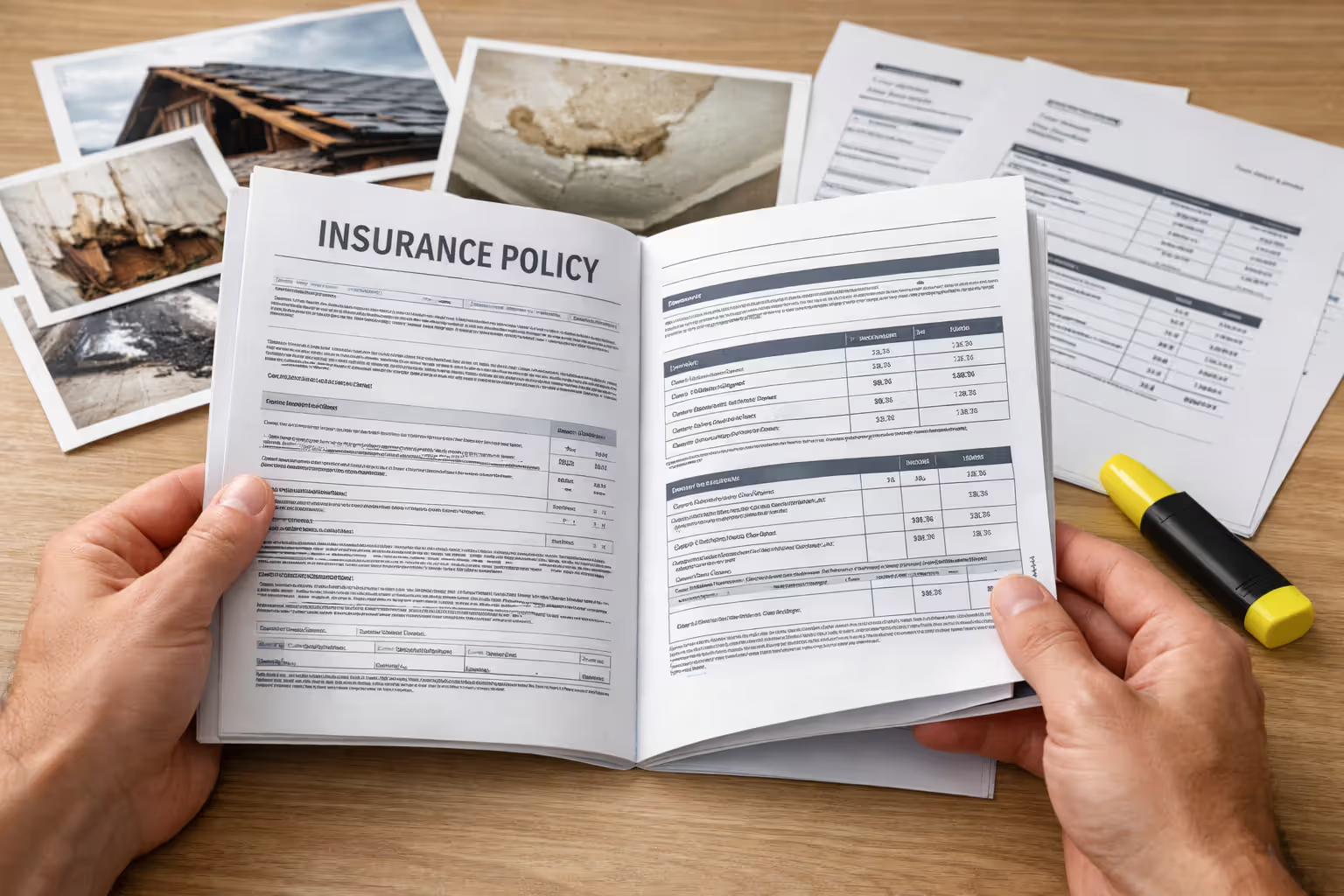
Start by getting independent professional assessments. If the insurance adjuster decided your roof damage came from wear and tear instead of storm damage, hire a roofing contractor or engineer to inspect everything and provide a written opinion. These expert reports carry real weight, particularly when they include the expert's credentials, detailed observations, and reasoning that contradicts what the adjuster concluded.
Photos and videos can be powerful evidence, but only when they're comprehensive enough. Take pictures showing how extensive the damage is, close-ups of specific problems, and wider shots establishing where the damage is and how far it extends. If you can possibly find "before" photos from old real estate listings, previous inspections, or your own archives showing what your property looked like before the damage, those help tremendously.
Get estimates from several licensed contractors—at least three. A single estimate might get dismissed as inflated, but three similar bids from reputable contractors establish what fair repair costs actually are. Make sure the estimates break down labor and materials separately and specify exactly what work the damage requires.
Pull together weather reports, news coverage, or city records that back up your account of what damaged your property. Claiming storm damage from a specific date? National Weather Service data showing high winds or hail in your area that day supports both your timeline and your explanation of what caused the damage.
Go back through your policy one more time, this time looking specifically for coverage rather than focusing on exclusions. Sometimes rejection letters cite exclusions that don't actually apply to your situation, or they overlook endorsements and additional coverages that would actually cover what happened. If your policy includes equipment breakdown coverage, water backup coverage, or other add-ons, double-check whether they might apply even if the base policy doesn't.
Author: Samantha Kessler;
Source: sixth-fleet.com
Writing an Effective Appeal Letter
Your appeal letter is a formal business document, not an emotional outburst. Keep it clear, organized, factual, and professional. Address it to whoever or whatever department is named in your rejection letter, and send it certified mail with return receipt so you can prove they received it.
Organize the letter logically: Start with your policy number, claim number, and the date of the rejection you're appealing. State plainly that you're formally appealing the rejection and requesting reconsideration.
In the main body, tackle each rejection reason head-on. If the insurer said you lacked sufficient documentation, explain what additional evidence you're now providing and how it resolves their concerns. If they disputed what caused the damage, present your expert's findings and explain why that conclusion is more accurate than theirs. If they cited a policy exclusion, explain why that exclusion doesn't actually apply to your circumstances or why a different coverage section actually covers your situation.
Quote specific policy language that supports your position. Pull out the relevant sections and explain how your claim fits within covered events or circumstances. If the policy language could be interpreted multiple ways, point out that ambiguous language is generally interpreted in favor of policyholders under insurance law in most states.
Attach every piece of supporting documentation: expert reports, additional photos, contractor estimates, weather data, receipts, and anything else that backs up your case. Reference these attachments in your letter so the reviewer knows what you've included and why each document matters.
End with a specific request: "Based on this evidence, I'm requesting that you reverse the denial and approve my claim for
." Include your contact information and mention that you're available to discuss this further or provide additional information if they need it.Keep your tone professional throughout. Skip the accusations, threats, or emotional pleas. Stick with facts, policy language, and evidence. Adjusters and appeals reviewers respond much better to well-reasoned arguments than to anger or desperation.
The insurance policy is a contract of adhesion — the insurer writes it, and the policyholder has no say in its terms. Because of this imbalance, courts have long held that any ambiguity in the policy language must be construed in favor of the insured. Homeowners who learn to cite specific policy provisions in their appeals speak the only language insurers truly respect
— Daniel Schwarcz
When to Involve Your Insurance Agent
Your insurance agent can potentially help during disputes, though how much they can actually do varies based on whether they're a captive agent (working only for your insurer) or an independent agent (representing multiple companies).
Independent agents often have more flexibility to go to bat for you. They work with multiple insurers and might have contacts in claims departments who can review your file or offer guidance. They also have business reasons to keep you satisfied—unhappy clients switch agents.
Captive agents work directly for the insurance company, which can limit how much they'll advocate for you. That said, they still have internal access and knowledge that might prove helpful. They can sometimes clarify confusing policy language, explain the insurer's reasoning, or suggest what additional information might change the outcome.
Reach out to your agent early in the dispute. Explain what happened with the rejection and ask whether they can provide insight into why the company made that decision or help facilitate communication with the claims department. Some agents will review your policy and documentation to spot issues you've overlooked or suggest alternative coverage sections that might apply.
Be realistic about what agents can accomplish, though. They don't have authority to reverse rejections themselves, and they might be reluctant to openly contradict their company's claims decisions. If your agent seems unhelpful or unwilling to get involved, don't waste time trying to convince them—put your energy into the formal appeal process instead.
The Formal Appeal Process for Denied Home Insurance Claims
When informal disputes don't work, formal appeal mechanisms give you structured ways to challenge the rejection. Understanding these processes and their timelines helps you navigate each level strategically.
Most insurers maintain internal appeal procedures that let you request review by someone other than the original claims adjuster. This first-level appeal typically involves submitting your appeal letter and supporting documents to a claims supervisor or appeals department. The insurer must review what you submitted and issue a written decision, usually within 30-60 days depending on your state's regulations.
The internal appeal gives you a chance to correct whatever misunderstandings or information gaps led to the initial rejection. Present your case as if the reviewer knows absolutely nothing about your situation—because often they don't beyond what's sitting in the file. Make your argument self-contained and compelling based solely on the documents you're submitting.

Author: Samantha Kessler;
Source: sixth-fleet.com
If the internal appeal doesn't work out, your next step involves your state's insurance department. Every state has a regulatory agency that oversees insurance companies and handles consumer complaints. Filing a complaint triggers an investigation where regulators review your claim file and how the insurer handled your case.
State insurance departments can't actually force insurers to pay claims, but they can identify regulatory violations, unfair claims practices, or policy misinterpretations. When regulators find the insurer acted improperly, they may pressure the company to reconsider or potentially face penalties. Even when they don't find violations, their inquiry often prompts insurers to take a fresh look at questionable rejections.
Amy Bach, who serves as Executive Director of United Policyholders (a nonprofit insurance consumer advocacy organization), puts it this way: "State insurance departments receive thousands of complaints annually about claim denials, and a significant percentage result in insurers reversing or modifying their initial decisions. Regulators have tools and authority that individual policyholders lack, and insurers take their inquiries seriously. Filing a complaint costs nothing and can be done online in most states, making it an essential step for homeowners facing questionable denials."
The complaint process is pretty straightforward. Go to your state insurance department's website, find the consumer complaint section, and fill out the online form or download the complaint form. You'll provide your policy information, describe the claim and rejection, explain why you think the rejection is wrong, and upload supporting documents. The department forwards your complaint to the insurer, which must respond within a specified timeframe—typically 15-30 days.
Throughout the formal appeal process, keep detailed records of every submission, response, and deadline. Build a timeline tracking when you submitted appeals, when the insurer responded, and what each response said. This documentation becomes crucial if you eventually pursue legal action or need to demonstrate a pattern of conduct by the insurer.
Be patient but persistent. Formal appeals take time—often several months from initial rejection to final resolution. That said, don't let long response times discourage you from following up regularly. Check in with the insurer or regulatory agency every couple weeks to check status and show that you're actively pursuing this.
Mistakes That Weaken Your Reconsideration Request
Even solid claims can fail on appeal when homeowners make avoidable mistakes that damage their credibility or legal position. Recognizing these common errors helps you steer clear of them.
Missing deadlines is the most catastrophic mistake. Appeal deadlines aren't suggestions—they're contractual requirements. If your policy or state law gives you 60 days to appeal and you submit on day 61, the insurer can toss your appeal as untimely without even looking at the substance. Put all deadlines in your calendar with reminders at 30 days out, 15 days out, and 7 days before they expire.
Submitting incomplete appeals wastes valuable opportunities. If you request reconsideration but don't include evidence addressing the insurer's concerns, you've essentially asked them to reconsider based on the same information they already rejected once. Before submitting an appeal, verify you've included every document mentioned in your letter and that your argument directly tackles each stated reason for rejection.
Emotional rather than factual appeals rarely accomplish anything. Letters focused on your financial hardship, how many years you've been a customer, or how unfair the rejection feels don't address the insurer's actual objections. Adjusters and appeals reviewers must follow policy terms and company procedures—they can't approve claims out of sympathy. Save emotional appeals for jury trials if you eventually sue—for internal appeals, stick with policy language, evidence, and facts.
Making inconsistent statements creates credibility issues. If you told the first adjuster the damage happened on March 15 but your appeal letter says March 12, the insurer will question whether you're reliable. If your contractor's estimate describes different damage than what you initially reported, the insurer might suspect fraud or exaggeration. Review all your previous statements and make sure your appeal stays consistent with what you've said before, or explicitly explain any changes based on new information you've learned.
Dumping too much irrelevant information can actually hurt you. Some homeowners submit massive files containing every document even remotely related to their property, thinking more equals better. This buries important evidence under piles of irrelevant material and makes it harder for reviewers to find your strongest arguments. Be selective—only include documents that directly support your case.
Accepting partial settlements without understanding the consequences can forfeit your rights. Insurers sometimes offer to pay a portion of rejected claims "as a goodwill gesture" or "without admitting coverage." If you accept and cash that check, you might be releasing your rights to challenge the remaining amount. Read any settlement documents carefully and think about rejecting inadequate offers to preserve your full appeal rights.
Failing to prevent ongoing damage gives insurers ammunition to reduce or reject your entire claim. If your roof's leaking and you don't make temporary repairs, allowing water to damage your home's interior over weeks or months, the insurer can argue that much of the damage resulted from your failure to prevent it rather than from the covered event. Make necessary emergency repairs, document them thoroughly, and save all receipts.
Most denied claims I review contain legitimate coverage — the problem is almost never that the loss isn’t covered, but that the homeowner failed to present the right evidence in the right way. A well-documented appeal with independent expert support transforms a weak file into one an insurer cannot reasonably ignore
— Robert Hunter
When to Hire a Public Adjuster or Attorney
Some rejections are straightforward enough to dispute on your own, while others need professional help. Knowing when to bring in experts can dramatically improve your odds of success, though it comes with costs that reduce your net recovery.
| Approach | What It Costs | Works Best For | How Long It Takes | Success Rate |
| Handling it yourself | Nothing except your time | Documentation problems; claims under $10,000; straightforward coverage questions | 1-3 months | 20-40% overturn rate |
| Public adjuster | 10-15% of whatever you recover (contingency basis) | Technical damage assessment; fighting over repair costs; claims exceeding $25,000 | 2-6 months | 40-60% overturn rate |
| Insurance lawyer | $250-500 per hour or 25-40% contingency | Coverage interpretation fights; bad faith situations; claims over $50,000; rejections involving legal questions | 6-18+ months | 50-70% for legitimate claims |
Public adjusters are licensed professionals who assess damage and negotiate with insurers for you. They work on contingency, taking a percentage (typically 10-15%) of whatever settlement you end up receiving. For complicated claims involving extensive damage or technical issues, public adjusters often recover substantially more than homeowners could manage alone, even after deducting their fee.
Think about hiring a public adjuster when damage assessment gets technical or extensive (fire damage, major water intrusion, structural problems), when the insurer's estimate seems unreasonably low, or when you lack the time or expertise to document and negotiate effectively. Public adjusters understand what insurers look for, how to document damage comprehensively, and what arguments actually resonate with claims departments.
Insurance attorneys become necessary when disputes involve legal questions rather than just damage assessment. If the insurer's rejecting coverage based on how they're interpreting your policy, if you suspect bad faith (unreasonable delays, inadequate investigation, or wrongful rejection), or if your claim exceeds $50,000 and the insurer won't negotiate reasonably, an attorney can evaluate whether you have grounds for a lawsuit.
Attorneys typically work either hourly ($250-500 per hour) or on contingency (25-40% of whatever you recover). Hourly arrangements make sense for limited work like reviewing your policy or drafting demand letters. Contingency arrangements work better for full representation through litigation, since you pay nothing unless you actually recover something.
Lots of attorneys provide free initial consultations for insurance disputes. Use these consultations to get professional opinions on how strong your claim is and whether legal action makes sense given potential recovery and costs. Ask specifically about the attorney's experience with homeowners insurance disputes and their track record with settlements versus trials.
Timing matters when you're hiring professionals. Public adjusters work most effectively when brought in early—ideally before you've even submitted your claim or immediately after a rejection. They can properly document damage and present claims correctly from the beginning. You can consult attorneys at any stage but they become essential once you've exhausted internal appeals and are considering litigation.
The cost-benefit math is pretty simple: If a professional can recover $30,000 more than you could alone but charges $5,000 or 15% ($4,500), you're still $25,500 ahead. However, if your claim's only worth $5,000 total, paying 15% ($750) or attorney fees might not make sense unless the professional works on contingency and you can't recover anything without professional help.
Preventing Future Claim Denials
Successfully overturning a rejection teaches valuable lessons about how insurers evaluate claims. Apply those lessons going forward to prevent future rejections and ensure smoother claims experiences.
Review your policy every year, not just when you're filing claims. Go through your declarations page, coverage sections, exclusions, and endorsements at renewal time. Understand what's actually covered, what's excluded, policy limits for different loss types, and any special conditions or requirements. Many rejections happen simply because homeowners don't know what their policies genuinely cover.

Author: Samantha Kessler;
Source: sixth-fleet.com
Document your home's condition on a regular basis. Take comprehensive photos and videos of your home's interior and exterior at least once a year. Store these in cloud storage or somewhere off-site so they're available even if your home gets destroyed. This baseline documentation proves your home's pre-loss condition and helps establish that damage was sudden and accidental rather than gradual deterioration.
Hang onto maintenance records for major systems and structural components. Save receipts and reports from roof inspections, HVAC servicing, plumbing work, electrical updates, and foundation inspections. When insurers claim damage resulted from poor maintenance, these records prove you maintained your property responsibly.
Report claims quickly, even when you're uncertain whether you'll actually pursue them. Most policies require "prompt" or timely notice of losses. You can always decide not to proceed with a claim after reporting it, but you can't fix late reporting after the deadline's passed. When damage happens, notify your insurer within a few days, even if you're still figuring out the full extent.
Photograph damage right away and extensively before making any repairs. Take photos from every angle, include both close-ups and wide shots, and capture date stamps when possible. If you must make emergency repairs to stop further damage, photograph the damage first, then photograph the repair process and keep all receipts.
Understand the distinction between emergency repairs and permanent repairs. Policies typically require you to make temporary repairs to stop further damage (tarping a roof, shutting off water) but want you to wait for adjuster inspection before permanent repairs. Emergency repairs usually get reimbursed; unauthorized permanent repairs often don't.
Think about whether your coverage limits actually match your needs. Many homeowners carry coverage limits below their home's actual replacement cost. When disaster hits, they discover their policy won't fully cover rebuilding. Review your dwelling coverage limit every few years and after major renovations to verify it reflects current construction costs.
Maintain an updated inventory documenting your personal property. Photograph or video your belongings, note purchase dates and prices for valuable items, and store receipts for expensive purchases. This inventory makes personal property claims much easier to prove and reduces fights over values.
Ask questions before assuming you're covered. If you're planning renovations, starting a home business, getting a dog, or making other significant changes, contact your agent to discuss coverage implications. Some changes require endorsements or policy modifications to maintain full coverage.
FAQ
Conclusion
A rejected home insurance claim doesn't mean you've run out of options. Most rejections can be challenged, and many get reversed when homeowners respond with organized evidence and refuse to give up. Start by pinpointing exactly why your claim got rejected, then systematically address those concerns with documentation, expert opinions, and clear arguments grounded in your policy language.
The appeal process has multiple stages—internal company reviews, state insurance department complaints, and potentially legal action. Each stage offers another opportunity to make your case. Success requires patience, meticulous attention to detail, and willingness to gather whatever evidence insurers need to reconsider their decisions.
Figure out when to handle appeals yourself and when professional help justifies its cost. For straightforward documentation problems or smaller claims, self-managed appeals frequently succeed. For complicated damage assessment, coverage disputes, or high-value claims, public adjusters and attorneys can recover substantially more than their fees cost you.
Finally, learn from the experience to avoid future rejections. Better documentation, annual policy reviews, and understanding your coverage before losses occur will make future claims smoother and reduce the likelihood of disputes. Your insurance policy is a contract—knowing what it says and what it requires puts you in the strongest position to get the coverage you've been paying for when you actually need it.