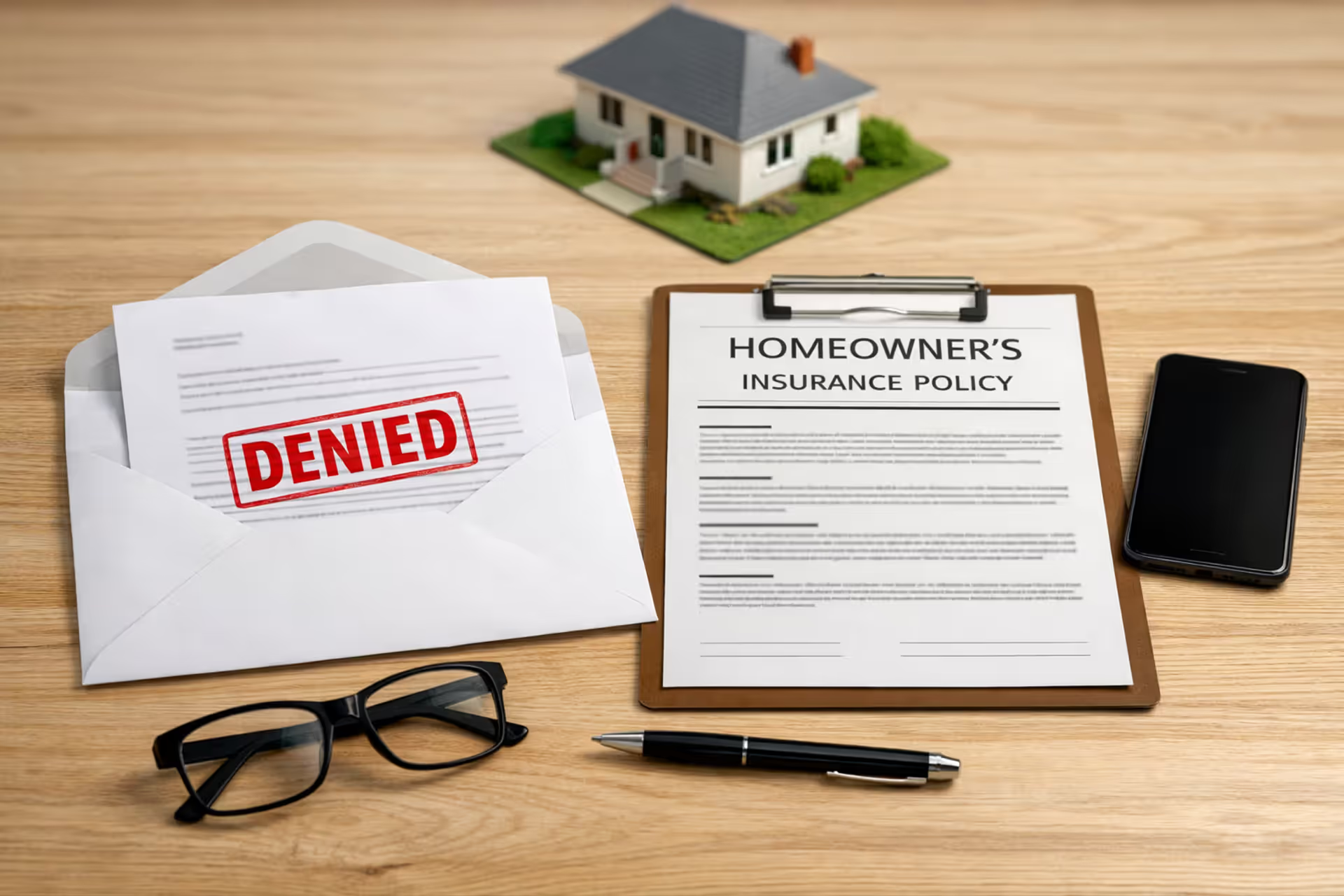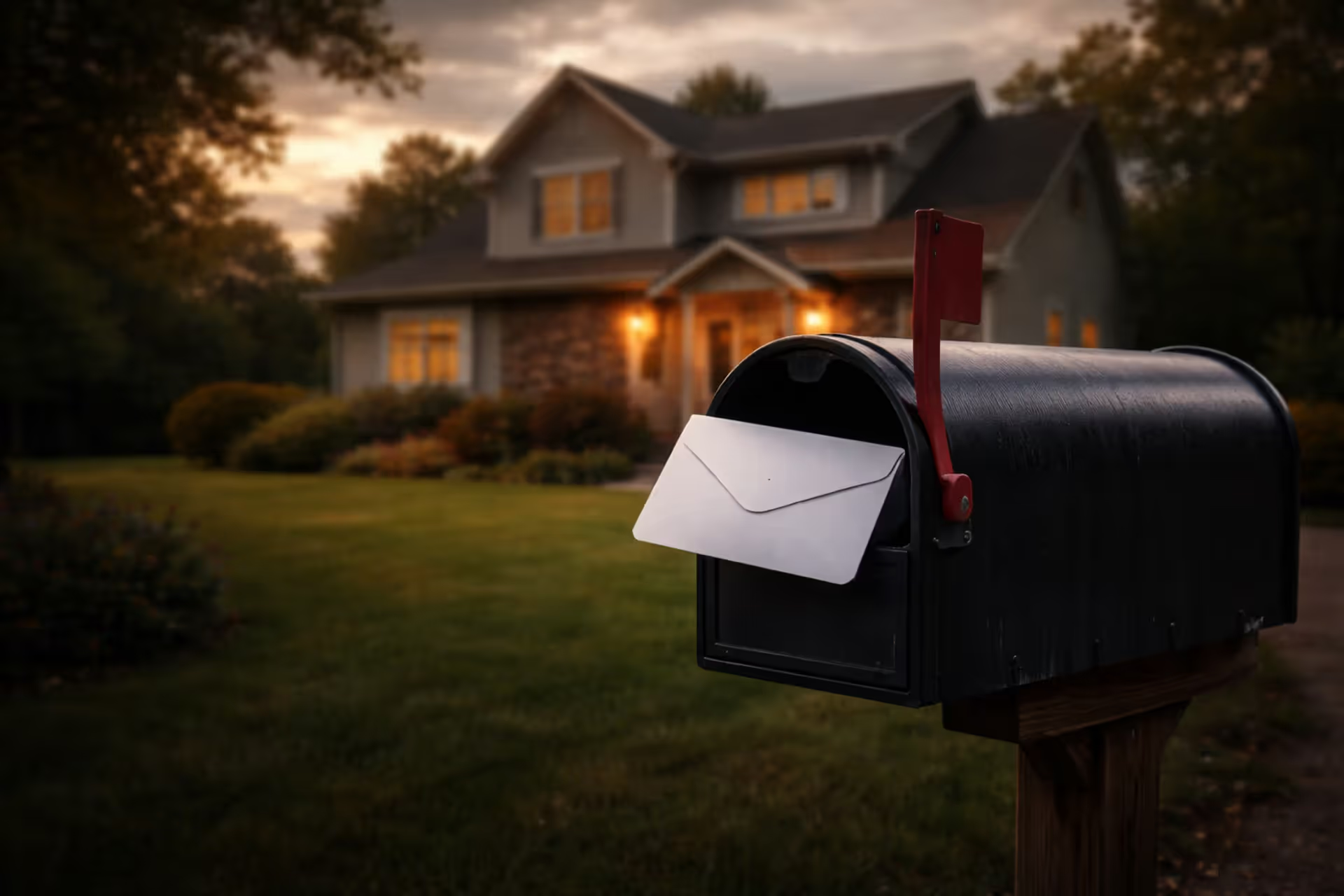
A suburban house with a mailbox containing an envelope, representing a homeowners insurance cancellation notice
Can Homeowners Insurance Drop You After a Claim? What Policyholders Need to Know

Content
Filing a homeowners insurance claim should bring relief, not anxiety about losing coverage. Yet thousands of homeowners each year receive notices that their insurer won't renew their policy—often after submitting what seemed like a legitimate claim. Understanding when and why insurance companies can terminate coverage helps you protect your financial security and make informed decisions about claim filing.
According to Robert Hunter, former Texas Insurance Commissioner and Director of Insurance at the Consumer Federation of America: "Insurance companies have broad authority to non-renew policies at expiration, but state laws impose important timing restrictions and notice requirements. Homeowners should know that mid-term cancellations are heavily regulated and typically limited to serious violations like non-payment or fraud."
How Insurance Companies Can End Your Coverage (And the Legal Difference)
Insurance companies have two distinct methods for ending your homeowners policy, each governed by different rules and timelines.
Policy Cancellation vs. Non-Renewal Explained
Policy cancellation after claim homeowners insurance occurs when your insurer terminates coverage before your policy expires. This mid-term cancellation faces strict legal limitations in most states. Insurers typically can only cancel during the policy period for specific reasons: non-payment of premiums, material misrepresentation on your application, fraud, or a substantial increase in hazard (like leaving your home vacant without notification).
Non-renewal happens when your insurance company dropping homeowners policy chooses not to offer you another term when your current policy expires. This gives insurers significantly more flexibility. While they still must provide proper notice and follow state regulations, the grounds for non-renewal are much broader than mid-term cancellation.
| Feature | Mid-Term Cancellation | Non-Renewal at Expiration |
| Timing | During active policy period | At policy expiration date |
| Notice required | 10-30 days (varies by state and reason) | 30-120 days before expiration |
| Common reasons | Non-payment, fraud, material misrepresentation, substantial hazard increase | Multiple claims, property condition, risk reassessment, business decisions |
| Your options | Limited; often must find immediate replacement | More time to shop for alternative coverage |
| Impact on future coverage | More severe; suggests serious issue | Less stigmatizing; may indicate market conditions |
State Regulations That Protect Homeowners
Every state maintains its own insurance regulations, creating a patchwork of consumer protections. California prohibits non-renewal based solely on filing a single claim. Florida requires 100 days' notice for non-renewal in most circumstances. Texas restricts non-renewals within the first 60 days of a new policy unless the policyholder committed fraud or failed to pay premiums.
Most states prohibit cancellation or non-renewal based on claims resulting from catastrophic events like hurricanes or wildfires when a state of emergency has been declared. These protections typically extend for a specified period—often 90 days to two years—following the disaster declaration.
Author: Ethan Caldwell;
Source: sixth-fleet.com
When Can Your Insurer Drop You After Filing a Claim?
Can homeowners insurance drop you after a claim? The answer depends on timing, your claims history, and state law.
During your initial policy period—usually the first 60 days—insurers have broader cancellation rights as they verify information and assess actual risk. After this underwriting period, mid-term cancellation becomes much harder for insurers to execute legally. They cannot simply cancel because you filed a legitimate claim.
However, non renewal homeowners insurance after claim represents a different scenario. When your policy approaches expiration, insurers can decide not to offer renewal for reasons including your claims history. They must provide advance notice—typically 30 to 120 days depending on your state and how long you've been insured with the company.
The timing matters significantly. If you file a claim in month three of a 12-month policy, the insurer generally cannot cancel you mid-term for that claim alone. But when renewal time arrives nine months later, that claim becomes part of your history they'll evaluate.
The essence of insurance is the pooling of risk, but insurers must constantly balance their obligation to pay legitimate claims against the need to maintain a financially sustainable book of business. Homeowners who understand this tension are better equipped to make strategic decisions about when to file a claim and when to absorb a loss themselves
— J. Robert Hunter
Some states provide additional protections. After you've maintained coverage with the same insurer for several years (often three or more), certain states require stronger justification for non-renewal and longer notice periods. This rewards policyholder loyalty with enhanced stability.
Natural disaster claims often receive special treatment. If your area experiences a declared emergency, many states temporarily prohibit non-renewals related to claims from that event. This prevents mass coverage loss in communities recovering from catastrophes.
The Most Common Reasons Insurers Cancel or Non-Renew Homeowners Policies
Understanding non renewal reasons homeowners insurance face helps you anticipate and potentially avoid coverage loss.
Multiple claims within a short timeframe top the list. Insurance companies track your claims frequency closely. Two claims within three years might trigger scrutiny. Three or more claims often lead to non-renewal, regardless of total payout amounts. Even small claims accumulate in your CLUE report (Comprehensive Loss Underwriting Exchange), which insurers review when making renewal decisions.
Claim type matters considerably. Water damage claims—especially from sources suggesting maintenance neglect like slow leaks or burst pipes—raise red flags. Dog bite claims create liability concerns that many insurers won't tolerate even once. Theft claims sometimes prompt questions about security measures. Conversely, a single weather-related claim (hail damage, windstorm) typically carries less weight.
Property condition issues frequently trigger non-renewal. If an inspector visits after a claim and discovers a deteriorating roof, outdated electrical systems, or foundation problems unrelated to your claim, the insurer may decide your property presents too much risk. They might offer renewal contingent on specific repairs within a deadline.
Non-payment or late payment history provides clear grounds for both cancellation and non-renewal. Even if you eventually pay, patterns of late payments signal financial instability that insurers consider when assessing risk.
Increased risk factors include acquiring certain dog breeds, installing a trampoline, adding a pool without notification, or starting a home business. These changes can violate policy terms or exceed the insurer's risk tolerance.
Fraud suspicion leads to immediate cancellation. Inflating claim values, misrepresenting damage causes, or submitting claims for pre-existing damage all constitute fraud. Insurers investigate suspicious claims thoroughly, and proven fraud results in cancellation plus potential criminal charges.
Business decisions unrelated to your claims also drive non-renewals. Insurers sometimes exit entire geographic markets, stop writing policies in specific ZIP codes, or eliminate certain coverage types. When this happens, you'll receive non-renewal notice even with a perfect claims record.
Here's how claim thresholds vary across selected states:
| State | Claims Allowed in 3 Years | Special Protections | Notes |
| California | Varies; cannot non-renew for single claim | Strong consumer protections; limits on non-renewal | Proposition 103 provides extensive rights |
| Florida | Typically 2-3 claims | 100-day notice required; hurricane claim protections | Recent reforms increased insurer flexibility |
| Texas | 2-3 claims common threshold | Cannot non-renew in first 60 days | Strong initial policy period protections |
| New York | Usually 3 claims | Cannot non-renew for single claim in most cases | Detailed justification required |
| North Carolina | 2 claims often trigger review | Rate Bureau oversight | State-regulated market with more stability |
| Louisiana | 2-3 claims typical | Hurricane/disaster protections | Post-Katrina reforms strengthened rules |
| Ohio | Varies by insurer (2-4 claims) | Standard 60-day notice | Fewer state-mandated protections |
| Colorado | 2-3 claims common | Wildfire claim protections in some areas | Growing restrictions in high-risk zones |
What Happens If Your Insurance Company Drops You: Timeline and Next Steps
Receiving a cancellation or non-renewal notice triggers an urgent timeline requiring immediate action.
How Much Notice You'll Receive
Homeowners policy cancellation rules mandate specific notice periods. For non-payment cancellations, expect 10 to 30 days' notice depending on your state. For other mid-term cancellations, you'll typically receive 30 to 60 days.
Non-renewal notices arrive further in advance—usually 30 to 120 days before your policy expires. Longer-term policyholders often receive extended notice periods. The notice must arrive via certified mail or another verifiable method in most states.
Your notice should explain the specific reason for cancellation or non-renewal. Vague explanations like "business decisions" may be legally insufficient in some states. If the reason isn't clear, contact your state insurance department—you're entitled to a specific explanation.
Finding New Coverage After Cancellation
Start shopping immediately upon receiving notice. Don't wait until the last week, as finding replacement coverage takes time and rushing leads to poor decisions.
Contact an independent insurance agent who works with multiple carriers. Different insurers have different risk appetites; one company's reject might be another's acceptable risk. Be honest about your claims history—it's documented in your CLUE report, which new insurers will access.
Expect higher premiums. Non renewal homeowners insurance after claim typically means moving to a more expensive policy. Some homeowners see rate increases of 20% to 50% or more, depending on their claims history and available market options.
If standard market insurers decline coverage, explore surplus lines carriers or your state's FAIR Plan (Fair Access to Insurance Requirements). FAIR Plans provide basic coverage when you cannot obtain insurance through normal channels. Coverage is more limited and expensive, but it protects your mortgage and provides essential protection while you work to improve your insurability.
Consider whether you can delay your next claim filing. If you're dropped due to claim frequency, maintaining a claims-free record for three to five years can significantly improve your options and rates. During this rebuilding period, only file claims for major losses exceeding several thousand dollars.

Author: Ethan Caldwell;
Source: sixth-fleet.com
How to Prevent Your Homeowner Policy From Being Cancelled
Strategic claim management and property maintenance significantly reduce cancellation risk.
Think carefully before filing small claims. If damage costs $2,000 and your deductible is $1,500, you'll receive only $500 while adding a claim to your record. Many insurance professionals suggest only filing claims exceeding twice your deductible amount. Self-funding smaller repairs protects your claims history.
Maintain your property proactively. Regular roof inspections, plumbing maintenance, electrical system updates, and structural repairs prevent both claims and the property condition issues that trigger non-renewal. Document maintenance with receipts and photos—this evidence can support your case if an insurer questions your property's condition.
Address insurer concerns immediately. If you receive an inspection notice or letter requesting specific repairs, complete them within the deadline. Request extensions in writing if you need more time, explaining your plan and timeline. Ignoring these notices virtually guarantees non-renewal.
Communicate changes that affect coverage. Getting a dog? Installing a pool? Starting a home business? Contact your insurer before making these changes. Proactive disclosure allows you to adjust coverage appropriately or find alternative insurance before problems arise. Discovering these changes after a claim creates fraud concerns.
Build a relationship with your agent. Agents can sometimes advocate for policy retention when you face non-renewal. They may know which underwriters have flexibility or what improvements might change the decision. An agent familiar with your situation and property provides valuable support during renewal challenges.
Too many consumers treat insurance like a prepaid maintenance plan, filing claims for every small loss. The smartest homeowners use insurance as a financial safety net for catastrophic events and self-insure the smaller risks. This approach not only saves money over time but dramatically reduces the chance of policy non-renewal
— Loretta Worters
Consider higher deductibles. Increasing your deductible from $1,000 to $2,500 or $5,000 reduces your premium while naturally discouraging small claims. This strategy demonstrates to insurers that you're retaining more risk and using insurance for significant losses only.
Review your policy annually. Understanding exactly what's covered prevents filing claims for excluded items—which frustrates insurers and wastes your time. Knowing your coverage also helps you make informed decisions about whether specific damage warrants a claim.
Your Rights When Facing Policy Cancellation or Non-Renewal
Homeowners policy cancellation rules include important consumer protections you can invoke when facing coverage loss.
You're entitled to a clear, specific explanation for cancellation or non-renewal. If the notice contains vague language or you don't understand the reasoning, request clarification in writing. Some states require insurers to provide detailed justification upon request.
You can dispute the decision. If you believe the cancellation or non-renewal violates state law or policy terms, file a complaint with your state insurance commissioner. This free process can result in investigations, mandated policy reinstatement, or other remedies. State insurance departments maintain consumer assistance divisions specifically for these disputes.
Request your CLUE report. You're entitled to one free copy annually. Review it for accuracy—errors in claims reporting can lead to unjustified non-renewals. If you find mistakes, dispute them through the reporting agency's correction process. Documentation proving an error (like a claim listed under your property that actually occurred at a different address) can reverse a non-renewal decision.
Document all communications. Keep copies of every notice, letter, email, and note from phone conversations with your insurer. Record dates, times, and the names of representatives you speak with. This documentation becomes crucial if you need to file a complaint or appeal.
Understand wrongful cancellation remedies. If an insurer cancels your policy in violation of state law, you may have grounds for legal action. Some states impose penalties on insurers for improper cancellations. Consult with an attorney specializing in insurance law if you believe your cancellation was illegal.
Know your state's specific protections. Contact your state insurance department to understand the exact rules governing cancellation and non-renewal in your jurisdiction. Many departments publish consumer guides explaining your rights in plain language.

Author: Ethan Caldwell;
Source: sixth-fleet.com
Frequently Asked Questions About Homeowners Insurance Cancellation After Claims
Protecting Your Coverage While Using It When Needed
Homeowners insurance exists to protect you from financial catastrophe, not to cover every minor repair. The key to maintaining coverage while using it appropriately lies in understanding the balance between filing legitimate claims and preserving your insurability.
Before filing any claim, calculate the net benefit after your deductible and consider the long-term impact on your insurance costs and availability. For significant losses—structural damage, major theft, substantial liability events—file without hesitation. That's exactly what insurance is for.
For smaller issues, consider whether self-funding the repair makes financial sense when weighed against potential rate increases and non-renewal risk. A $3,000 repair might seem claim-worthy, but if it leads to a $500 annual premium increase for five years plus non-renewal hassles, you've lost money overall.
Maintain your property diligently, document that maintenance, and communicate openly with your insurer about changes affecting your coverage. These practices demonstrate that you're a responsible homeowner managing risk appropriately—exactly the type of policyholder insurers want to retain.
If you do face cancellation or non-renewal, act immediately, understand your rights, and don't panic. Replacement coverage exists, and your situation will improve over time with a clean claims record. The insurance market constantly changes, and today's non-renewal doesn't mean permanent uninsurability.
Your homeowners policy represents a business relationship, not a guaranteed entitlement. Insurers assess risk continuously and make business decisions accordingly. By understanding their perspective while protecting your own interests, you can navigate this relationship successfully and maintain the coverage protecting your most valuable asset.