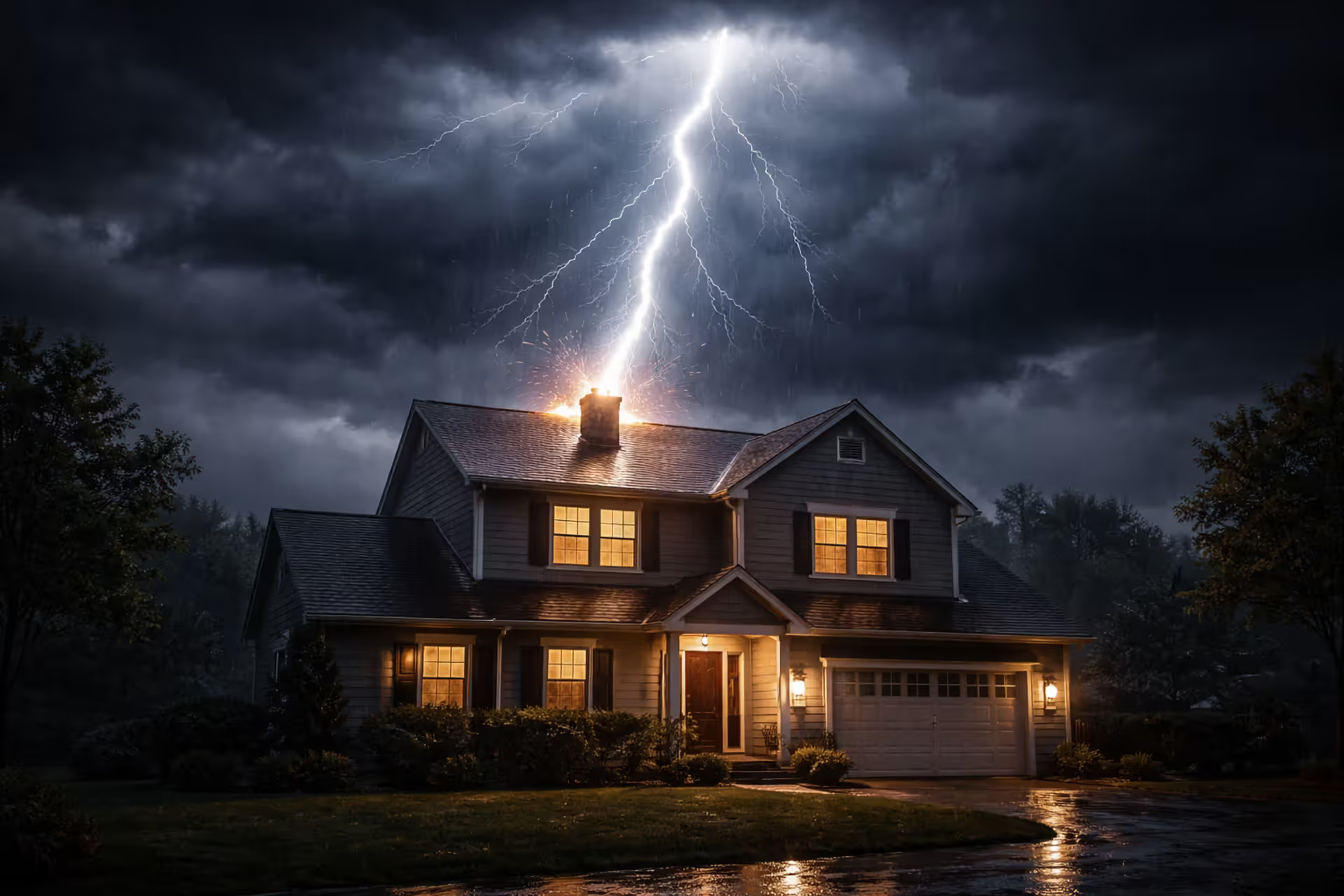
Lightning bolt striking the roof of a suburban American house during a nighttime thunderstorm
Does Home Insurance Cover Lightning Strikes and Surge Damage

Content
Lightning strikes US homes roughly 25 million times each year, causing billions in property damage. When a bolt hits your roof or sends a power surge through your electrical panel, you need to know exactly what your homeowners insurance will pay for—and what it won't.
Most standard homeowners policies do cover lightning damage, but the details matter. A direct strike that punches a hole through your roof gets handled differently than a surge that fries your refrigerator. Understanding these distinctions before disaster strikes can save you thousands of dollars and prevent claim denials.
How Lightning Damage Is Classified in Standard Homeowners Policies
Lightning qualifies as a named peril in most homeowners insurance policies. This means insurers explicitly list it as a covered cause of loss, rather than leaving coverage open to interpretation.
An HO-3 policy—the most common type in the United States—covers your home's structure against lightning on an "open perils" basis. Your dwelling is protected unless the policy specifically excludes the cause of damage. Personal property inside receives "named perils" coverage, meaning lightning must be listed (which it is) for your belongings to be covered.
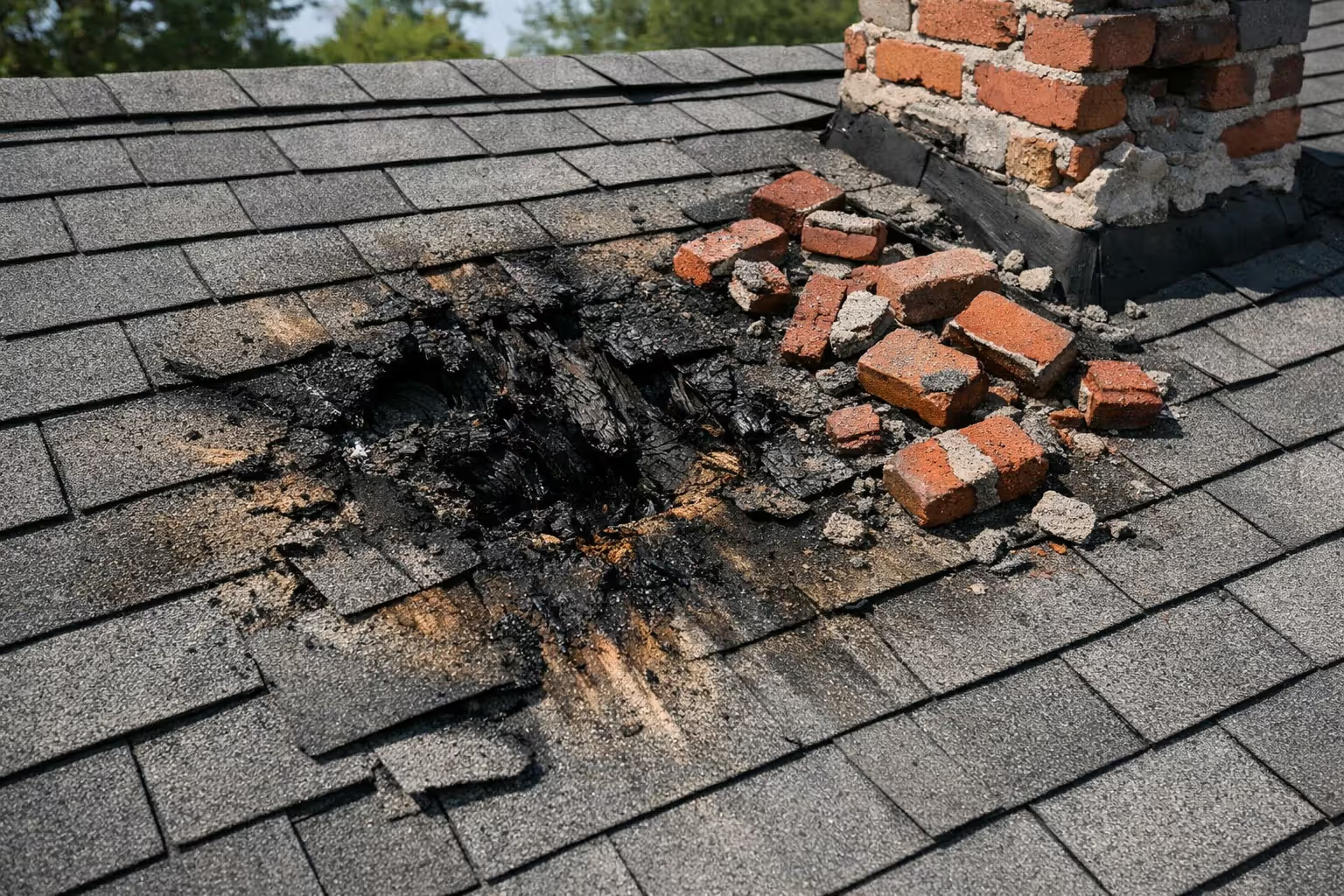
The distinction between direct and indirect damage creates confusion during claims. A direct strike occurs when lightning physically contacts your home, causing immediate visible damage like shattered shingles, cracked chimneys, or burned wood. Indirect damage happens when lightning strikes nearby—perhaps hitting a transformer or power line—and sends a voltage spike through your electrical system.
Both types typically receive coverage, but insurers apply different limits and scrutiny. Direct strikes usually face fewer questions because the damage is obvious. Indirect surge damage requires more documentation since multiple homes on the same grid might experience the same event, and proving causation becomes trickier.
Author: Samantha Kessler;
Source: sixth-fleet.com
Lightning Coverage by Policy Type
| Policy Type | Structure Coverage | Personal Property | Electronics Limits | Power Surge Coverage |
| HO-3 (Standard) | Open perils (including lightning) | Named perils (lightning included) | Typically $1,500–$5,000 per item | Included, often with sub-limits |
| HO-5 (Premium) | Open perils | Open perils | Higher limits, sometimes no caps | Broader coverage, fewer exclusions |
| HO-8 (Older Homes) | Named perils only | Named perils | Lower limits, around $1,000 | May require endorsement |
| HO-4 (Renters) | N/A (landlord's policy) | Named perils (lightning included) | $1,000–$2,500 typical | Limited, often requires rider |
HO-5 policies provide the most comprehensive lightning protection but cost 15-20% more than standard HO-3 coverage. Older homes insured under HO-8 policies face more restrictions because these policies cover actual cash value rather than replacement cost.
What Lightning Damage Your Homeowners Insurance Covers
Lightning damage coverage extends beyond the obvious. Policies typically reimburse multiple categories of loss stemming from a single event, though each comes with specific conditions.
Direct Strike Damage to Your Home's Structure
When lightning physically strikes your house, the resulting structural damage almost always receives full coverage up to your dwelling limit. This includes:
- Roof repairs or replacement when strikes puncture shingles, decking, or trusses
- Masonry work for damaged chimneys (a common lightning target due to height)
- Siding replacement where the electrical charge exits the structure
- Attic fire damage from ignited insulation
- Foundation cracks caused by ground discharge
A homeowner in Tampa discovered this coverage firsthand when lightning struck their two-story colonial, traveling through the chimney and cracking the brick facade. The insurer paid $18,000 for masonry repairs and another $6,000 for interior wall damage where the current exited through plumbing pipes.
Structural claims rarely face denial if you report damage promptly and can establish the timeline. Take dated photos immediately after the storm and before making temporary repairs.
Electrical System and Appliance Damage from Power Surges
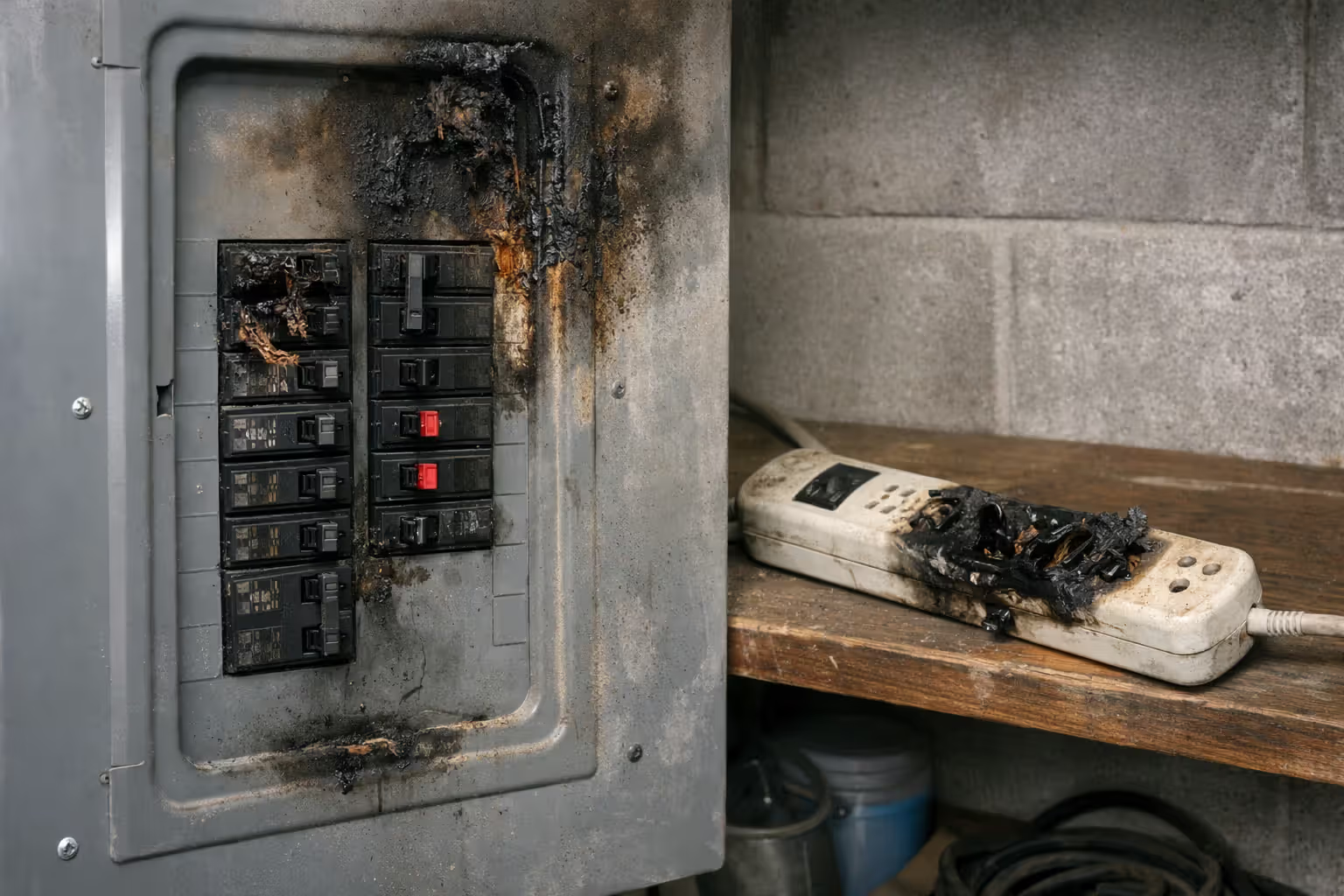
Power surges from lightning—whether from direct strikes or nearby hits—can destroy anything plugged into your electrical system. Standard policies cover:
- Circuit breaker panels and service boxes
- Hardwired HVAC systems
- Built-in appliances (dishwashers, ranges, water heaters)
- Well pumps and sump pumps
- Garage door openers
- Ceiling fans and light fixtures
Most policies cap electronics coverage at $1,500 to $5,000 per item unless you've scheduled high-value equipment separately. A $3,000 refrigerator typically receives full reimbursement, but a $8,000 home theater system might hit policy limits.
The challenge with surge damage: proving the lightning caused it. Insurers sometimes argue that equipment failed due to age or manufacturing defects. Keeping maintenance records and having a documented storm event strengthens your claim considerably.
Author: Samantha Kessler;
Source: sixth-fleet.com
Fire Damage Caused by Lightning
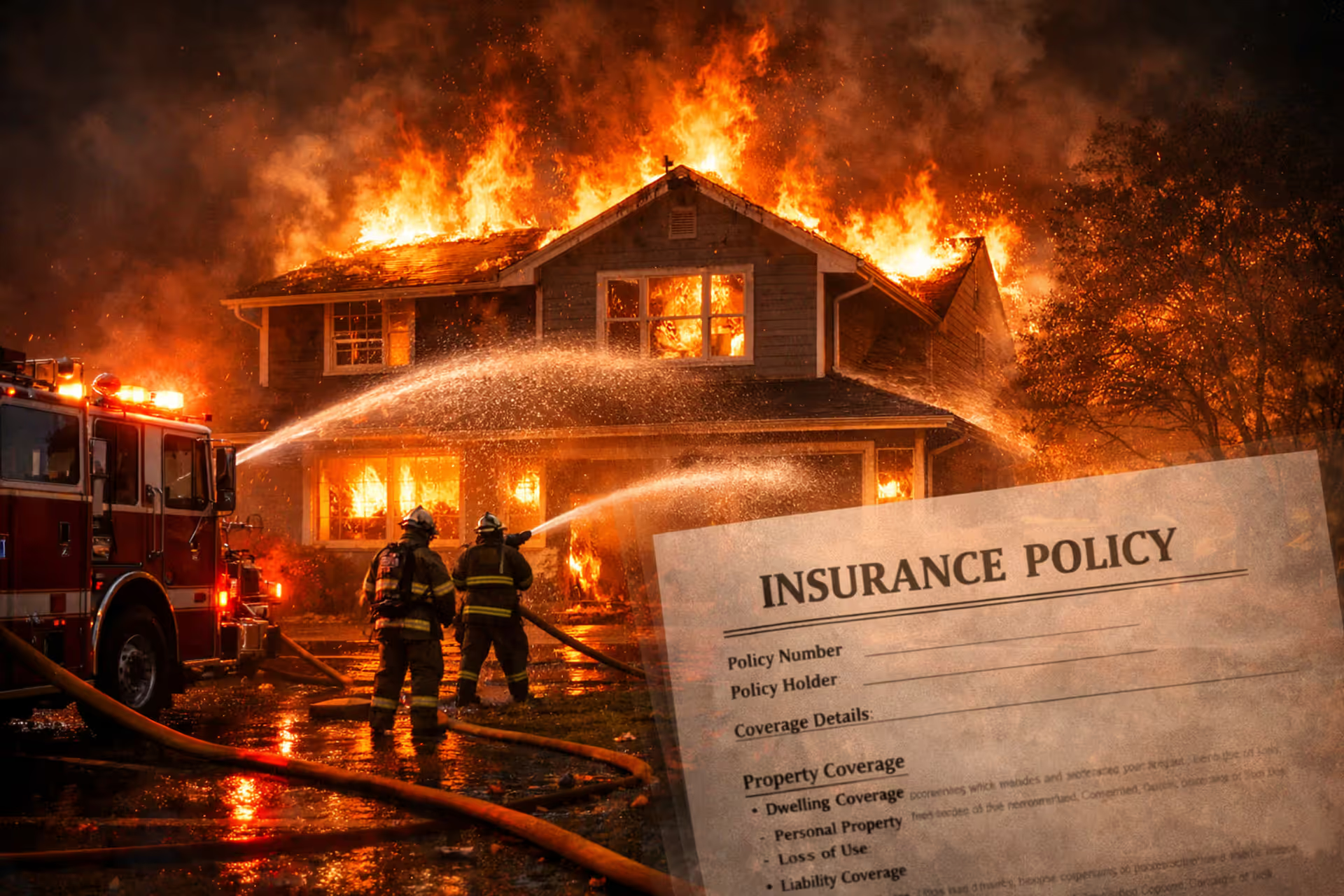
Lightning-sparked fires represent one of the costliest claim categories. When a strike ignites your home, your policy covers:
- Fire suppression and smoke damage throughout the structure
- Water damage from firefighting efforts
- Temporary living expenses while your home undergoes repairs
- Contents destroyed by fire, smoke, or water
- Debris removal and cleanup
The Insurance Information Institute reports that lightning fires cause an average of $30,000 in damage per incident—significantly higher than other fire causes because the ignition often starts in hidden areas like attics or wall cavities, allowing flames to spread before detection.
A New Jersey family learned this when lightning struck their ranch home during a midnight storm. They smelled smoke an hour later. By the time firefighters arrived, flames had spread through the attic. Their insurer paid $127,000 for structural repairs, $45,000 for contents, and $18,000 for six months of rental housing.
Average Lightning Damage Claim Costs by Category
| Damage Type | Average Claim Amount | Typical Coverage Limit |
| Structural damage | $8,000–$35,000 | Dwelling coverage limit (usually $200,000+) |
| Electrical system | $2,500–$12,000 | Dwelling coverage (permanent fixtures) |
| Appliances/electronics | $1,500–$8,000 | $1,500–$5,000 per item (standard policy) |
| HVAC systems | $3,500–$15,000 | Dwelling coverage (if hardwired) |
| Fire damage | $30,000–$150,000+ | Dwelling + contents limits apply |
These figures come from industry data compiled by the Insurance Services Office. Actual payouts depend on your specific policy limits, deductible, and depreciation factors.
Common Lightning Damage Claims That Get Denied (And Why)
Understanding denial reasons helps you avoid costly mistakes during the claims process. Insurers reject or reduce lightning claims for several predictable reasons.
Insufficient documentation tops the list. You report that a surge destroyed your computer, TV, and microwave, but you can't prove they worked before the storm or that a lightning event occurred. Without dated photos, repair estimates, or weather service confirmation, adjusters may suspect pre-existing failure.
Maintenance-related exclusions catch homeowners off guard. If lightning reveals that your electrical panel violated code or your roof had pre-existing damage, insurers may reduce payouts. A strike that exposes rotted roof decking might result in coverage for the lightning hole but not the surrounding deterioration.
Power surge sub-limits frustrate many policyholders. Your policy covers $300,000 in personal property, but electronics face a $2,500 aggregate limit for surge damage. When lightning fries $12,000 worth of computers, TVs, and appliances, you receive only a fraction of replacement cost.
Timing issues create problems. Most policies require "prompt" reporting—typically within 60 days. A homeowner who doesn't notice subtle HVAC damage until the next cooling season might find their claim denied as untimely.
Indirect damage disputes arise when insurers argue the loss stemmed from power company negligence rather than lightning. If a transformer failure caused the surge (even if lightning struck the transformer), some insurers attempt to redirect claims to the utility company, which rarely accepts liability.
The number one reason lightning claims get reduced is lack of proof that equipment was functional before the event. I've seen $20,000 claims cut to $3,000 because the homeowner couldn't produce recent photos or repair records showing the HVAC system worked the day before the storm. Always document your high-value systems annually—it's the best insurance for your insurance
— Marcus Chen
Gradual damage arguments sometimes surface. An insurer might claim that repeated small surges over time degraded your electronics, not a single lightning event. This defense works when you can't pinpoint the exact storm date.
Detached structure limitations surprise homeowners with workshops or pool houses. These buildings often carry separate, lower coverage limits—sometimes just 10% of your dwelling coverage. A $15,000 lightning claim on a detached garage might face a $20,000 policy cap, but if you assumed your $300,000 dwelling coverage applied, you'll be disappointed.
How to File a Lightning Insurance Claim: Step-by-Step Process
Filing correctly from the start prevents delays and maximizes your payout. Follow this sequence:
Immediately after the strike: Document everything with photos and video before touching anything. Capture damaged areas from multiple angles, including wide shots showing context. If safe, photograph your electrical panel, especially if breakers have tripped. Note the date and time.
Within 24 hours: Report the claim to your insurer. Most companies offer 24/7 claims hotlines. Don't wait to assess full damage—initial reports can be updated. Request a claim number and the name of your assigned adjuster.
Before the adjuster arrives: Create a written inventory of damaged items with purchase dates and costs if possible. Gather receipts, credit card statements, or product manuals. For electronics, note model numbers and serial numbers. Pull up weather service data confirming lightning activity in your area during the relevant timeframe.
During the inspection: Walk through the property with the adjuster, pointing out all damage. Don't assume they'll find everything—attics, crawl spaces, and electrical panels require specific attention. Ask questions about coverage limits and depreciation calculations.
Get multiple estimates: Your insurer will provide one, but independent contractor quotes give you negotiating leverage. Focus on licensed electricians and roofing contractors who can document code violations or safety hazards caused by the strike.
Save surge protector evidence: If you had surge protectors installed, show receipts and the damaged units to the adjuster. Some policies offer higher limits when protective devices were in use, and it demonstrates you took reasonable precautions.
Track temporary repairs: If you need emergency tarping or electrical work to prevent further damage, keep all receipts. Policies cover reasonable mitigation costs, but "reasonable" has limits—a $500 tarp job is fine; a $5,000 temporary roof probably needs pre-approval.
Follow up weekly: Claims can stall. Contact your adjuster every five to seven business days for status updates. Document these conversations with dates and summaries.

Author: Samantha Kessler;
Source: sixth-fleet.com
Review the settlement carefully: When the insurer sends a payment offer, verify it against your estimates and policy limits. Check whether they applied depreciation (actual cash value) or full replacement cost. You typically have 30-60 days to dispute the amount before it becomes final.
The entire process usually takes two to six weeks for straightforward claims, longer if structural damage requires engineering assessments or if you dispute the initial offer.
Coverage Gaps and When You Need Additional Protection
Standard homeowners policies leave several lightning-related vulnerabilities that additional coverage can address.
Electronics coverage limits represent the most common gap. If you own high-value computer equipment, home automation systems, or entertainment centers worth more than $10,000 combined, your base policy likely won't cover full replacement. A scheduled personal property endorsement lists specific items with agreed values, eliminating depreciation and sub-limits. This typically costs $15-$30 per $1,000 of additional coverage.
Detached structures often receive only 10% of your dwelling coverage. A home insured for $300,000 might have just $30,000 for detached garages, sheds, or workshops. If lightning destroys a well-equipped workshop, you'll face significant out-of-pocket costs. Increasing detached structure coverage usually adds minimal premium—often $50-$150 annually for an extra $20,000-$30,000 in coverage.
Voltage surge endorsements specifically boost protection for electronic and electrical equipment. These riders increase per-item and aggregate limits for surge-related damage, sometimes to $25,000 or more. They cost $40-$100 annually and make sense if you have extensive smart home systems, home offices, or multiple high-end appliances.
Equipment breakdown coverage (also called mechanical breakdown coverage) extends beyond lightning to cover failure of major systems from any electrical cause. This includes HVAC systems, water heaters, and built-in appliances. While standard policies cover lightning damage to these items, equipment breakdown coverage fills gaps for power surges from other sources, mechanical failure, and operator error. Annual cost runs $75-$150.
Service line coverage protects underground utility lines on your property. Lightning can damage buried electrical, water, or sewer lines, and standard policies typically exclude these unless the damage results from a covered peril affecting above-ground structures. Service line endorsements cost $25-$50 yearly and cover repairs that otherwise might cost thousands.
Author: Samantha Kessler;
Source: sixth-fleet.com
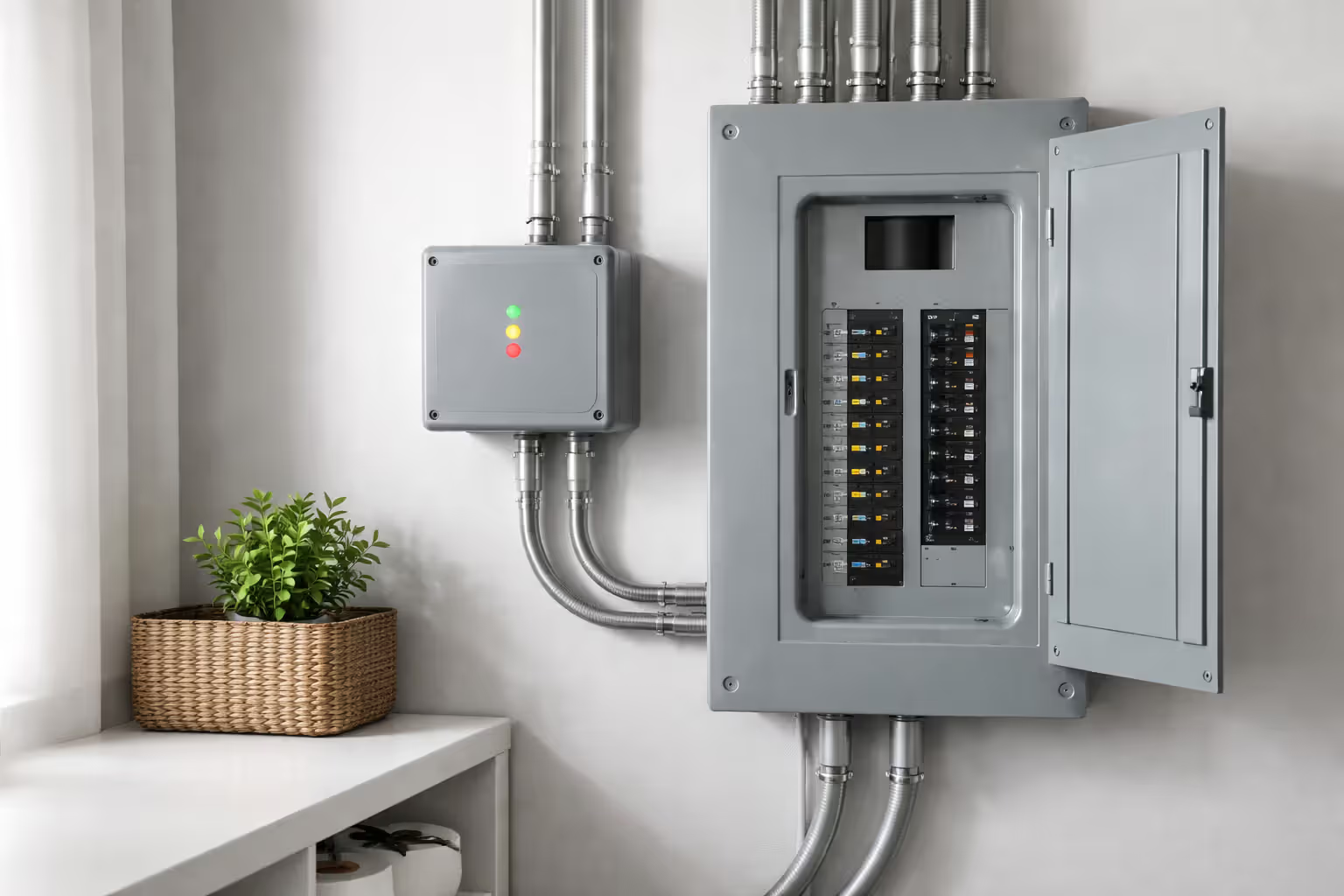
Ordinance or law coverage becomes critical when lightning damage requires bringing your home up to current building codes during repairs. If your 1970s electrical panel needs replacement after a strike, code compliance might require upgrading the entire system at $8,000-$15,000. Standard policies often limit code upgrade coverage to 10% of dwelling coverage. Increasing this to 25% or more costs roughly $40-$80 annually.
Smart homeowners in lightning-prone regions—Florida, Louisiana, Texas, Oklahoma, and Colorado top the list—should evaluate these endorsements carefully. The combined cost of comprehensive lightning protection rarely exceeds $300 annually, while a single underinsured claim can cost tens of thousands out-of-pocket.
Lightning Risk Factors That Affect Your Coverage and Premiums
Insurers assess lightning risk when pricing policies and deciding whether to offer coverage. Understanding these factors helps you manage costs and avoid coverage problems.
Geographic location matters most. Florida experiences 1.4 million lightning strikes annually—more than any other state. Louisiana, Mississippi, Alabama, and Arkansas follow closely. Homes in these high-frequency zones pay 15-30% higher premiums than identical properties in low-risk states like California or Washington. Some insurers limit coverage or require higher deductibles in lightning hotspots.
Home age and wiring directly impact risk. Houses built before 1970 often lack grounded electrical systems and modern surge protection at the panel. Aluminum wiring, common in 1960s-1970s construction, poses higher fire risk when exposed to power surges. Insurers may require electrical inspections for homes over 40 years old, and outdated systems can result in coverage restrictions or higher premiums. Upgrading to copper wiring and installing whole-house surge protectors can reduce premiums by 5-10%.
Claims history influences both availability and cost. Multiple lightning claims within five years can lead to non-renewal or placement in high-risk pools with 40-60% premium increases. Even if lightning is an uncontrollable peril, repeated claims suggest inadequate protection or heightened exposure. If you've filed two or more lightning claims, expect scrutiny during your next renewal.
Mitigation measures can lower premiums. Installing whole-house surge protection systems (cost: $300-$800) demonstrates risk reduction and may qualify for discounts of 2-5%. Lightning rod systems (cost: $1,500-$3,000) offer larger discounts—sometimes 10-15%—though few modern homes use them. Documenting these installations with receipts and photos when requesting quotes ensures you receive applicable discounts.
Property characteristics affect exposure. Homes on hills, near water, or with tall trees nearby face elevated strike risk. Metal roofs, while durable, can attract lightning if not properly grounded. Swimming pools with extensive electrical systems (pumps, heaters, automation) increase potential surge damage. Insurers consider these factors during underwriting, sometimes requiring additional inspections or risk assessments.
Proximity to fire stations influences fire-related lightning claims. Homes more than five miles from the nearest fire department pay higher premiums because lightning fires can cause total losses before firefighters arrive. This factor combines with lightning risk in rural areas, where both strike frequency and response times create compounded risk.
Homeowners can't change geography, but they can address controllable factors. A $2,000 investment in electrical upgrades and surge protection might save $150-$300 annually in premiums while significantly reducing claim risk—a break-even proposition within ten years, plus the peace of mind.
Frequently Asked Questions
Lightning damage coverage exists in virtually every homeowners policy, but the details determine whether you'll receive adequate compensation after a strike. Direct structural damage typically faces few coverage hurdles, while surge-related electronics claims require careful documentation and often bump against policy limits.
The most effective approach combines adequate insurance with physical protection. Schedule high-value electronics separately, consider surge protection endorsements, and install whole-house surge suppressors at your electrical panel. Keep detailed records of your major systems and appliances—photos, receipts, and maintenance records—so you can prove pre-loss condition if needed.
When lightning strikes, report damage immediately and document everything before making repairs. Work with licensed contractors who can identify all affected systems, not just obvious damage. Many homeowners discover secondary electrical problems weeks after a strike; prompt professional inspections catch these issues while your claim is still active.
Review your policy annually, especially after purchasing expensive electronics or completing home improvements. A $5,000 home theater system or $8,000 HVAC upgrade might exceed your coverage limits. Adjusting your policy before a loss costs far less than absorbing thousands in out-of-pocket expenses afterward.
Lightning remains one of nature's most unpredictable hazards, but your financial recovery doesn't have to be uncertain. Understanding exactly what your policy covers—and where gaps exist—ensures you're protected when the next storm rolls through.