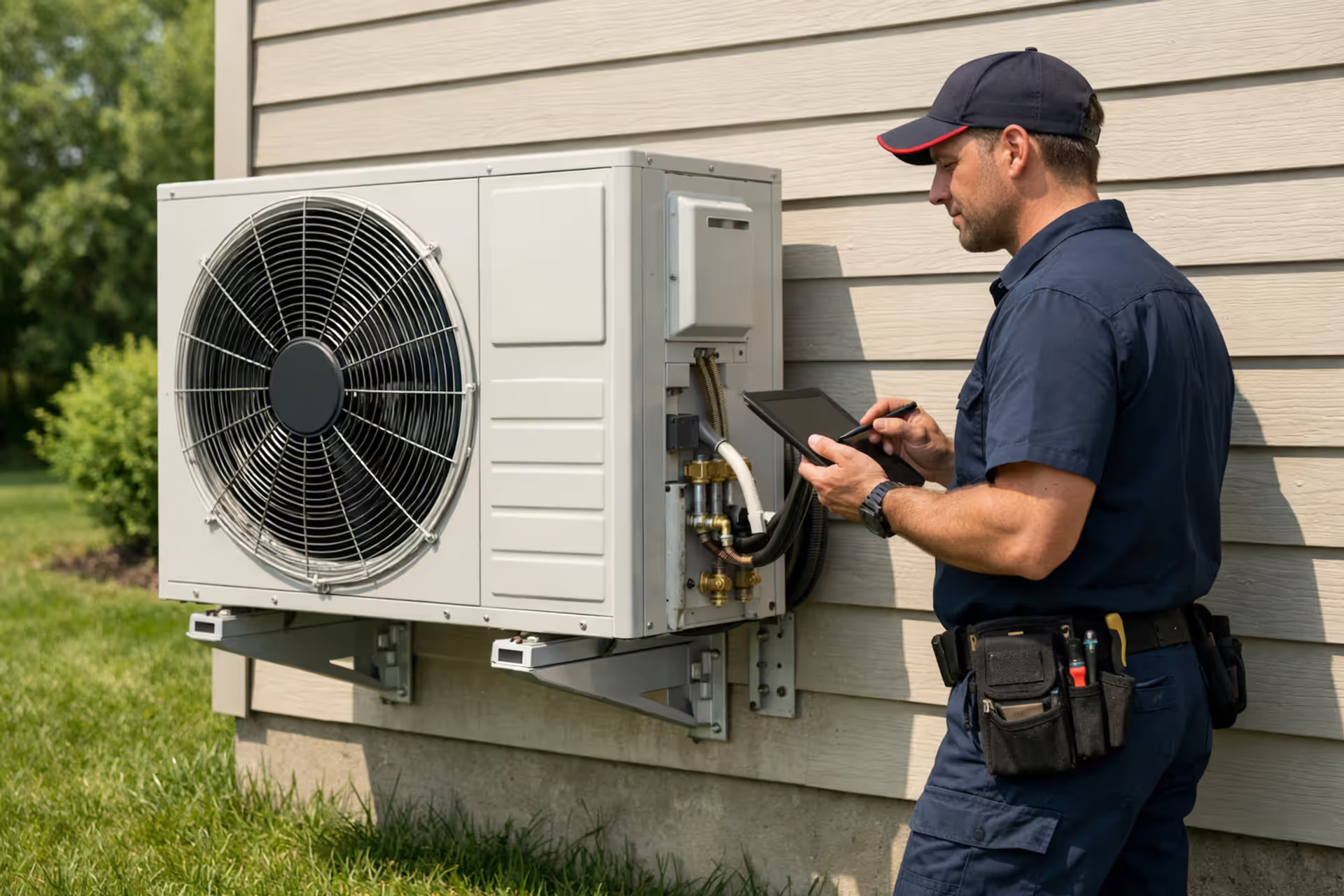
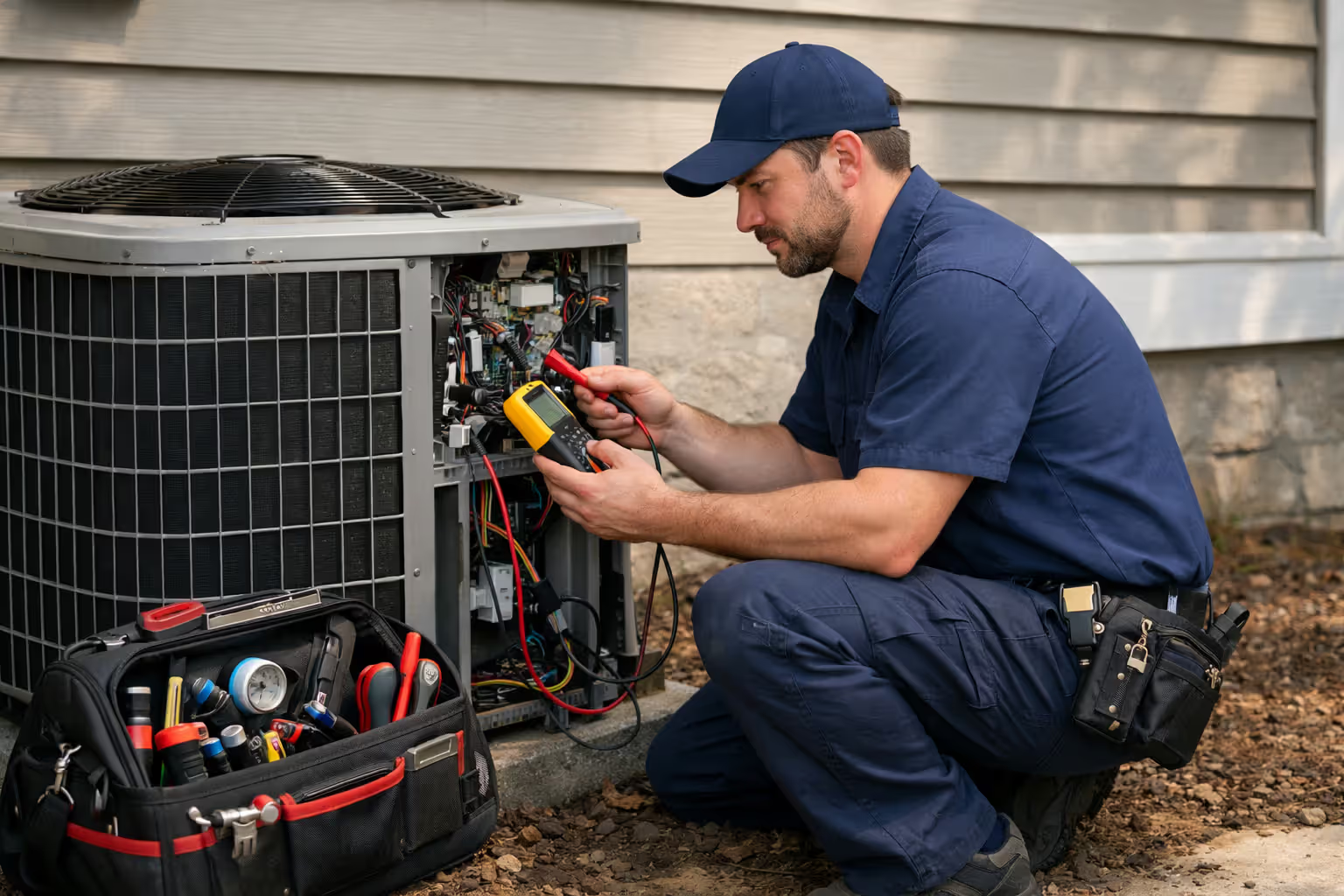
HVAC technician inspecting an outdoor air conditioning unit next to a residential home on a sunny summer day
Does Homeowners Insurance Cover Air Conditioner Replacement?

Content
Your air conditioner dies on the hottest day of summer. After the technician delivers the bad news—replacement, not repair—your first thought turns to insurance. Will your homeowners policy cover the $5,000 to $10,000 bill for a new unit?
The answer depends on why your AC failed. Standard homeowners insurance covers specific sudden events but excludes gradual deterioration. Understanding this distinction saves you from filing a claim destined for denial and helps you plan financially for HVAC expenses.
How Homeowners Insurance Typically Covers AC Units
Homeowners insurance operates on a "named perils" or "open perils" basis, depending on your policy type. Your air conditioner falls under dwelling coverage—the part of your policy protecting the physical structure and permanently attached systems.
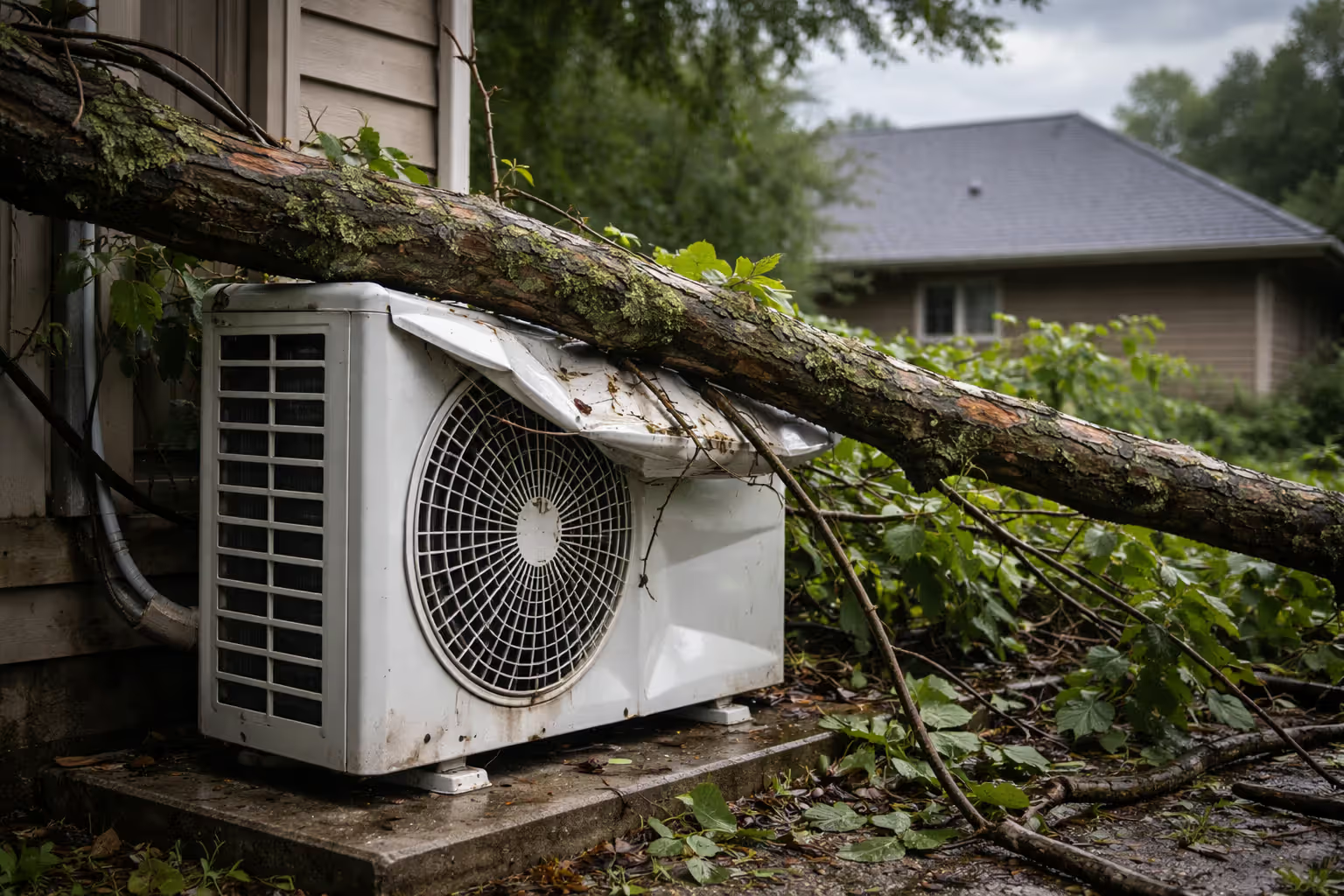
Standard policies cover sudden, accidental damage from specific events: fire, lightning strikes, hail, windstorms, vandalism, or falling objects. If a tree branch crashes through your roof during a storm and destroys your outdoor compressor, you're covered. If lightning surges through your electrical system and fries the circuit board, your claim gets approved.
What doesn't qualify? Mechanical failure from normal use. Your AC compressor wearing out after 15 years of faithful service isn't an insurable event—it's predictable equipment aging. Insurance companies distinguish between perils (sudden, external forces) and maintenance (ongoing upkeep and eventual replacement).
The dwelling coverage portion of your policy includes permanently installed HVAC systems as part of your home's structure. Window units and portable air conditioners, however, fall under personal property coverage with different limits and deductibles. This matters when you're calculating potential reimbursement.
Your policy also specifies whether it pays actual cash value (depreciated worth) or replacement cost (new equipment price). A 12-year-old AC unit might cost $7,000 to replace, but its actual cash value could be just $2,500 after depreciation. Reading your declarations page clarifies which valuation method applies to your dwelling coverage.
Author: Ethan Caldwell;
Source: sixth-fleet.com
When Your Policy Will Pay for AC Replacement
Covered Scenarios: Storm Damage, Vandalism, and Sudden Mechanical Failure
Your homeowners insurance steps in when covered perils damage your air conditioning system. A hurricane's winds tear your outdoor unit from its mounting—covered. Vandals smash your compressor with baseball bats—covered. A power surge from a lightning strike miles away fries your control board—typically covered under standard electrical system protection.
Fire damage qualifies unambiguously. If an electrical fire originates in your AC unit or spreads to it from elsewhere in your home, replacement falls squarely within dwelling coverage. The same applies to smoke damage that ruins internal components.
Hail presents interesting scenarios. Golf-ball-sized hail denting your condenser coils badly enough to cause refrigerant leaks usually triggers coverage. Minor cosmetic dents without functional impact might not meet the threshold for a claim worth filing after you factor in your deductible.
Frozen pipes that burst and flood your basement, damaging your furnace or air handler, generally qualify—assuming you maintained reasonable heat and didn't leave your home vacant without proper winterization. Insurers scrutinize cold-weather claims for evidence of negligence.
Some policies include limited coverage for sudden mechanical breakdown without an external cause. Your compressor seizes unexpectedly despite regular maintenance, with no warning signs. This gray area often requires an equipment breakdown endorsement (discussed later) for reliable coverage. Standard policies frequently deny these claims, arguing the failure resulted from hidden wear rather than a sudden event.
What Documentation You'll Need to File a Claim

Author: Ethan Caldwell;
Source: sixth-fleet.com
Insurance adjusters require proof that a covered peril caused the damage. Start documenting immediately when disaster strikes:
Take photos and videos showing the damage from multiple angles. Capture the failed component, surrounding damage, and any visible cause (fallen tree limb, hail dents, vandalism evidence). Time-stamped images from your phone establish the damage timeline.
Get a professional assessment from a licensed HVAC technician. Their written diagnosis should specify what failed, the likely cause, and whether repair or replacement is necessary. Adjusters trust third-party technician reports more than homeowner descriptions. The report stating "compressor failure due to lightning surge damage to circuit board" supports your claim. A report saying "compressor worn out, end of service life" kills it.
Gather maintenance records proving you properly maintained the system. Regular filter changes, annual inspections, and timely repairs demonstrate you didn't neglect the equipment. Insurers deny claims when poor maintenance contributed to failure.
Collect receipts for the original installation and any major repairs. These establish the system's age and replacement cost basis. Your 3-year-old premium unit commands higher replacement value than a builder-grade model from 2005.
Contact your insurance company within the timeframe specified in your policy—usually immediately or within a few days. Delayed reporting can jeopardize claims, especially for weather events where you need to prove the damage occurred during a specific storm.
Insurance is not a substitute for maintenance — it is a safety net for the unexpected. Homeowners who treat their HVAC systems with consistent care and keep thorough records are the ones who succeed when they need to file a claim. Documentation is the bridge between a denied claim and a paid one
— Robert Palmer
Common Exclusions That Leave You Paying Out of Pocket
Most AC replacement costs fall outside standard homeowners insurance coverage. Understanding exclusions prevents frustrating claim denials.
Wear and tear tops the exclusion list. Your 18-year-old AC unit finally gives up, compressor shot and refrigerant leaking. That's not an insurable event—it's an appliance reaching the end of its design life. Insurers expect homeowners to budget for eventual replacement of mechanical systems.
Lack of maintenance voids coverage even for otherwise covered events. You haven't changed filters in three years, never scheduled professional inspections, and ignored strange noises for months. When the system fails, your adjuster will likely deny the claim based on neglect. Your policy requires reasonable upkeep as a condition of coverage.
Gradual deterioration never qualifies. Rust slowly corroding your evaporator coils over five years doesn't suddenly become insurable when they finally leak. The damage accumulated slowly and predictably—not suddenly and accidentally.
Age-related failure mirrors wear and tear but deserves separate mention because insurers sometimes impose age limits. Some policies won't cover AC units older than 15 or 20 years regardless of the failure cause, reasoning that ancient equipment should be replaced proactively. Check your policy for age restrictions on mechanical systems.
Flood damage requires separate flood insurance. Standard homeowners policies exclude flooding—defined as water entering from ground level. If heavy rains flood your basement and ruin your air handler, you're out of luck without flood coverage. Water damage from a burst pipe (originating inside your home) is different and typically covered.
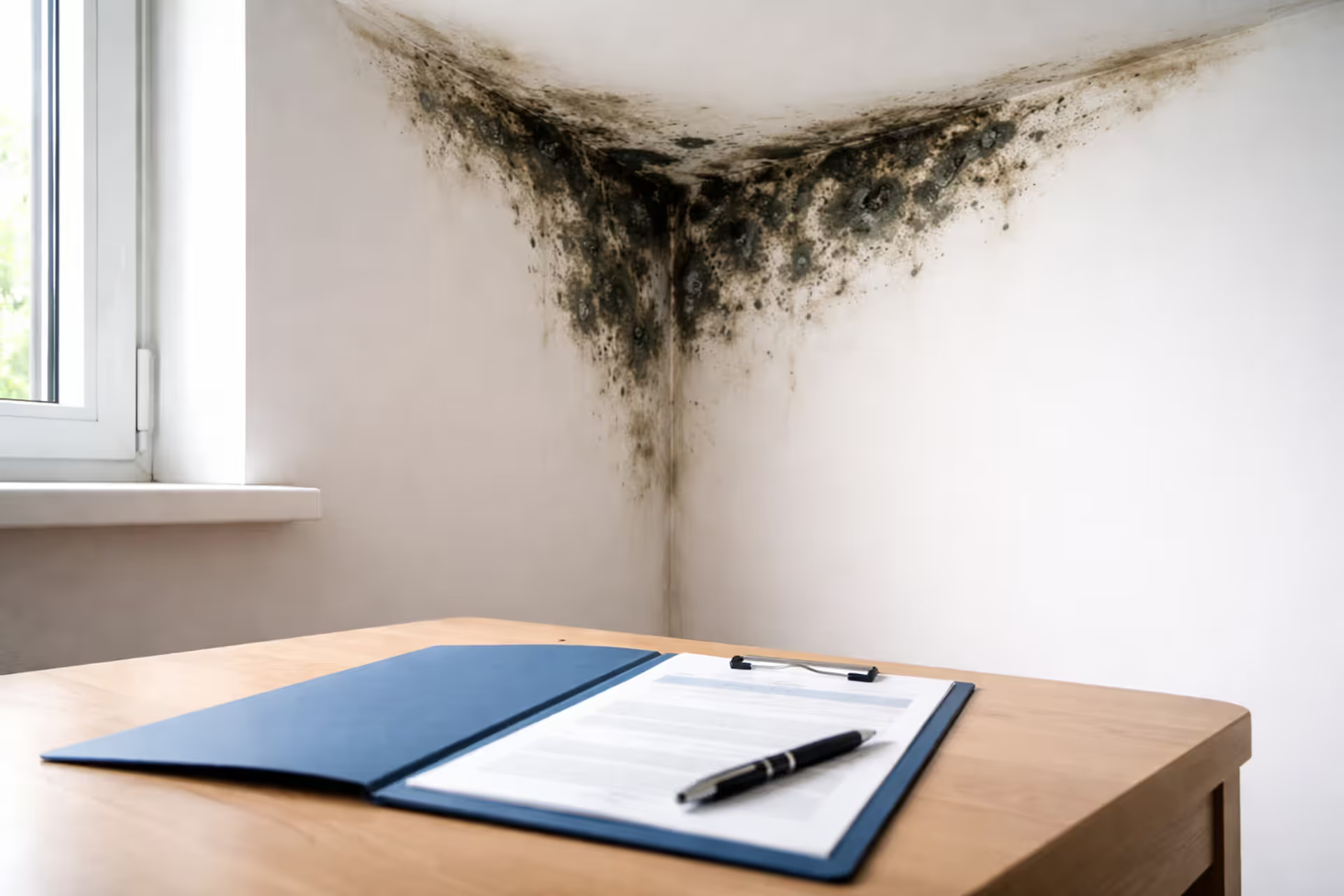
Mold resulting from AC malfunction rarely receives coverage. Your AC's condensate drain clogs, causing water damage and mold growth around the unit. The mold remediation and any related repairs usually aren't covered because the root cause was a maintenance issue, not a covered peril.
Refrigerant leaks from gradual deterioration don't qualify. Topping off refrigerant costs money, but it's considered maintenance. However, if a covered event (hail damage, vandalism) punctures your refrigerant lines, both the repair and refrigerant replacement fall under your claim.
HVAC Coverage Differences Across Policy Types
Not all homeowners policies treat air conditioning systems identically. Your policy type determines baseline coverage and available endorsements.
HO-3 policies—the most common type—use "open perils" coverage for your dwelling and "named perils" for personal property. Your permanently installed AC system enjoys broader protection under dwelling coverage, but you'll still face the exclusions discussed earlier. HO-3 policies work well for most homeowners with standard risk profiles.
HO-5 policies provide "open perils" coverage for both dwelling and personal property. This premium option covers more scenarios but still excludes maintenance, wear and tear, and age-related failure. The difference shows up in edge cases: unusual damage scenarios not specifically named in HO-3 policies might receive coverage under HO-5's broader language.
HO-6 policies serve condominium owners. Your AC coverage depends on whether the unit is part of the building structure (covered by the condo association's master policy) or your individual unit's fixtures (covered by your HO-6 policy). This gets complicated fast. A central air system serving your unit exclusively typically falls under your policy, while a shared HVAC system serving multiple units falls under the association's coverage. Review your condo association documents to determine responsibility.
Dwelling coverage limits matter significantly for expensive HVAC systems. If you've upgraded to a high-efficiency system costing $15,000, ensure your dwelling coverage limit adequately reflects your home's total value including such improvements. Underinsurance means proportional claim payments—you might receive only 80% of replacement costs if you're 20% underinsured.
Equipment breakdown endorsements (also called mechanical breakdown or systems breakdown coverage) extend protection beyond standard policies. This optional add-on covers sudden mechanical or electrical failure without requiring an external peril. Your compressor seizes despite proper maintenance and no storm damage—the endorsement covers replacement. Most homeowners policies don't include this protection automatically.
| Policy Type | Standard AC Coverage | Typical Exclusions | Equipment Breakdown Available | Best For |
| HO-3 | Covered perils (storm, fire, vandalism, etc.) for permanently installed systems | Wear and tear, maintenance issues, age-related failure, gradual damage | Yes, as optional endorsement | Most single-family homeowners; standard risk profiles |
| HO-5 | Open perils for dwelling and personal property; broader protection for unusual scenarios | Same core exclusions (maintenance, wear, aging) but fewer gaps in coverage | Yes, as optional endorsement | Homeowners wanting premium coverage; higher-value homes |
| HO-6 | Coverage depends on condo docs; typically covers unit-specific systems you own | Same as HO-3, plus potential gaps in master policy coordination | Sometimes available; check with insurer | Condominium unit owners |
Equipment Breakdown Endorsements: Worth the Extra Cost?
An equipment breakdown endorsement costs $30 to $100 annually—a fraction of AC replacement expenses. This add-on bridges the gap between covered perils and maintenance exclusions.
Standard policies leave you vulnerable when mechanical systems fail without external damage. Your five-year-old AC compressor seizes on a calm summer day. No storm, no power surge, no vandalism—just sudden failure. Without an equipment breakdown endorsement, you're paying out of pocket despite the system being relatively new and well-maintained.
The endorsement covers sudden mechanical breakdown, electrical failure, motor burnout, and operator error. It typically includes HVAC systems, water heaters, appliances, and electrical panels. The coverage applies when something breaks unexpectedly, not when it wears out gradually.
Age limits often apply. Insurers might cover systems up to 15 or 20 years old, reasoning that older equipment should be replaced proactively. Read the endorsement terms carefully—some exclude coverage for systems past a certain age or cap payouts for older equipment.
Deductibles for equipment breakdown claims may differ from your standard homeowners deductible. Some endorsements use a separate, lower deductible ($500 instead of $2,500) making claims more financially viable for moderate repair costs.
The endorsement makes sense if your HVAC system is newer but past manufacturer warranty, typically 5 to 12 years old. You've got years of service life remaining, but you're vulnerable to sudden mechanical failure. The modest annual premium buys peace of mind against expensive surprises.
Skip the endorsement if your AC is very new (still under manufacturer warranty) or very old (approaching replacement age anyway). Brand-new systems have warranty protection, while ancient systems will need replacement soon regardless of insurance coverage. Save the premium and budget for inevitable replacement.
Consider your financial reserves. Can you absorb a $6,000 emergency expense without hardship? If yes, self-insuring might cost less over time than paying endorsement premiums for decades. If no, the endorsement provides valuable protection against financial disruption.
The smartest dollar a homeowner can spend on insurance is the one that closes a coverage gap they didn’t know existed. An equipment breakdown endorsement costs less than a single dinner out each month, yet it can save thousands when a compressor fails without warning on the hottest day of the year
— Lisa Crawford
Steps to Take When Your AC Fails
AC failure demands quick action, especially during extreme weather. Your response affects both comfort and insurance claim success.
First, assess the situation safely. If you smell burning, see smoke, or suspect electrical problems, shut off power at the breaker and evacuate if necessary. Don't investigate further until a professional declares it safe.
Contact a licensed HVAC technician immediately for diagnosis. Explain any unusual events preceding the failure—storms, power outages, strange noises. Their assessment determines whether you have an insurance claim or a maintenance issue.
Author: Ethan Caldwell;
Source: sixth-fleet.com
Review your homeowners policy before calling your insurer. Check your deductible, coverage limits, and any specific requirements for filing claims. If the repair costs less than your deductible, filing a claim wastes time and might trigger rate increases despite no payout.
Call your insurance company if the technician identifies damage from a covered peril. Report the claim promptly, describe the damage and suspected cause, and ask about the claims process. Your insurer will assign an adjuster to inspect the damage.
Get written repair or replacement quotes from licensed contractors. Insurers typically want estimates from qualified professionals, not DIY assessments. Multiple quotes help establish fair market value, though your insurer may use their own approved contractors.
Don't authorize permanent repairs before your adjuster inspects the damage unless you're preventing further damage (a policy requirement). Take temporary measures to protect your home—covering exposed components, preventing water intrusion—but document everything with photos.
Keep all receipts for temporary repairs, alternative cooling (hotel, portable AC units), and related expenses. Some policies reimburse additional living expenses if your home becomes uninhabitable, though AC failure alone rarely qualifies unless you have medical conditions requiring climate control.
File your claim within the timeframe specified in your policy, typically within a few days of discovering damage. Include all documentation: photos, technician reports, quotes, maintenance records, and receipts.
Follow up regularly with your adjuster. Claims processing can drag on, especially during busy seasons when many homeowners file weather-related claims simultaneously. Polite persistence keeps your claim moving.
FAQ: Air Conditioning Insurance Coverage
Expert Perspective on AC Claim Denials:
"The number one reason we deny air conditioning claims is lack of maintenance documentation," says Jennifer Martinez, senior claims adjuster with 15 years of experience at a major national insurer. “Homeowners file claims for compressor failure, but when we investigate, we find they haven't changed filters regularly or scheduled annual inspections. Even if storm damage contributed to the failure, neglected maintenance often voids coverage. Keep detailed service records—they're your best defense when filing a claim.”
Protecting Your Investment Beyond Insurance
Homeowners insurance provides a safety net for sudden disasters, not a maintenance plan for aging equipment. Understanding this distinction helps you make informed decisions about coverage and budgeting.
Start by reading your actual policy documents—not just the declarations page. Identify your dwelling coverage limits, deductible amounts, valuation method (actual cash value vs. replacement cost), and any age restrictions on mechanical systems. Call your agent to clarify confusing language before you need to file a claim.
Consider an equipment breakdown endorsement if your HVAC system is past manufacturer warranty but not approaching replacement age. The modest annual cost provides valuable protection during the vulnerable middle years when sudden mechanical failure becomes more likely but the system still has substantial service life remaining.
Maintain meticulous service records. Schedule annual professional inspections, change filters regularly, and address minor issues before they escalate. These records prove you upheld your policy obligations and haven't neglected the equipment. They're essential evidence when filing claims.
Budget for eventual replacement regardless of insurance coverage. Even with comprehensive coverage, your policy won't pay for predictable age-related failure. Setting aside $100 to $200 monthly in a home maintenance fund ensures you can replace major systems without financial crisis.
Review your coverage annually as your HVAC system ages. What made sense when your AC was five years old might not work when it's fifteen. Adjust endorsements, increase dwelling coverage limits if you've upgraded to premium equipment, and verify your deductible still aligns with your financial situation.
Understanding what homeowners insurance covers—and more importantly, what it doesn't—empowers you to protect your home and budget effectively. Your air conditioner will eventually need replacement. Whether insurance helps with that cost depends on why it failed, how well you maintained it, and what coverage you purchased before disaster struck.