
Split-screen comparing homeowners insurance and separate flood insurance policy for a suburban house surrounded by floodwater
Why Flood Insurance Is Separate from Homeowners Insurance

Content
Yes, flood insurance is completely separate from homeowners insurance. Your standard homeowners policy excludes flood damage, meaning you must purchase a standalone flood insurance policy if you want protection against rising water, storm surge, or overflow from bodies of water. This separation exists across the entire insurance industry—no traditional homeowners policy in the United States includes flood coverage as a standard feature.
Understanding this distinction matters because many homeowners discover the gap only after water damage occurs. A burst pipe? Your homeowners policy likely covers that. But when a nearby river overflows and sends three feet of water into your basement, you're on your own unless you bought separate flood protection.
Why Standard Homeowners Insurance Doesn't Cover Floods
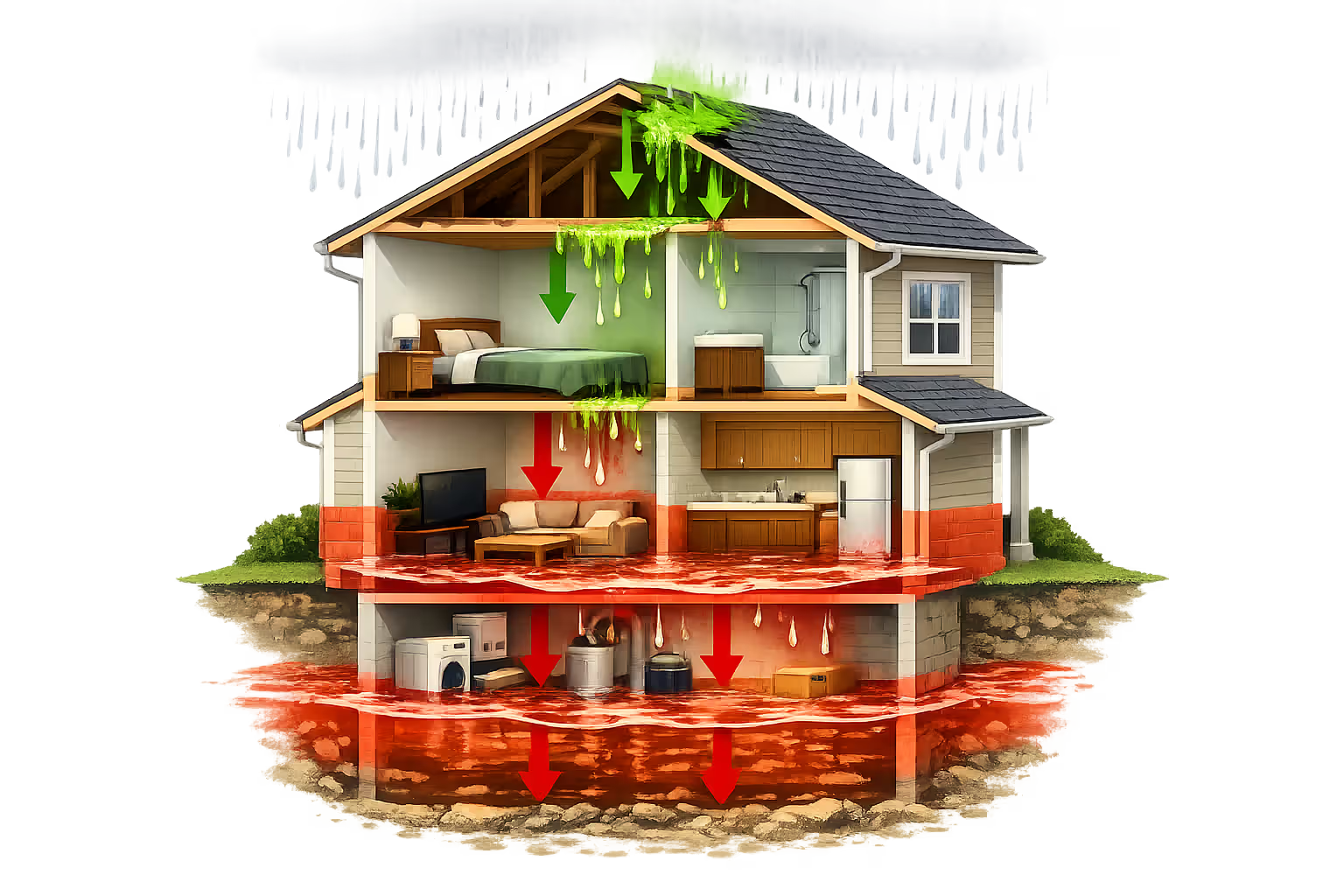
Homeowners insurance policies follow a clear dividing line: they cover water damage from above (like roof leaks during storms) but exclude water that rises from below or flows across the ground. This isn't an oversight—it's an intentional industry-wide exclusion that dates back decades.
The reasoning comes down to risk concentration. When a flood hits, it doesn't damage one house—it damages hundreds or thousands simultaneously in the same geographic area. Insurance companies spread risk across many policyholders, but floods create catastrophic losses concentrated in specific regions. A single hurricane's storm surge can generate billions in claims within days, far exceeding what private insurers collected in premiums from that area over years.
Your homeowners policy does cover certain water damage. If wind tears shingles off your roof and rain pours into your attic, that's covered. If a washing machine hose bursts and floods your laundry room, you're protected. The key difference: these events involve water entering from above or originating inside the structure, not rising groundwater or surface water flowing across land.
Here's where confusion often happens. After a major storm, you might have water in your home from multiple sources—wind-driven rain through a damaged roof and street flooding that seeped through your foundation. Your homeowner's adjuster will cover the roof damage but deny the foundation seepage. Without flood insurance, you'll pay for half the cleanup yourself.
Insurance companies also exclude floods because the peril is partially predictable based on geography. Homes in floodplains face significantly higher risk than those on hilltops, making it impossible to price fairly within a standard homeowners policy that doesn't account for elevation and proximity to water bodies.
Author: Ethan Caldwell;
Source: sixth-fleet.com
How Standalone Flood Insurance Policies Work
A standalone flood insurance policy operates independently from your homeowners coverage. You'll receive a separate policy document, pay a separate premium (usually annually), and file claims with a different adjuster when flood damage occurs.
These policies divide coverage into two parts: building property and contents. Building coverage protects your home's structure, foundation, electrical and plumbing systems, built-in appliances, and permanently installed items like cabinets and bookcases. Contents coverage protects your belongings—furniture, clothing, electronics, and portable appliances.
You can purchase building coverage alone, or both building and contents coverage, but you cannot buy contents coverage without building coverage if you own the structure. Renters, however, can purchase contents-only policies since they don't own the building.
The claims process differs from homeowners insurance in important ways. Flood policies typically require more documentation, including photographs of damage, receipts for damaged items, and detailed inventories. Because floods often affect entire neighborhoods, adjusters may take longer to inspect your property than they would for an isolated homeowners claim.
Coverage limits also work differently. Rather than insuring your home to its full replacement value like most homeowners policies, flood insurance sets maximum limits. The National Flood Insurance Program (NFIP) caps building coverage at $250,000 and contents at $100,000 for residential properties. If your home is worth $500,000, you'll face a significant coverage gap unless you secure additional protection through private insurers.
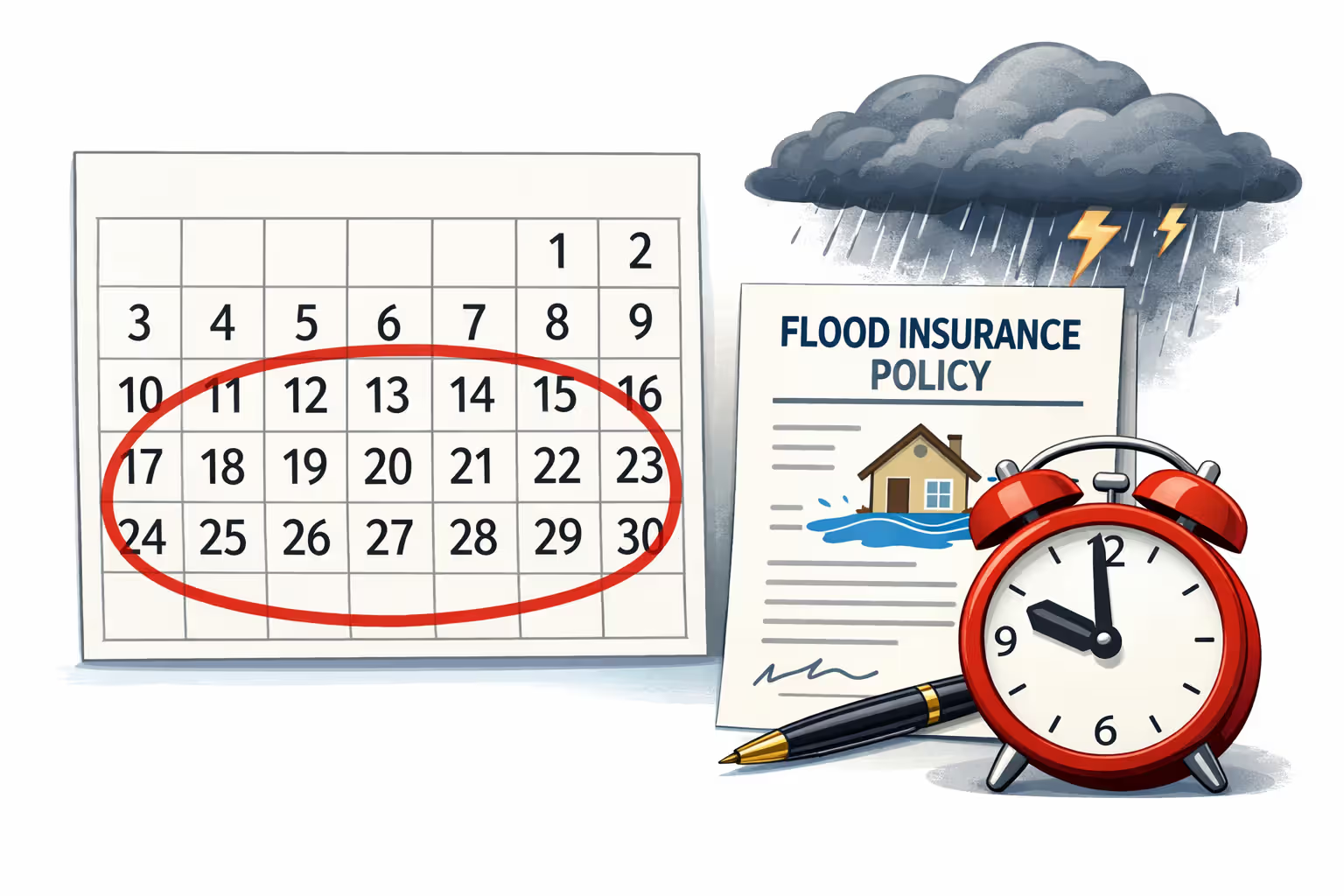
Most flood policies include a waiting period before coverage begins—typically 30 days from purchase. You can't buy a policy when a hurricane is three days offshore and expect immediate protection. This waiting period prevents adverse selection, where people only purchase coverage when they know a flood is imminent.
What Flood Insurance Actually Covers (and What It Doesn't)
Flood insurance covers direct physical damage from flooding, defined as a general and temporary condition where two or more acres of normally dry land or two or more properties are inundated by water. This includes overflow of inland or tidal waters, unusual and rapid accumulation of runoff, mudflows, and collapse of land along a lake or waterway due to erosion caused by flooding.
Covered building elements include the foundation, walls, floors, ceilings, built-in appliances like dishwashers, permanently installed carpeting over unfinished flooring, and essential systems—furnaces, water heaters, heat pumps, air conditioners, and electrical panels.
Contents coverage protects clothing, furniture, electronics, portable appliances, area rugs, and window treatments. Valuable items like jewelry and artwork are covered but subject to the overall contents limit—there's no special scheduling like you'd find in homeowners policies.
Major exclusions catch many policyholders off guard. Flood insurance doesn't cover temporary living expenses if you must evacuate during repairs. Your homeowners policy typically includes "loss of use" coverage, but flood policies don't. You'll pay hotel bills from your own pocket.
Basement coverage is extremely limited. Finished basements with carpeting, drywall, and entertainment systems? The policy won't cover those finishing materials or contents stored below ground. You'll get coverage for the structural elements, essential equipment like water heaters, and limited coverage for washers and dryers, but your home theater and pool table aren't protected.
Currency, precious metals, stock certificates, and most valuable papers aren't covered. Neither are vehicles, trees, shrubs, or detached structures like standalone garages (though some policies offer limited coverage for detached garages).
Swimming pools, hot tubs, fences, retaining walls, decks, patios, and landscaping are excluded. After a major flood, you might face $20,000 in yard restoration costs that insurance won't touch.
NFIP vs. Private Flood Insurance: Which Should You Choose?
The National Flood Insurance Program, managed by FEMA, dominated the flood insurance market for decades. Recently, private insurers have entered the space, offering alternatives that sometimes provide better coverage or pricing, depending on your situation.
| Feature | NFIP | Private Insurance |
| Maximum dwelling coverage | $250,000 | Up to $10 million+ (varies by insurer) |
| Contents coverage limit | $100,000 | Up to $500,000+ (varies by insurer) |
| Average annual premium | $700-$1,500 (varies by zone) | $400-$3,000+ (risk-based pricing) |
| Waiting period | 30 days (standard) | Typically 10-30 days |
| Basement coverage | Very limited | Some policies offer enhanced coverage |
| Replacement cost option | Limited (ACV for most items) | Often available for dwelling and contents |
| Additional living expenses | Not covered | Sometimes included |
| Claims process | Federal program, can be slower | Private adjusters, potentially faster |
NFIP policies offer consistency. Rates are set by federal guidelines based on flood maps, construction date, and elevation. You know exactly what you're getting, and the program has government backing, so there's no concern about insurer solvency.
However, NFIP coverage limits create problems for expensive homes. A $600,000 house in a flood zone faces a $350,000 gap with NFIP's $250,000 maximum. Private insurers fill this gap, offering coverage that matches your home's actual value.
Private flood insurance often costs less for homes in moderate-risk areas or newer homes built to modern standards. Insurers use sophisticated risk modeling that sometimes reveals lower risk than FIP's broad-brush flood maps suggest. A home built in 2015 with proper elevation might get a better rate from a private insurer than from NFIP.
The trade-off? Private insurers can cancel policies or raise rates more aggressively than NFIP. They're also selective about which properties they'll insure. A home with repeated flood claims might find NFIP as the only option.
Cost Differences Between Government and Private Options
NFIP premiums recently shifted to "Risk Rating 2.0," a system that considers individual property characteristics rather than just flood zone designation. This change increased premiums for some policyholders while decreasing them for others.
A home in a high-risk zone (Special Flood Hazard Area) might pay $1,800 annually through NFIP, while a similar home in a moderate-risk zone could pay $450. Private insurers might quote $1,200 for the high-risk property if it has favorable characteristics like recent construction, elevated first floor, or flood mitigation features.
Private insurers reward risk reduction more aggressively. Install a backwater valve, elevate your mechanicals, or add flood vents, and you might see significant premium reductions with private carriers. NFIP acknowledges these improvements but adjusts rates less dramatically.
Some homeowners buy NFIP coverage to satisfy lender requirements, then purchase excess coverage from private insurers to reach full replacement value. This hybrid approach combines NFIP's stability with private market capacity.
Shopping both markets makes sense for most homeowners. Get NFIP quotes through any property insurance agent (they all access the same NFIP rates), then compare against private insurers like Neptune, Kin, or Palomar. Prices can vary by 40% or more for the same property.

Author: Ethan Caldwell;
Source: sixth-fleet.com
When Mortgage Lenders Require You to Buy Flood Insurance
Federal law mandates flood insurance for properties in Special Flood Hazard Areas (SFHAs) when you have a federally backed mortgage. These high-risk zones appear on FEMA flood maps as areas with a 1% or greater chance of flooding annually—commonly called the "100-year floodplain."
Your lender will order a flood zone determination during the mortgage process. If the property sits in an SFHA, you must purchase flood insurance before closing. The requirement continues for the life of the loan, not just the first few years.
Federal lending regulations require flood insurance for any property securing a mortgage from a federally regulated or insured lender when that property is located in a Special Flood Hazard Area. This requirement protects both the homeowner's investment and the lender's collateral from one of the most common and costly natural disasters
— David Maurstad
Lenders require coverage equal to the outstanding loan balance or the maximum available coverage ($250,000 for NFIP), whichever is less. If you borrow $180,000 on a home in a flood zone, you need at least $180,000 in building coverage.
Properties outside SFHAs—in moderate or low-risk zones—don't trigger mandatory purchase requirements. Your lender won't force you to buy coverage, though you remain eligible and it's often advisable. About 25% of flood claims come from outside high-risk zones, where many homeowners skip coverage because it's optional.
If FEMA remaps your area and your property moves into an SFHA after you've owned it for years, your lender will send a notice requiring you to obtain flood insurance within 45 days. Ignore this notice, and the lender will purchase force-placed coverage and bill you—typically at rates much higher than you'd pay shopping yourself.
Some lenders require flood insurance even outside SFHAs as an internal risk management policy. This is less common but happens with portfolio lenders who keep loans on their own books rather than selling them to Fannie Mae or Freddie Mac.
Properties in Coastal Barrier Resource System (CBRS) areas face restrictions. These environmentally sensitive coastal zones don't qualify for federal flood insurance, and you can't get a federally backed mortgage there unless you find private flood coverage.
Where and How to Purchase Flood Insurance Separately
Buying a standalone flood insurance policy involves several steps, starting well before you need coverage due to waiting periods.
First, determine your flood risk. Visit FEMA's Flood Map Service Center and enter your address. You'll see whether your property sits in a high-risk (SFHA), moderate-risk, or low-risk zone. This information guides your decision about coverage amounts and helps you understand whether your lender will require insurance.
Next, decide between NFIP and private coverage. Contact your current homeowners insurance agent—many sell both NFIP policies and private flood insurance. They can quote both options simultaneously. Alternatively, search for "private flood insurance" and request quotes from companies like Neptune, Wright Flood, or Kin.

Author: Ethan Caldwell;
Source: sixth-fleet.com
When requesting quotes, you'll need property details: construction date, square footage, number of floors, foundation type (basement, crawlspace, slab), and whether you have an elevated first floor. For NFIP, you may need an Elevation Certificate—a surveyor's document showing your home's elevation relative to the base flood elevation. Newer homes often have this from construction; older homes might require a new survey costing $500-$800.
Compare quotes carefully. Look beyond the premium to coverage limits, replacement cost versus actual cash value, basement coverage, and whether additional living expenses are included. A policy that costs $200 less annually but provides actual cash value instead of replacement cost might cost you $30,000 more after a claim.
Submit your application at least 45 days before you need coverage active. The standard 30-day waiting period means last-minute purchases won't help when a storm is approaching. Exceptions exist—if you're buying a home and your mortgage requires flood insurance, coverage typically begins at closing without a waiting period. Similarly, if your property newly maps into an SFHA, you get a 30-day grace period.
Pay your premium annually or through escrow. Many lenders prefer escrow payment, collecting monthly amounts with your mortgage payment and paying the annual premium when due. This prevents lapses that could leave you uninsured.
Keep your policy current. Flood insurance policies renew annually, and you must maintain continuous coverage. A lapse creates a new 30-day waiting period when you reinstate, leaving you vulnerable during that gap.
Common Mistakes When Buying Flood Coverage Outside Your Home Policy
Many homeowners delay purchasing flood insurance until hurricane season approaches, only to discover the 30-day waiting period prevents immediate coverage. You can't buy protection on June 1st when forecasters predict an active hurricane season starting June 15th—your coverage won't begin until July 1st.
Another frequent error: assuming flood risk is zero because you've never experienced flooding. Flood patterns change as development alters drainage, storms intensify, and infrastructure ages. The absence of historical flooding doesn't guarantee future safety. Moreover, FEMA updates flood maps periodically, and your low-risk property today might become moderate-risk tomorrow.
Author: Ethan Caldwell;
Source: sixth-fleet.com
Skipping contents coverage saves money upfront but creates massive out-of-pocket expenses after a flood. Replacing furniture, appliances, clothing, and electronics in a 2,000-square-foot home easily exceeds $50,000. Contents coverage costs a fraction of building coverage—often $150-$300 annually for $50,000 in protection.
Misunderstanding actual cash value versus replacement cost leads to unpleasant surprises during claims. NFIP pays replacement cost for the building structure but actual cash value for most contents and certain building items. Your five-year-old sofa that would cost $1,200 to replace might fetch a $400 actual cash value payment after depreciation. Private policies sometimes offer replacement cost for both building and contents, making them more valuable despite potentially higher premiums.
Failing to document possessions before a flood complicates claims. Insurance adjusters need proof of what you owned and its condition. Take photos or video of each room, keep receipts for major purchases, and store this documentation in the cloud or off-site. After a flood destroys everything, your memory of what you owned won't satisfy the claims process.
Some homeowners cancel flood insurance once they pay off their mortgage, thinking the requirement no longer applies. While legally true—no lender means no mandatory coverage—the flood risk remains unchanged. Your paid-off home faces the same potential damage as before, except now you're fully self-insuring that risk.
Underinsuring is perhaps the costliest mistake. Buying minimum coverage to satisfy lender requirements leaves you personally responsible for the gap between your coverage limit and actual losses. If your home needs $180,000 in flood repairs but you carry only the required $150,000 to match your mortgage balance, you'll pay $30,000 from savings.
FAQ About Flood Insurance and Homeowners Policies
Flood insurance operates entirely outside your homeowners policy because standard home insurance systematically excludes rising water damage. This separation means you'll carry two distinct policies if you want complete protection—one for typical homeowners perils like fire and theft, another specifically for flooding.
The decision to buy flood insurance separately depends on your property's location, your mortgage requirements, and your financial capacity to absorb major losses. Properties in high-risk flood zones face mandatory purchase requirements when financed with federally backed mortgages, while those in moderate and low-risk areas must weigh the cost of premiums against potential out-of-pocket repair expenses.
Both NFIP and private insurers offer standalone flood insurance policies, each with distinct advantages. NFIP provides government-backed stability and consistent pricing, while private insurers often deliver higher coverage limits, additional features like replacement cost and living expenses, and sometimes lower premiums for well-built homes in moderate-risk areas.
The 30-day waiting period before coverage activates makes advance planning essential. You cannot purchase protection when a storm approaches and expect immediate coverage. Starting the process well before you need protection—ideally when you purchase a home or at the beginning of the year rather than mid-hurricane season—ensures you're protected when weather threatens.
Understanding what flood insurance covers and excludes prevents unpleasant surprises during claims. The limited basement coverage, absence of additional living expenses in NFIP policies, and distinction between actual cash value and replacement cost all affect your out-of-pocket costs after a flood. Reading policy details before purchasing, not after filing a claim, helps you make informed coverage decisions.
Whether required by your lender or purchased voluntarily, flood insurance remains separate from homeowners coverage by design. Recognizing this separation and taking action to secure appropriate standalone coverage protects your home and finances from one of the most common and expensive natural disasters affecting American properties