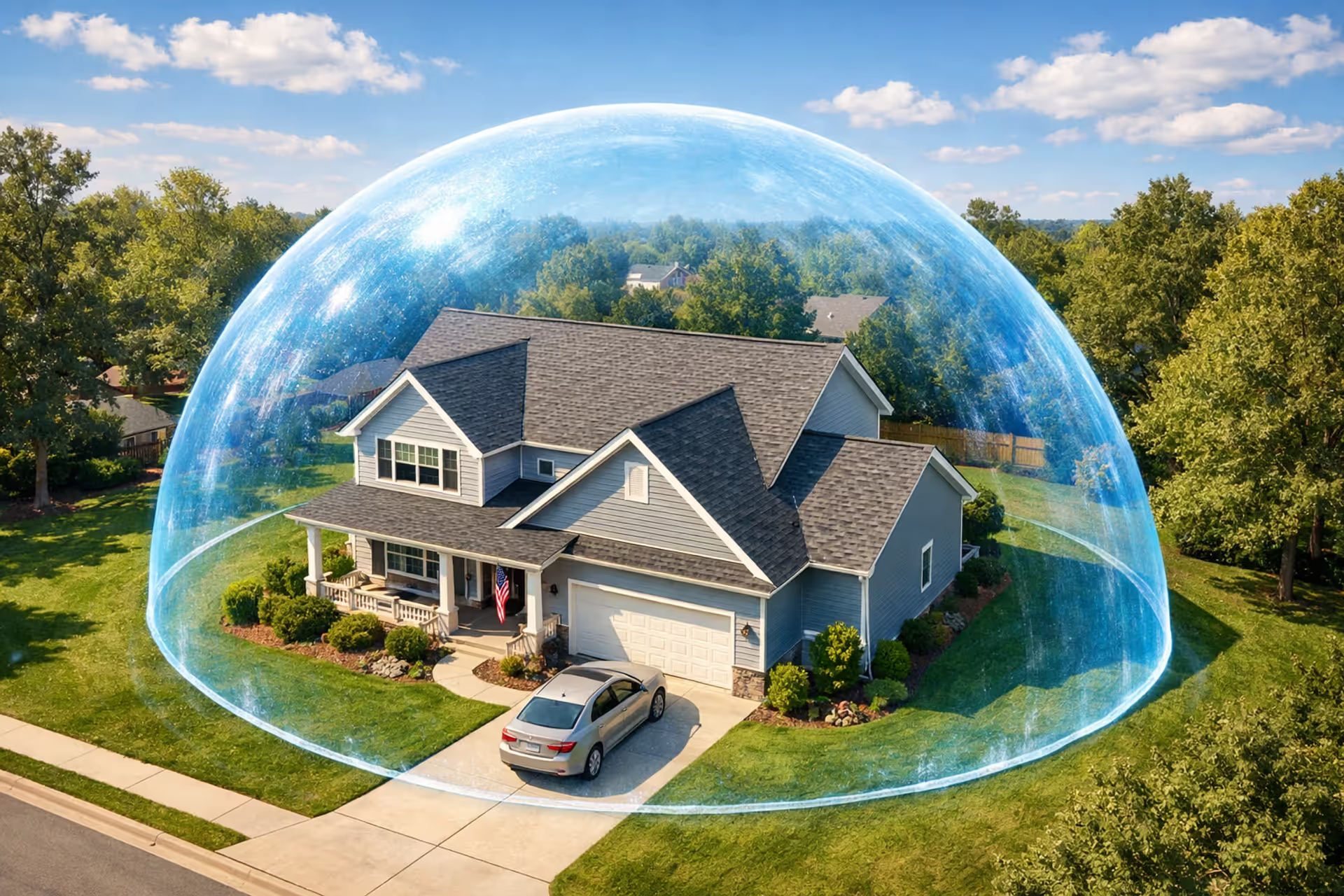
Suburban American house with green lawn under translucent blue protective insurance shield dome on a sunny day aerial angle view
What Does Home Insurance Cover?

Content
Your policy isn't just a single blanket of protection—it's a carefully structured document with distinct sections covering different aspects of your home and life. Knowing these distinctions helps you avoid surprises when filing a claim and ensures you're not paying for redundant coverage or leaving critical gaps unprotected.
The Four Core Coverage Types in Standard Homeowners Policies
Every standard homeowners policy divides protection into four fundamental categories. These work together but function independently, each with separate limits and rules. Understanding how they interact prevents confusion when you need to file a claim.
Dwelling Coverage: Protecting Your Home's Structure
Dwelling coverage pays to repair or rebuild the physical structure of your home after damage from a covered peril. This includes walls, roof, floors, built-in appliances, and attached structures like garages. If a fire destroys your kitchen or a tornado rips off your roof, dwelling coverage handles the reconstruction costs.
The coverage amount should reflect your home's rebuild cost, not its market value. A house worth $400,000 in a hot real estate market might only cost $250,000 to rebuild. Conversely, older homes with custom features might cost more to reconstruct than their sale price. Many homeowners make the mistake of insuring to market value, leaving them underinsured when contractors provide rebuild estimates.
Attached structures fall under dwelling coverage, but detached structures—sheds, fences, standalone garages—typically receive 10% of your dwelling coverage limit. A detached garage destroyed by wind might only get $25,000 if your dwelling coverage is $250,000, even if rebuilding costs $40,000.
Personal Property Coverage: What Happens to Your Belongings
Personal property coverage protects your belongings inside and sometimes outside your home. Furniture, clothing, electronics, appliances, and other possessions receive protection up to a percentage of your dwelling coverage—usually 50-70%. With $200,000 in dwelling coverage, you'd have $100,000-$140,000 for personal property.
This coverage follows you beyond your property lines. If someone breaks into your car and steals your laptop, or your luggage disappears during travel, your homeowners policy may cover the loss. However, certain high-value items face strict sublimits. Jewelry might cap at $1,500 total, cash at $200, and firearms at $2,500. A $5,000 engagement ring stolen in a burglary would only receive $1,500 without a scheduled personal property endorsement.
The replacement cost versus actual cash value distinction matters enormously here. Actual cash value deducts depreciation—your five-year-old laptop might have cost $1,200 new, but you'd only receive $400 after depreciation. Replacement cost coverage pays for a new equivalent item, though you'll pay higher premiums.

Author: Lauren Bishop;
Source: sixth-fleet.com
Liability Protection: When Someone Gets Injured on Your Property
Liability coverage protects your assets when you're legally responsible for someone's injury or property damage. A guest slips on your icy walkway and breaks their hip, requiring surgery and months of rehabilitation. Your liability coverage pays their medical bills, lost wages, and legal fees if they sue.
Standard policies offer $100,000-$300,000 in liability protection, but lawsuits easily exceed these amounts. A single serious injury can generate $500,000 in medical costs and lost income. Legal defense costs alone can drain tens of thousands before a case reaches trial. Many insurance professionals recommend $300,000 minimum, with $500,000 being increasingly common.
Liability coverage extends beyond your property. If your dog bites someone at the park or your child accidentally damages a neighbor's expensive sculpture, your homeowners liability coverage responds. However, certain dog breeds face exclusions, and intentional acts never receive coverage.
Additional Living Expenses: Coverage When You Can't Stay Home
Additional living expenses (ALE) coverage, sometimes called "loss of use," pays for temporary housing and increased living costs when your home becomes uninhabitable after a covered loss. A house fire forces you into a hotel for three months during repairs—ALE covers hotel bills, restaurant meals (beyond your normal food budget), and even pet boarding.
Coverage typically equals 20-30% of your dwelling coverage and lasts for the "shortest time required" to repair your home or find permanent housing. With $200,000 dwelling coverage, you'd have $40,000-$60,000 for temporary living expenses. This sounds generous until you calculate costs: $150/night for a hotel is $4,500 monthly, plus increased food costs, laundry, and storage fees.
ALE doesn't cover temporary living expenses if you simply decide to renovate or if damage results from an excluded peril. A flood that makes your home unlivable won't trigger ALE unless you purchased flood insurance separately.
Covered Perils: What Events Trigger Your Homeowners Insurance
Most homeowners purchase an HO-3 policy, the most common type, which uses "open perils" coverage for your dwelling and "named perils" for personal property. Open perils coverage protects against all causes of loss except those specifically excluded. Named perils coverage only responds to explicitly listed events.
Standard covered perils under a homeowners insurance policy include fire and smoke damage, lightning strikes, windstorms and hail, explosions, riots and civil commotion, aircraft and vehicle damage, vandalism and malicious mischief, theft, falling objects, and weight of ice, snow, or sleet. Water damage from burst pipes, accidental overflow from appliances, and sudden cracking or bulging of heating or cooling systems also receive coverage.
The distinction between "open" and "named" perils creates practical differences. Your dwelling receives broader protection—if a sinkhole swallows part of your foundation and sinkholes aren't specifically excluded, you're likely covered. But if that same sinkhole destroys your furniture (personal property), you won't receive compensation because sinkholes aren't a named peril for contents.
| Peril/Event | Typically Covered | Typically Not Covered |
| Fire and smoke | ✓ Full coverage | Intentional fires set by homeowner |
| Wind and hail damage | ✓ Full coverage | Damage from lack of maintenance |
| Theft and burglary | ✓ Full coverage | Theft by residents or tenants |
| Vandalism | ✓ Full coverage | Vandalism to vacant homes (60+ days) |
| Water damage (burst pipes) | ✓ Full coverage | Gradual leaks or seepage |
| Lightning strikes | ✓ Full coverage | Power surge damage (often limited) |
| Falling objects | ✓ Full coverage | Objects that fall during construction you hired |
| Weight of ice/snow | ✓ Full coverage | Damage from snow you failed to remove |
| Flooding (natural) | ✗ Excluded | Requires separate flood insurance |
| Earthquakes | ✗ Excluded | Requires separate earthquake policy |
| Mold | ✗ Usually excluded | Covered only if resulting from covered peril |
| Foundation settling | ✗ Excluded | Considered maintenance issue |
| Wear and tear | ✗ Excluded | Homeowner maintenance responsibility |
| Pest damage (termites, rodents) | ✗ Excluded | Preventative maintenance required |
| Sewer backup | ✗ Often excluded | Available as endorsement |
Understanding "named perils" versus "open perils" prevents claim surprises. Named perils policies (like HO-2) only cover specifically listed events—if it's not on the list, you're not protected. Open perils policies flip this approach, covering everything except specific exclusions. This distinction explains why HO-3 policies cost more than HO-2 but less than HO-5 (which offers open perils for both dwelling and personal property).
What Home Insurance Typically Doesn't Cover (And Why It Matters)
Homeowners insurance excludes certain perils because they're either predictable maintenance issues, require specialized coverage, or would make policies financially unsustainable if included. These exclusions catch homeowners off-guard more than any other policy aspect.
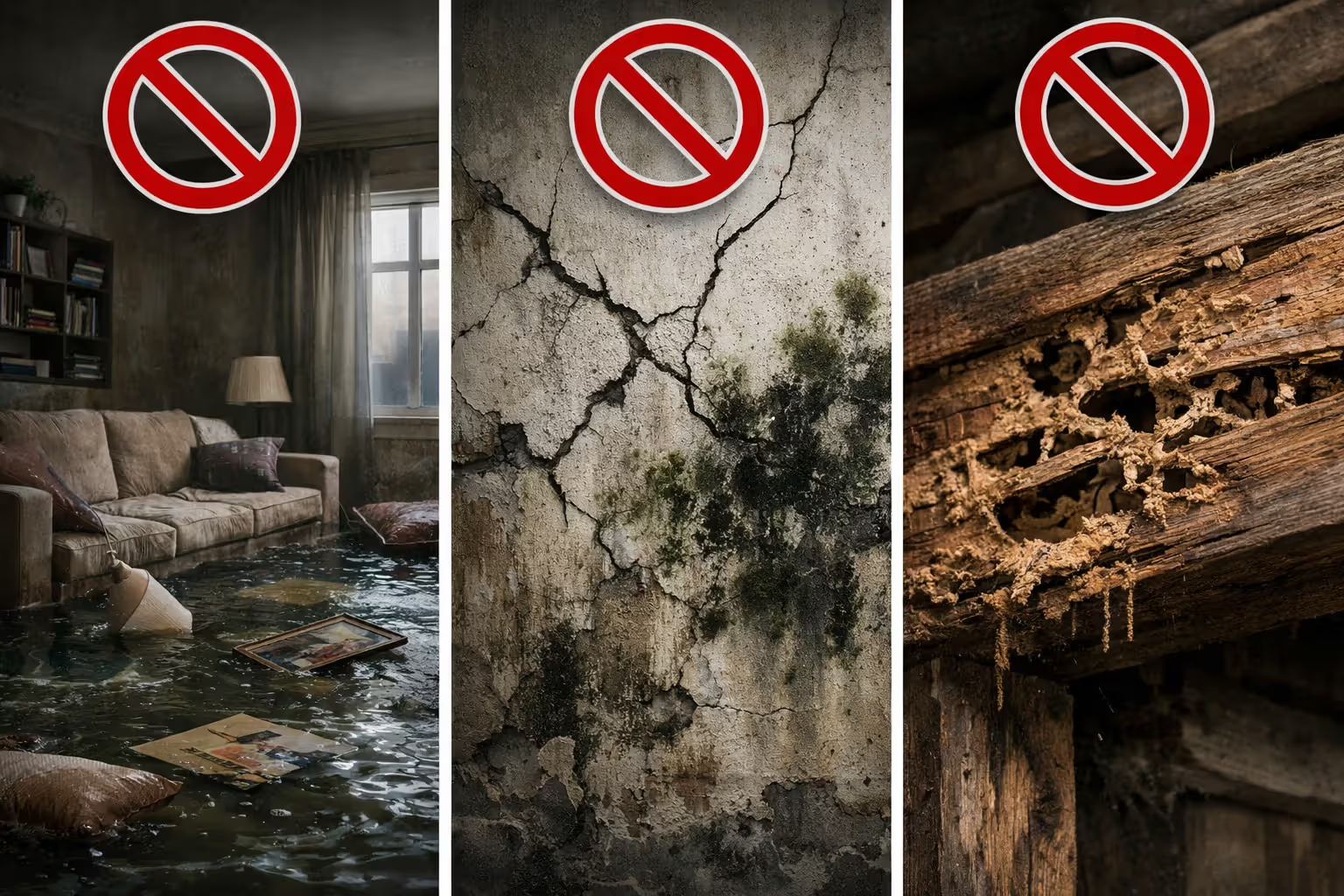
Flood damage represents the most significant exclusion. Standard policies don't cover water that enters your home from ground level—whether from heavy rain, storm surge, or overflowing rivers. Even if you don't live in a mapped flood zone, flash flooding can occur anywhere. A separate flood insurance policy through the National Flood Insurance Program or private insurers fills this gap, typically costing $400-$2,000 annually depending on risk.
Earthquake damage requires separate coverage in most states. California homeowners know this well, but earthquakes can strike unexpected areas. The New Madrid fault zone threatens eight states in the central US. Earthquake insurance comes with high deductibles—often 10-20% of dwelling coverage—making it expensive when you need it but necessary in high-risk zones.
Routine maintenance, wear and tear, and deterioration never receive coverage. Your roof gradually loses shingle granules over 20 years—that's expected deterioration. But if a violent hailstorm damages that same roof, you're covered. Insurers won't pay for problems you should have prevented through regular upkeep. A pipe that bursts due to freezing gets covered; a pipe that corrodes over years and finally leaks doesn't.
Pest damage from termites, rodents, birds, or insects falls outside standard coverage. Termites cause $5 billion in property damage annually in the US, yet homeowners insurance won't pay a cent. Insurers consider pest prevention a homeowner responsibility. The same applies to damage from animals you own—if your dog chews through drywall, you're paying for repairs.
Mold presents a gray area. Policies typically exclude mold unless it results directly from a covered peril. A burst pipe floods your bathroom, and mold grows in the walls during repairs—that's covered. But mold developing from a slow leak you ignored for months won't be. Many insurers now cap mold remediation at $10,000 even when covered, requiring separate endorsements for higher limits.
Real-world claim denials often surprise homeowners. A family returns from vacation to find their basement flooded from a sewer backup—denied, because sewer backup requires a specific endorsement. A homeowner's jewelry collection worth $25,000 gets stolen—they receive $1,500 due to policy sublimits. Someone running a home business faces a lawsuit from a client who trips during a consultation—denied, because business activities need commercial coverage.
Author: Lauren Bishop;
Source: sixth-fleet.com
How Coverage Limits and Deductibles Affect What You're Protected Against
Coverage limits and deductibles determine how much protection you actually receive when disaster strikes. Two homeowners might both have "full coverage," but one receives a check for $150,000 while the other gets $45,000 for identical damage due to these policy details.
Replacement cost versus actual cash value fundamentally changes claim payouts. Replacement cost pays to buy new items at today's prices. Your ten-year-old roof gets destroyed—you receive enough to install a new roof of similar quality. Actual cash value deducts depreciation based on age and condition. That same roof might receive 40% of replacement cost since it was halfway through its expected lifespan. A $15,000 roof replacement nets you $6,000 under actual cash value coverage.
Most policies default to replacement cost for dwellings but actual cash value for older roofs or homes. You might pay lower premiums for actual cash value coverage, but the savings evaporate when you're stuck with a $20,000 gap between your payout and actual repair costs. Replacement cost coverage typically adds 10-15% to premiums but eliminates this gap.
Coverage limits for high-value items create frequent disappointment. Standard policies cap certain categories regardless of your total personal property limit:
- Jewelry, watches, and furs: $1,500 total
- Firearms: $2,500 total
- Silverware and goldware: $2,500 total
- Cash and coins: $200-$500 total
- Securities and stamps: $1,500 total
- Electronics used for business: $2,500 total
A $10,000 engagement ring stolen during a burglary receives $1,500 unless you purchased a scheduled personal property endorsement. These endorsements list specific items with agreed values and remove sublimits, typically costing 1-2% of the item's value annually. That $10,000 ring might cost $100-$200 yearly to properly insure.
Deductibles represent your out-of-pocket cost before insurance pays anything. A $2,500 deductible means you pay the first $2,500 of any claim. Higher deductibles lower premiums—jumping from $1,000 to $2,500 might save $200-$400 annually. But you must have that amount readily available when disaster strikes.

Author: Lauren Bishop;
Source: sixth-fleet.com
Some policies use percentage deductibles for specific perils. Wind and hail damage in coastal areas often carries a 2-5% deductible based on dwelling coverage. With $300,000 dwelling coverage and a 2% wind deductible, you'd pay the first $6,000 of wind damage. A severe hurricane could trigger a $15,000 deductible with 5% terms.
Special Considerations: Coverage Variations by Policy Type
Not all homeowners policies offer identical protection. The Insurance Services Office creates standardized policy forms, with HO-3 being most common, but understanding alternatives helps you choose appropriate coverage.
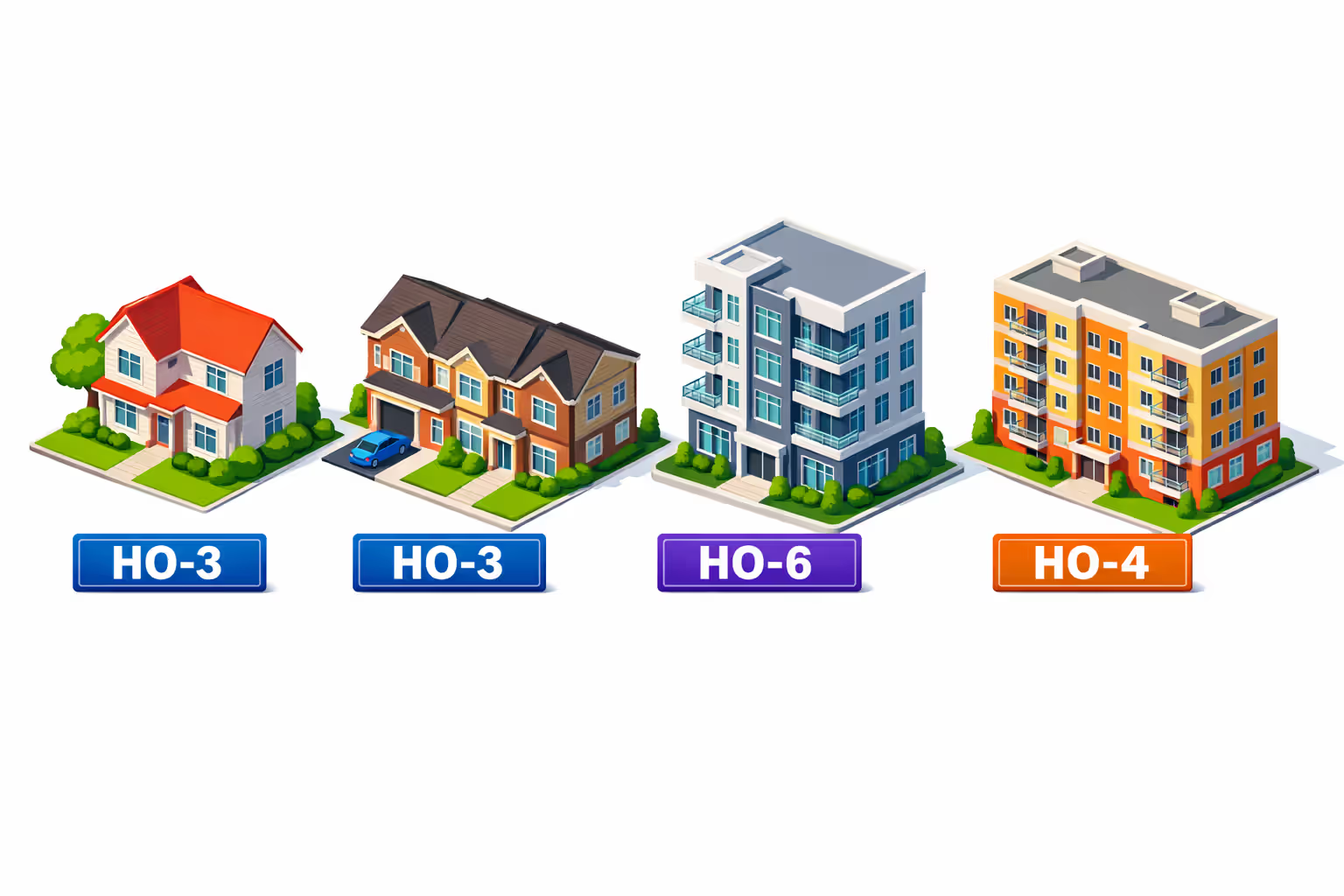
HO-3 policies provide "special form" coverage—open perils for dwellings, named perils for personal property. This balances comprehensive protection with affordable premiums. About 80% of homeowners purchase HO-3 policies. The dwelling coverage protects against all risks except specific exclusions, while contents coverage only responds to listed perils like fire, theft, and vandalism.
HO-5 policies offer "comprehensive form" coverage—open perils for both dwelling and personal property. Your belongings receive the same broad protection as your house structure. This eliminates the named perils limitation, covering personal property against all risks except specific exclusions. HO-5 policies cost 10-20% more than HO-3 but provide significantly better contents protection. Homeowners with valuable possessions or those wanting maximum coverage should consider this upgrade.
HO-8 policies serve older homes where replacement cost exceeds market value. Historic homes with custom millwork, plaster walls, or unique architectural features might cost $500,000 to rebuild but only sell for $300,000. Standard policies would leave you underinsured. HO-8 uses "functional replacement cost," paying to rebuild with modern equivalent materials rather than matching original construction. Ornate plaster ceilings might be replaced with textured drywall, reducing costs while maintaining function.
Most homeowners never review their policy documents until they file a claim, and that's when they discover gaps in coverage. The difference between an HO-3 and HO-5 policy might seem minor when you're comparing quotes, but it becomes critical when you're explaining to an adjuster why your $8,000 laptop collection should be covered after water damage. Understanding your specific policy type and customizing coverage to match your actual needs—not just accepting default limits—can mean the difference between full recovery and financial hardship after a loss
— Michael Rodriguez
Condo insurance (HO-6) differs substantially from standard homeowners policies. The condo association's master policy covers building exteriors and common areas, while your HO-6 policy covers interior improvements, personal property, and liability. You need "loss assessment" coverage for your share of association-level claims. If the building's roof requires $200,000 in repairs and the association assesses each unit $5,000, loss assessment coverage pays your portion.
Renters insurance (HO-4) eliminates dwelling coverage since you don't own the structure. You're buying personal property protection and liability coverage. Many renters skip insurance, wrongly assuming their landlord's policy covers their belongings. Landlord policies only cover the building structure—your $30,000 in furniture, electronics, and clothing has zero protection without your own policy. Renters insurance typically costs $15-30 monthly for $30,000-$50,000 in contents coverage.
Author: Lauren Bishop;
Source: sixth-fleet.com
Frequently Asked Questions About Homeowners Insurance Coverage
Homeowners insurance provides essential protection, but only if you understand exactly what you've purchased. The difference between financial recovery and devastating loss often comes down to knowing your policy's structure before disaster strikes.
Review your policy annually, especially after major purchases or home improvements. That kitchen renovation added $50,000 in value—does your dwelling coverage reflect this? Document your possessions with photos or video, storing evidence off-site or in cloud storage. When disaster strikes, you'll struggle to remember every item you owned without documentation.
Consider your actual risks rather than accepting default coverage. Living near a river? Flood insurance isn't optional. Own valuable jewelry or collectibles? Schedule them specifically. Run a side business from home? Get appropriate commercial coverage before a claim gets denied.
The cheapest policy rarely provides the best value. An extra $200 annually for replacement cost coverage instead of actual cash value could mean tens of thousands more in claim payouts. Higher liability limits cost relatively little but protect your assets from lawsuits that could otherwise force bankruptcy.
Talk to your insurance agent about endorsements and riders that match your situation. Most homeowners never explore available options beyond the standard policy. Equipment breakdown coverage, water backup protection, and increased limits for specific categories cost less than you'd expect while filling critical gaps.
Your homeowners insurance policy represents one of your largest ongoing expenses and most important financial protections. Understanding what it covers—and what it doesn't—ensures you're prepared when the unexpected happens rather than learning about exclusions while standing in your damaged home.